Last weekend marked another sad journey to
Kang’o ka Jaramogi, the home of founding vice president, Jaramogi Oginga
Odinga, the father of departed ODM leader.
For the second time in as many
months, a sombre mood engulfed Bondo, the birthplace of the iconic former Prime
Minister, following the death of his younger sister, Beryl.
Ahead of the Saturday burial service, the
political space was awash with rumours and counter-rumours of plans to heckle
some leaders and cheer others in equal measure.
If the rumours were to be
believed, the funeral, for many political actors in attendance, was to be a
post-Raila popularity contest, over what has now come to be known by the fancy
pseudo-title, “Luo kingpin”.
Predictably, the mobilisation of crowds
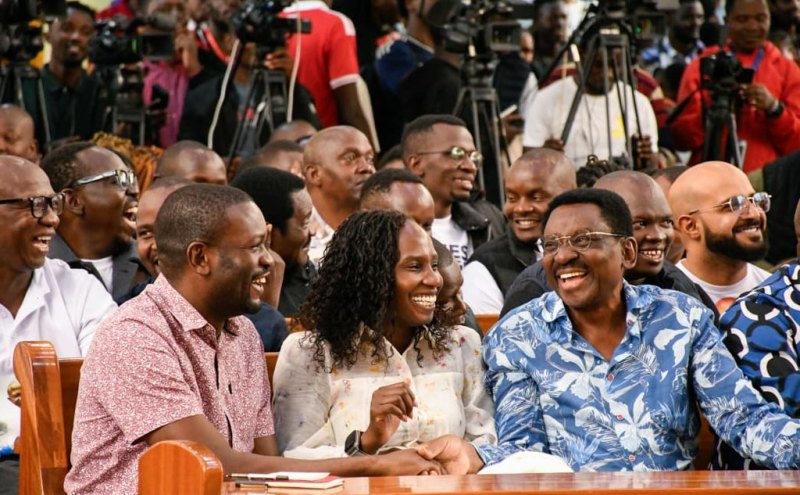
ended up being a chaotic spectacle, which forced several ladies from the Odinga
clan, among them Raila’s widow Ida, his two sisters Ruth and Wenwa, as well as
his two in-laws, Anne Oburu and Tabu Osewe, to take to the podium to castigate
the political class for interrupting the service with “these shameful acts”.
It
wasn’t immediately clear which of the two main recipients of the cheers they
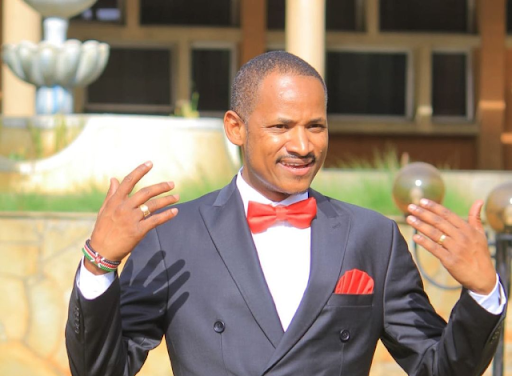
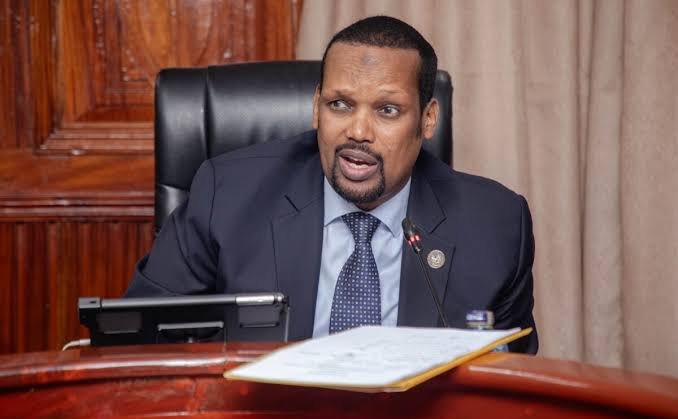
were targeting; between Embakasi East MP Babu Owino and Homa Bay Governor
Gladys Wanga.
Watching proceedings at the funeral
service keenly, two things immediately hit me. The first is just how audacious
ODM and Luo politicians have become since the death of Raila.
At any other
time, Kang’o would be a sacred and highly respected place. It is difficult to
imagine that just weeks after Raila’s interment, and at his own sister’s
burial, political leaders had no qualms about having a supremacy contest with
shouting crowds right in this near-holy place.
The second thing that struck me was the realisation
that the ODM leadership, the Luo variety of it at least, practically has no
idea what to do with the party.
My reading of the situation is that the ODM
faction that is aligned to the government, the so called broad-based wing, is
in a daze, awaiting instructions from “above” and with no idea what to do in
the interim period. It is now obvious that it is easier for some leaders in the
party to chant “Tutam” merely because they have no other strategy in place.
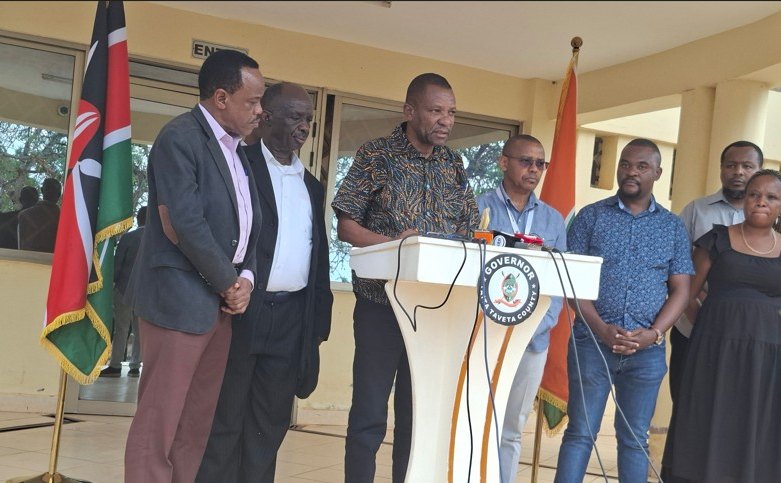
Siaya Governor James Orengo, a fierce critic
of the broad-based arrangement, was at it again in Bondo, warning the community
to tread carefully when entering into political deals.
And when she rose to
speak, Raila’s last born daughter, one of the three people who received wild
cheers at the ceremony, threw a shout-out at Babu, labelling him “one of us”,
eliciting even more cheers. She didn’t clarify who “us” could be.
But a casual observer wouldn’t fail to see
how the transition within Luo-ODM is taking shape. As of this week, one can see
that Orengo, Babu and Winnie Odinga
coalesce towards one side of the divide, making up the group that wants ODM to
chart its own path, break free of the broad-based government and possibly field
a presidential candidate in the 2027.
Then there is the other group led by
Wanga, whose sole mission is to partner with President Ruto in 2027, secure the
latter’s reelection and extract as much benefit from the arrangement as
possible.
To the Babu-Winnie-Orengo group, you can
comfortably add, as well as Rarieda MP Otiende Amollo. Both of them have
questioned the wisdom of “voting in advance” to give Ruto a second term,
without waiting to negotiate a better deal in 2027. To them, the rushed
enthusiasm to endorse the President for a second term way before the election
denies the community and the party a chance to weigh their options before
settling on an agreeable coalition.
This latter group makes a valid argument.
Indeed, if one was to check for which faction of the party has any blueprint
for getting to the desired destination, I would pick this as the one.
In
contrast, the fiercely pro-government faction of Luo-ODM, egged on by the
“experts” that the party “donated” to government, are pushing for Ruto’s reelection, regardless
of whether the party membership is aligned with it or not. My problem with this
faction is that in the interim period, it seems content to await instructions
from somewhere, on what to do with the party pre-2027.
I have previously drawn parallels with the
post-Jaramogi transition in 1994, and how political schemers and strategists
may sometimes move without the people. Indeed, several leaders at Beryl’s
burial were constrained to remind their audience that the leadership may be
moving faster than the people, a stark realisation that some of the political
dealings may not have the people’s stamp of approval.
And this would have been
a good point to discuss their peers, fellow leaders opposed to the quick
herding of the community into a pre-election coalition simply because “Raila
left us there”.
But there is something else at play. In
nearly every ODM function in recent times, the elephant in the room has been
whether to let Babu speak, because youths chanting his name and demanding he
address them have become a permanent fixture of party events.
The convenient narrative
has been that since he doesn’t hold a senior party position, his speaking slot
is taken up by the space infamously known as “just stand and wave from where
you are so that the people can acknowledge your presence”.
However, there is only so long that this
can last, in the absence of the unifying and powerful figure of Raila. And
since Winnie has already declared Babu “one of us”, the forceful youth movement
in the party that has been pushing for space and demanding reforms in the
party, will grow bigger and louder.
It is possible that they will be branded
“young and not ready”, which is why they need to quickly align with a more
experienced and liberal leader in the party who speaks their language and has
probably travelled the less trodden path of resistance. This is where Orengo
comes in.
I am persuaded that at this time in the
transition in Luo Nyanza, the young pair of Babu and Winnie, coupled with the
experience trio of Ruth, Otiende and Orengo, may have more joint support in the
grassroots than they imagine.
And given that there is confusion in the party
over what direction to take ahead of the decisive 2027 polls, I believe this
group should make a grab for the party using their grassroots might, before
moving on to align with like-minded individuals across the country.
I also submit that they should make this
move fast, because the longer it takes to grab the party, the more time it
accords the other side, complete with state machinery, to plan counter moves.
The
truth is, Ruto doesn’t need the ODM party as much as he needs the Luo
community. And in this venture, he already has surrogates to expedite the job
without necessarily using ODM as a party.
Once this distinction is made, those
who hang onto ODM hoping to catch the President’s eye will likely desist from
trying too hard. And those who want the party to retain its identity will have
a clearer path ahead. The Orengo-Babu-Winnie faction needs to make its move,
now!