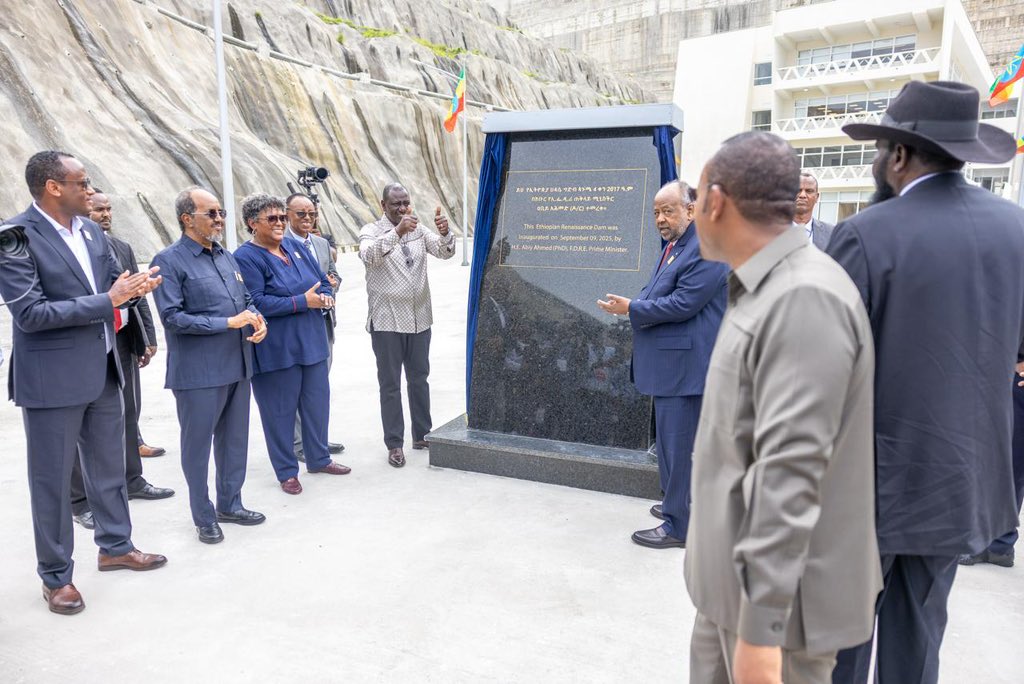
 President William Ruto with other leaders during the inauguration of the Grand Ethiopia Renaissance Dam/PCS
 The highlight of President William Ruto’s week was his participation in the Second Africa-CARICOM Summit in Addis Ababa, Ethiopia.
At the high-level meeting, he championed stronger Africa-Caribbean solidarity, pushed for urgent reforms of the international financial system, and led conversations on Haiti’s security crisis and reparatory justice.
He also addressed the Second Africa Climate Summit, hosted in Ethiopia, where he unveiled major climate partnerships and called for fairer global financing to accelerate Africa’s green industrialisation.
Here’s a roundup.
September 7, Sunday
He held a bilateral meeting with Barbados Prime Minister Mia Mottley on the sidelines of the Africa-CARICOM Summit.
Their talks focused on deepening ties and addressing global security challenges, with particular attention to Haiti’s UN Security Council, mandated mission.
With the current mandate nearing expiry, they stressed the need for timely Council guidance on a responsible transition.
He later participated in a summit session on international financial reforms, urging the Global South to speak with one voice in demanding a fairer system.
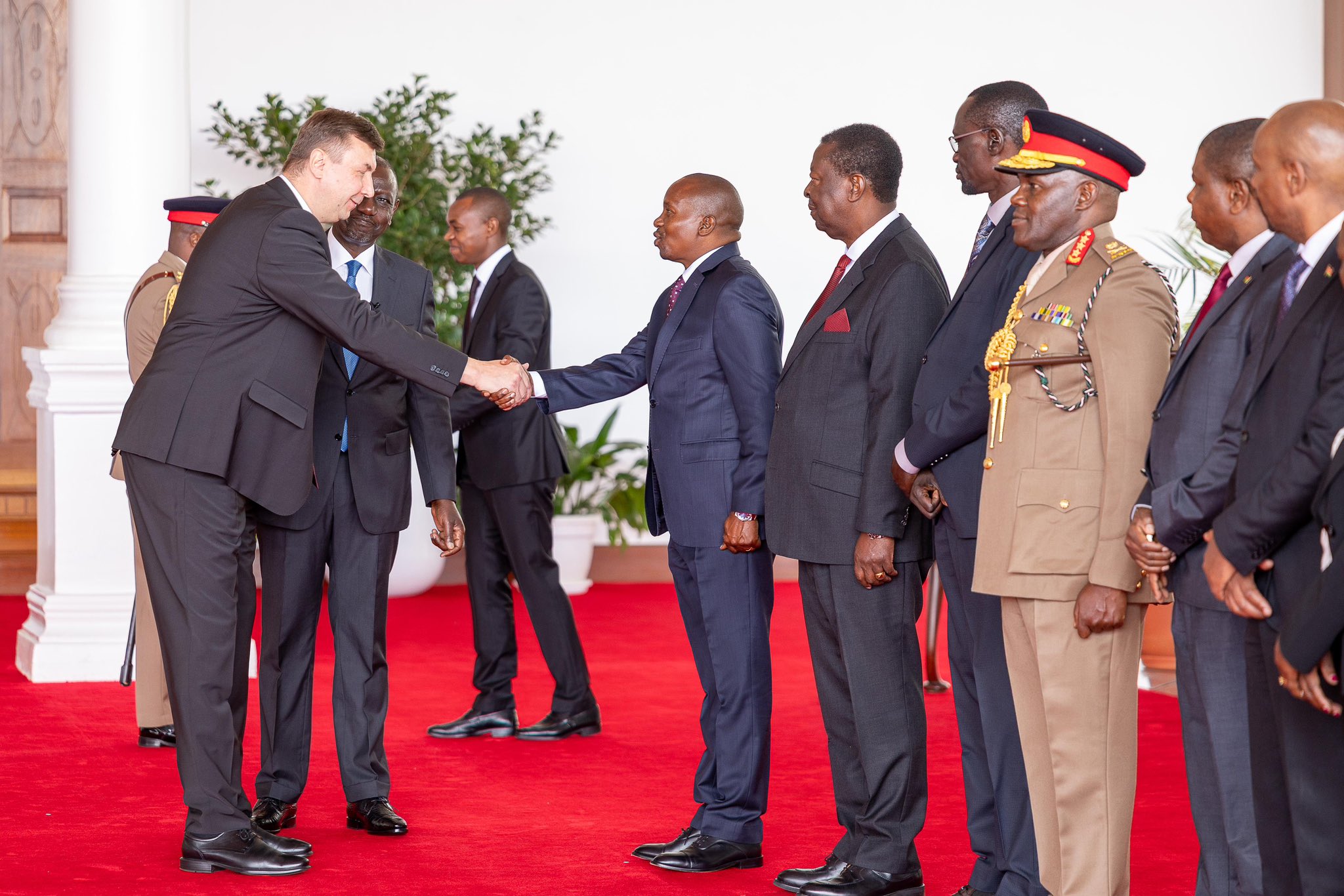 Deputy President Kithure Kindiki shakes hands with a new enjoy as president William Ruto look on/PCS
 He pushed for strengthening the IMF Common Framework, replenishing development banks, and unlocking financing for climate-smart industrialisation.
On the sidelines, he engaged Bahamas Prime Minister Philip Edward Davis on Haiti’s fragile security situation.
Both leaders highlighted the importance of building on gains made by the Multi-National Security Support Mission and called for a successor UN resolution to secure sustained backing.
During the main summit, Ruto joined leaders in making a united call for reparatory justice — a step he said was vital to restore dignity and correct historical injustices.
He proposed strengthening the Africa-CARICOM Reparations Working Group and urged the UN to take concrete action against debt burdens and unmet pledges.
Later, he met Haitian Transitional Presidential Council member Edgar Leblanc, who conveyed gratitude for Kenya’s peacekeeping role.
The President reiterated the need for sustainable international support for Haiti.
Further bilateral meetings with Grenada’s Prime Minister Dickon Mitchell and Antigua & Barbuda’s Prime Minister Gaston Browne focused on deepening ties in areas such as fintech, climate action, tourism, geothermal energy, and agriculture.
Both leaders expressed appreciation for Kenyan troops in Haiti, with Prime Minister Browne committing to undertake a State Visit to Kenya.
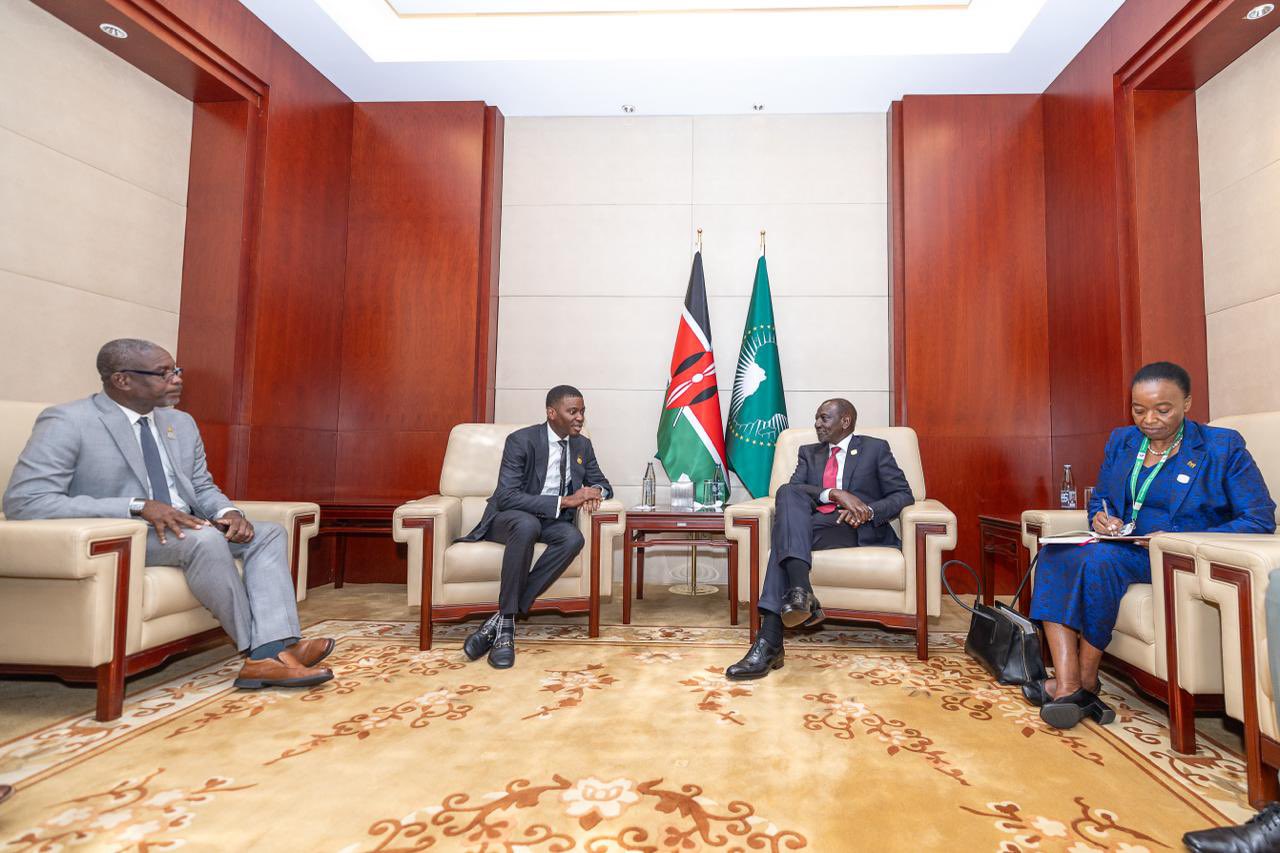 President William Ruto during one of the meetings in Addis Ababa, Ethiopia/PCS
 September 8, Monday
At the 2nd Africa Climate Summit, President Ruto launched the report “Africa’s Journey of Climate Action and Partnership.”
He affirmed that Africa sees climate action as an opportunity for growth and transformation, not a burden.
He also presided over a landmark $100 billion cooperation agreement between African development finance institutions and commercial banks to drive green industrialisation.
He addressed sessions on climate adaptation and debt, where he condemned the current global financial order as “a new form of colonialism” that punishes poor countries.
He called for a fair, inclusive system that allows all nations to thrive.
September 9, Tuesday
He joined fellow leaders for the historic inauguration of the Grand Ethiopian Renaissance Dam. He congratulated Prime Minister Abiy Ahmed and the Ethiopian people, hailing the project as a symbol of African self-reliance.
He reaffirmed Kenya’s interest in purchasing surplus power while urging Nile Basin countries to pursue dialogue and compromise for shared prosperity.

September 10, Wednesday
Back in Nairobi, the President received letters of credence from newly posted ambassadors representing Algeria, Hungary, Norway, Ukraine, Mexico, Egypt, Slovenia, and Uzbekistan.
He welcomed them and pledged to deepen cooperation in trade, investment, and global challenges.
September 11, Thursday
At State House, Nairobi, President Ruto hosted a Gusii political leadership delegation led by Kisii Governor Simba Arati, joined by ODM leader Raila Odinga and other senior officials.
He unveiled transformative investments for Kisii and Nyamira counties, including more than 22,000 affordable housing units, modern student hostels, new markets, and expanded electricity access to over 32,000 households.
He emphasised that such projects will anchor long-term trade, industry, and prosperity in the region.
Ruto later capped the day by presenting a cheque worth Sh2.65 billion to the Kenya Tea Development Agency.
The funds, which had been held as deposits by the Kenya Deposit Insurance Company following the collapse of Chase and Imperial Banks, were finally released to benefit farmers.
“We have placed agriculture at the very heart of our national transformation agenda because it remains the backbone of our economy, contributing nearly half of our GDP, creating millions of jobs, driving exports, and ensuring food security,” he said.
Through bold and deliberate reforms, the government has registered 6.5 million farmers, distributed 21 million bags of subsidised fertiliser, dismantled cartels, streamlined sector management, opened new markets, and expanded support systems.
The results are evident across the board, with tea emerging as a flagship success story.
Average prices have risen from Sh51 to Sh64 per kilo, while export earnings have jumped from Sh138 billion to Sh250 billion.
With continued investment in value addition, modernisation of factories, and global branding, projections show tea earnings could climb to Sh280 billion by 2027.
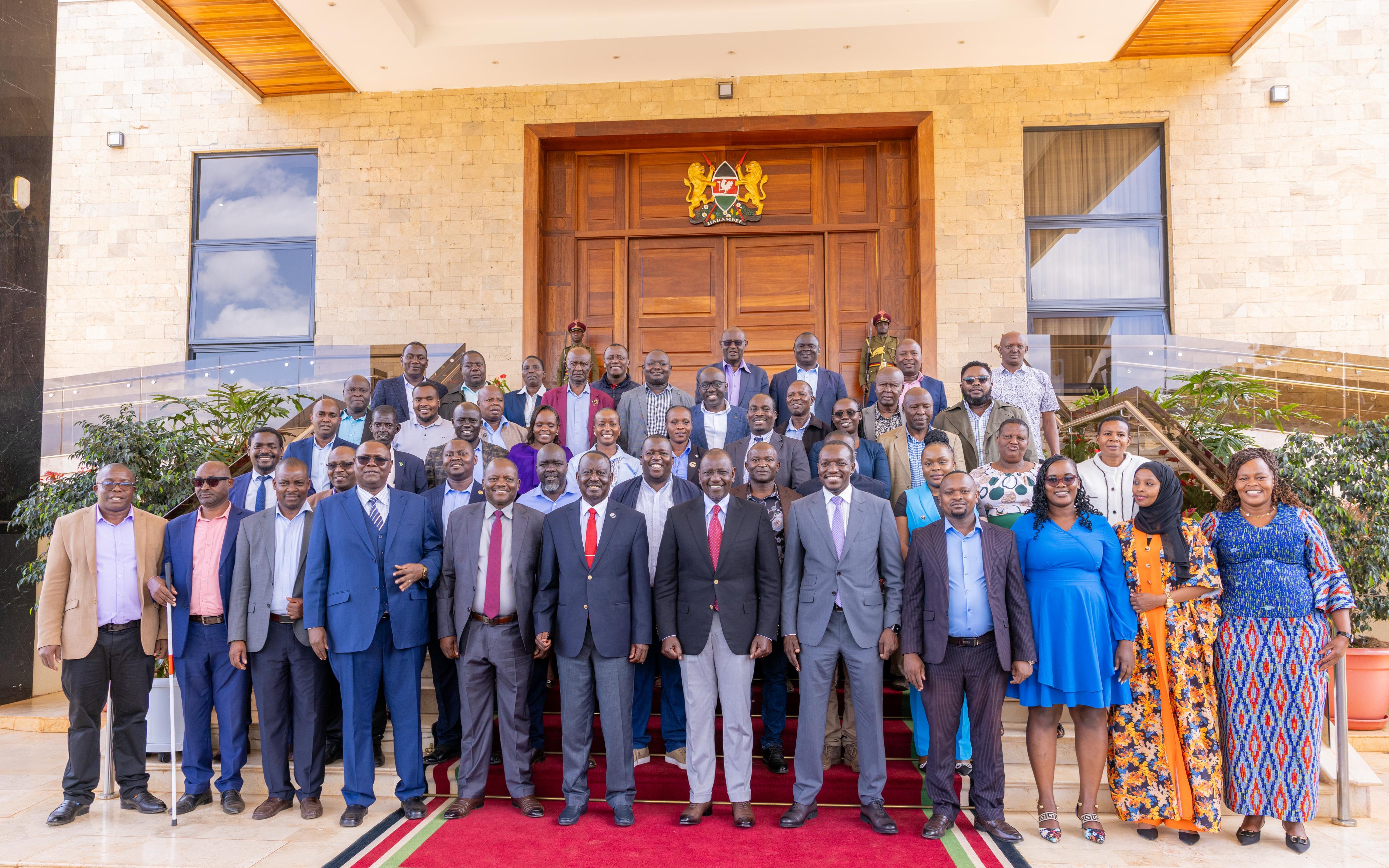 President William Ruto with Raila Odinga after a meeting with leaders from Kisii at State House/PCS
 Saturday, September 12
The President began his day in Murang’a County, where he met grassroots leaders and shared tangible progress on his development agenda.
“There is no longer any room in Kenya for tribalistic and retrogressive politics that enrich a few at the expense of the many,” he declared.
“We are charting a new course, one of bold, visionary leadership that transforms lives and unites our nation.”
He announced Sh23 billion for the construction of 10,300 affordable houses, Sh3.5 billion for road upgrades, Sh2.3 billion for the development of 23 modern markets, and Sh3 billion for new student hostels.
To accelerate entrepreneurship and inclusive growth, he noted that more than 10,000 households will be connected to electricity by December under an Sh850 million electrification project.
The government has also committed Sh1.5 billion for the construction of two modern stadiums, and Sh2.4 billion to connect Kangema, Mathioya, Kiharu, and Kandara to clean water.
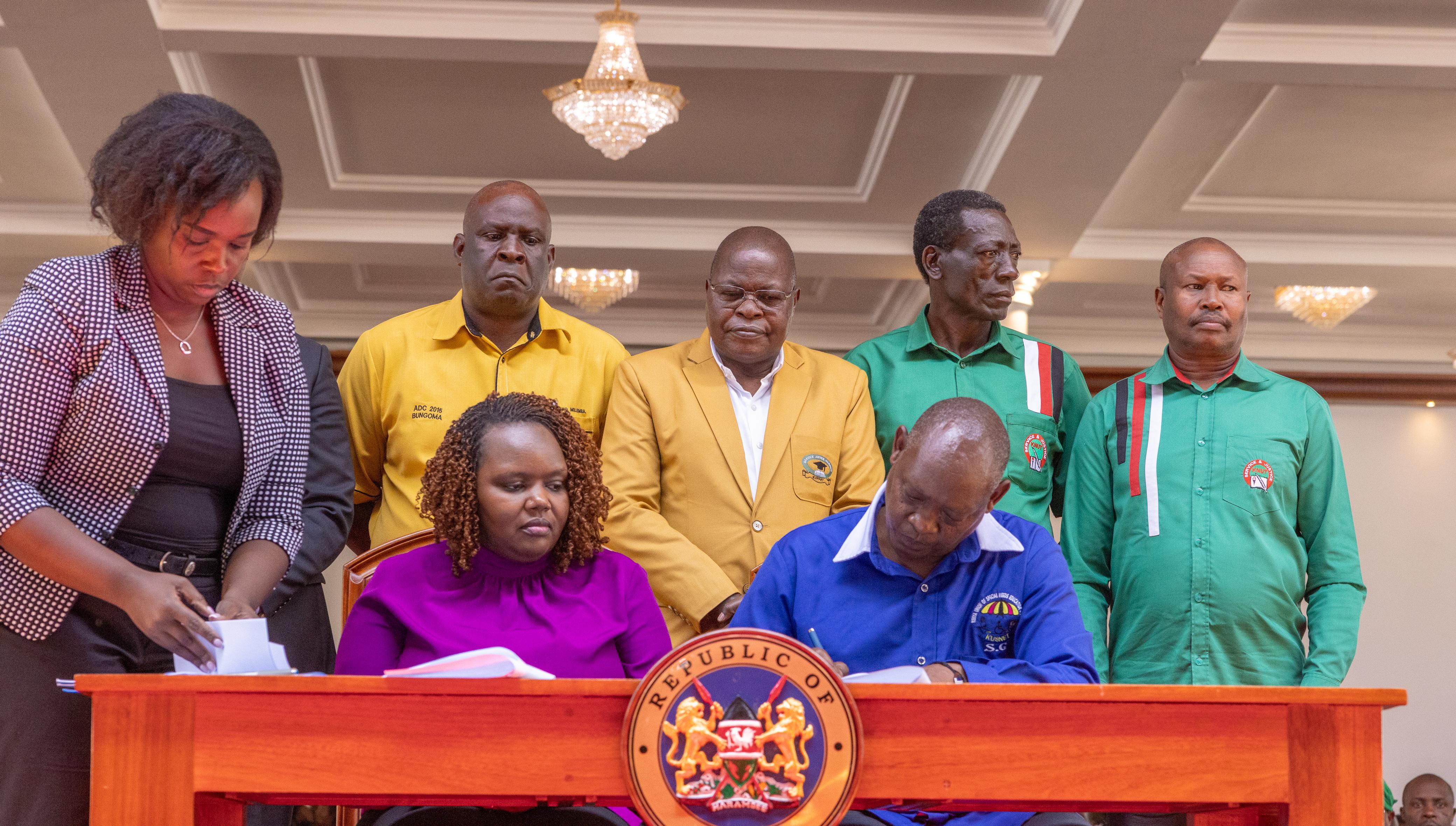
The President closed the day by meeting representatives of teachers from across the country, underscoring the central role of education in his reform agenda.