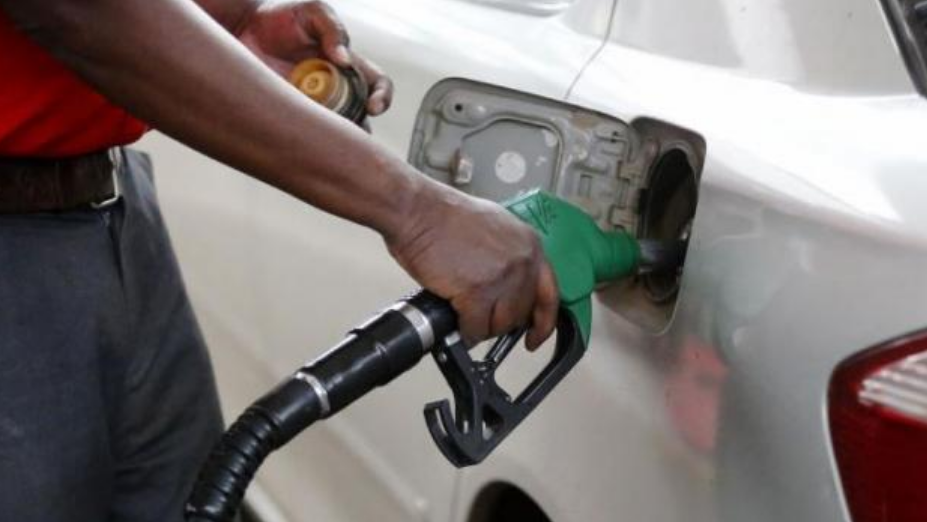
 Pump attendant fuels a vehicle /FILE
The Energy and Petroleum Regulatory Authority has announced new fuel prices that will take effect from December 15 to January 14, 2026.
In the December review, in Nairobi, motorists will continue to pay Sh184.52 for Super Petrol, Sh171.47 for Diesel, and Sh154.78 for Kerosene.
"In the period under review, the maximum allowed petroleum pump prices for Super Petrol, Diesel and Kerosene remain unchanged," Epra said in a statement.
“The prices are inclusive of the 16% Value Added Tax (VAT) in line with the provisions of the Finance Act 2023, the Tax Laws (Amendment) Act 2024 and the revised rates for excise duty adjusted for inflation as per Legal Notice No. 194 of 2020."
Pump prices in Mombasa will be Sh18.24 for super petrol, Sh168.19 for diesel and Sh151.49 for kerosene.
Super petrol will retail at Sh183.56 in Nakuru, with diesel going for Sh170.87 and kerosene Sh154.21.
In Eldoret, the pump prices will be Sh184.38 for super petrol, Sh171.68 for diesel and Sh155.03 for kerosene.
The pump prices will be Sh184.37 for super petrol, Sh171.68 for diesel and Sh155.03 for kerosene in Kisumu.
December last year prices were at Sh176.29 for a litre of petrol in Nairobi, Sh165.06 for diesel while kerosene was at the time retailing at Sh148.39 per litre.
Kenya imports all its petroleum products in refined form and the products are traded in international markets based on a pricing framework that's partly determined by the prevailing exchange rate of the local currency to the UD dollar.
The purpose of the Petroleum Pricing Regulations is to cap the retail prices of petroleum products which are already in the country so that importation and other prudently incurred costs are recovered while ensuring reasonable prices to consumers.
"Epra wishes to assure the public of its continued commitment to the observance of fair competition and protection of the interests of both consumers and investors in the energy and petroleum sectors."
The consecutive months of unchanged fuel prices provide temporary relief to consumers by stabilising transport and energy costs.
For households, this means no immediate increase in commuting or cooking expenses, while businesses reliant on fuel—such as transport, logistics and manufacturing—can plan operating costs more predictably.
Economically, stable fuel prices can help contain inflationary pressures, as fuel is a key input affecting the prices of goods and services across the economy.
However, the benefit is limited to short-term price stability and does not address longer-term volatility in global energy markets.