The Social Health Authority (SHA) says the directive applies to all contributors under the Social Health Insurance Act No. 16 of 2023.
Deadline to remit
The SHIF contributions are expected to be made by the 9th of
every month. This deadline is set by Regulation 22(1) of the Social Health
Insurance (General) Regulations, 2024.
“Employers who delay will face the consequences. The
contribution must be submitted by this date every month, and missing it
triggers automatic penalties,” SHA said.
Failure to submit contributions by the due date results in a
2 per cent penalty charged on the outstanding balance. This penalty is applied
monthly until the contribution is fully paid.
The longer the delay, the more the penalty accumulates. Employers
who delay for several months could find themselves owing a large amount in
fines, in addition to the original unpaid contributions.
The penalties are not the only concern. SHA warns that
missing the payment deadline could also lead to suspension of access to health
benefits.
In such a case, employees under the affected employer will
not be able to access any healthcare services funded by SHIF until all pending
contributions and penalties have been paid in full.
“This suspension takes effect automatically when employers
default. It remains in place until every due amount is settled,” SHA stated.
This means that an employee could go to a hospital expecting
care, only to be turned away because their employer did not remit their health
insurance contributions on time.
This has serious implications. For workers, it could mean
being unable to access treatment when they need it most. For employers, it
could damage their relationship with staff, disrupt business operations, and
attract the attention of regulators.
That is why SHA is calling on employers to treat the 9th of
every month as a strict deadline and ensure contributions are made well before
the cut-off date.
“Employers have no excuse to delay. The law is clear, and
the deadline is public,” SHA added.
Why comply
Complying with this requirement comes with key benefits.
First, it helps avoid costly penalties that can add up quickly.
Secondly, it ensures that employees continue to receive
uninterrupted healthcare services. This is important for their well-being and
productivity at work.
Third, it allows the employer to stay on the right side of
the law.
The Social Health Insurance Act requires compliance, and
falling behind on contributions may also expose an employer to further legal
action.
To ensure compliance, SHA is encouraging employers to
organise their payroll systems so that the SHIF contributions are processed and
submitted ahead of the deadline.
Employers can also take advantage of the SHA Employer
Portal, which is designed to make it easy for businesses to submit contributions,
access records, and track their compliance status.
In addition, SHA has provided a customer service email
([email protected]) and the toll-free number 147 for any questions or help
regarding the process.
The SHA further advises employers to keep accurate records
and always confirm that payments have been received and processed.
It is the responsibility of the employer to ensure that
every contribution is accounted for. Failure to confirm payment could lead to
unexpected penalties, even when the employer believes they have complied.
“We encourage employers to be proactive in checking their
payment status. Don’t wait for a penalty notice,” SHA said.
It is important to note that penalties and suspension of
healthcare benefits apply every time the deadline is missed. There is no waiver
unless contributions and all penalties are cleared.
Some employers may be dealing with tight cash flow or
administrative delays, but SHA insists that these are not valid reasons for
missing the deadline.
"Once the penalty is applied, it cannot be reversed. The only
solution is to pay everything due."
Employers are therefore being advised to avoid last-minute
submissions and to treat the remittance as part of their routine monthly
obligations.
SHA has made it clear that it is monitoring compliance and
will not tolerate negligence. The authority is rolling out systems that flag
defaulters and track overdue contributions. Employers who repeatedly fail to
comply may be flagged for further regulatory action.
In the long run, keeping up with SHIF obligations is not
just about avoiding penalties. It is also about protecting the health of
workers and contributing to a sustainable health insurance system for the
country.

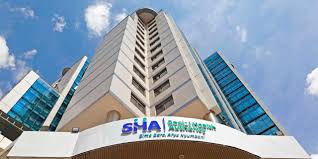 SHA headquarters in Nairobi