Sino-Africa relations, which
have spanned several decades, extend beyond infrastructure development
to encompass culture and education.
These aspects have played a crucial
role in soft diplomacy, complementing the more tangible investments
in infrastructure. Together, they
form a well-rounded and strategic
partnership.
They were established in honour
of renowned Chinese philosopher
Confucius (Kong Fuzi, 551-479 BC),
whose teachings on ethics, morality,
social harmony and governance laid
the foundation of Confucianism.
The
Confucius Institutes have emerged
as one of China’s key tools for fostering closer ties with Africa.
In Kenya, Confucius Institutes are
present at the University of Nairobi,
Kenyatta University, Moi University and Egerton University, offering
courses in Chinese language and
culture.
Additionally, several Confucius
classrooms have been introduced
in secondary schools, and under
the competency-based curriculum,
Chinese has become one of the foreign languages taught in schools.
The growing demand for Chinese
language skills is opening up a wide
range of professional opportunities
for Kenyans.
As Chinese companies
and investments continue to expand
across Africa, proficiency in Mandarin has become an increasingly
valuable asset, especially in construction, engineering, tourism
and education.
The growing Chinese
presence on the continent also provides career opportunities for Africans fluent in Mandarin, including
roles as interpreters, trainers and
cultural liaisons.
By offering language programmes,
cultural exchanges and academic
collaborations, Confucius Institutes
serve as vital bridges that deepen
Sino-African relations.
As economic and political engagements continue to evolve, the institutes’ role in shaping mutual understanding
and long-term cooperation cannot
be overlooked. Language plays a
fundamental role in fostering cultural connections.
The institutes
offer Africans the opportunity to
engage with China on linguistic
terms, which is crucial as economic interactions between the two regions continue to expand.
African
professionals, businesspeople and
students are increasingly seeking
to learn Mandarin to facilitate trade,
investment and career opportunities
with Chinese firms. This linguistic
proficiency allows for more direct
engagement with Chinese partners,
reducing dependence on intermediaries.
Furthermore, learning Mandarin
helps demystify Chinese culture,
leading to a more informed and organic relationship between Africa
and China.
By integrating Mandarin
into their education systems, African
nations empower their citizens to
participate more actively in global
economic exchanges.
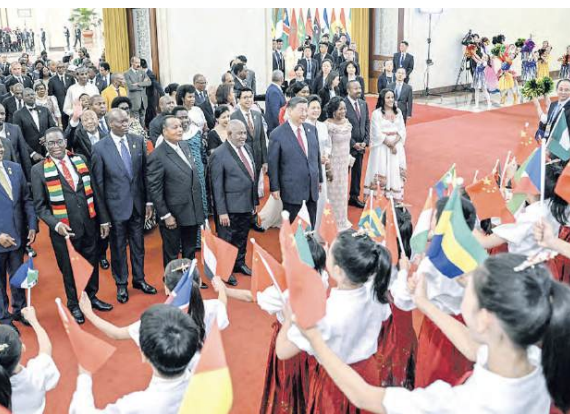
Confucius Institutes play a crucial
role in President Xi Jinping’s vision
for people-to-people exchanges, as
outlined during the ninth Forum on
China-Africa Cooperation in September 2023. These institutes also
offer exchange programmes and
fellowships that enhance Sino-African ties at a strategic level.
Beyond
language, they serve as platforms for
cultural exchange, offering insights
into Chinese traditions, philosophies
and societal values.
Through events, workshops and
study-abroad programmes, participants gain exposure to Chinese
history, cuisine, music and martial
arts, fostering a deeper appreciation
of China’s rich heritage.
At the same time, these exchanges
provide opportunities for China to
engage with African cultures, facilitating a reciprocal exchange of
ideas.
Cultural diplomacy dismantles stereotypes and misconceptions,
creating an environment of mutual respect and understanding.
The continued support Africa receives through Confucius Institutes
aligns with President Xi’s announcement in 2023 during the China-Africa Leaders’ Dialogue in Johannesburg, South Africa.
His talent
development plan includes training 500 principals and high-calibre
teachers from vocational colleges
annually, educating 10,000 technical
personnel in both Chinese language
and vocational skills, and inviting
20,000 African government officials
and technicians to workshops and
seminars.
This initiative underscores
China’s long-term commitment to
strengthening human capital development in Africa.
Education has been a cornerstone
of China’s engagement strategy in
Africa, and the institutes play a pivotal role in academic partnerships
between African and Chinese institutions.
They also offer scholarships
and exchange programmes, enabling
African students to study in China
and gain firsthand exposure to its
educational system, technological
advancements and business practices.
Many of these students return home as advocates for stronger Sino-African ties, taking on influential
roles in government, business, and
international organisations.
In Kenya, Confucius Institutes
have contributed significantly to the
Technical and Vocational Education
and Training sector.
Through these
partnerships, Kenya has made notable strides in equipping technical
institutions, reskilling tutors and
improving the quality of vocational
training to match current job market
demands.
Early last year, China allocated Sh13 billion to support TVET
institutions, reaffirming Beijing’s
commitment to advancing technical
education in the country.
Ultimately, the success of the
institutes will depend not just on
China’s intentions, but also on how
African nations choose to engage
with them.
If these institutes are
embraced as platforms for genuine
educational and cultural exchange,
they can serve as catalysts for education, diplomacy and economic cooperation by investing both in cultural
understanding and infrastructure,
and in but also in fostering a longterm, sustainable, and truly global
partnership.
The writer Journalist and
communications
consultant




![[PHOTOS] The new Ngong –Naivasha Road viaduct](https://cdn.radioafrica.digital/image/2026/06/64d4f771-4432-4aee-ba3c-2f304c4436ec.jpg)










![[PHOTOS] 'Mr Speaker Sir' Gen Z protester in court](https://cdn.radioafrica.digital/image/2026/06/b3e62d8e-25c3-4780-90f9-4eb48b1ce8a7.jpg)