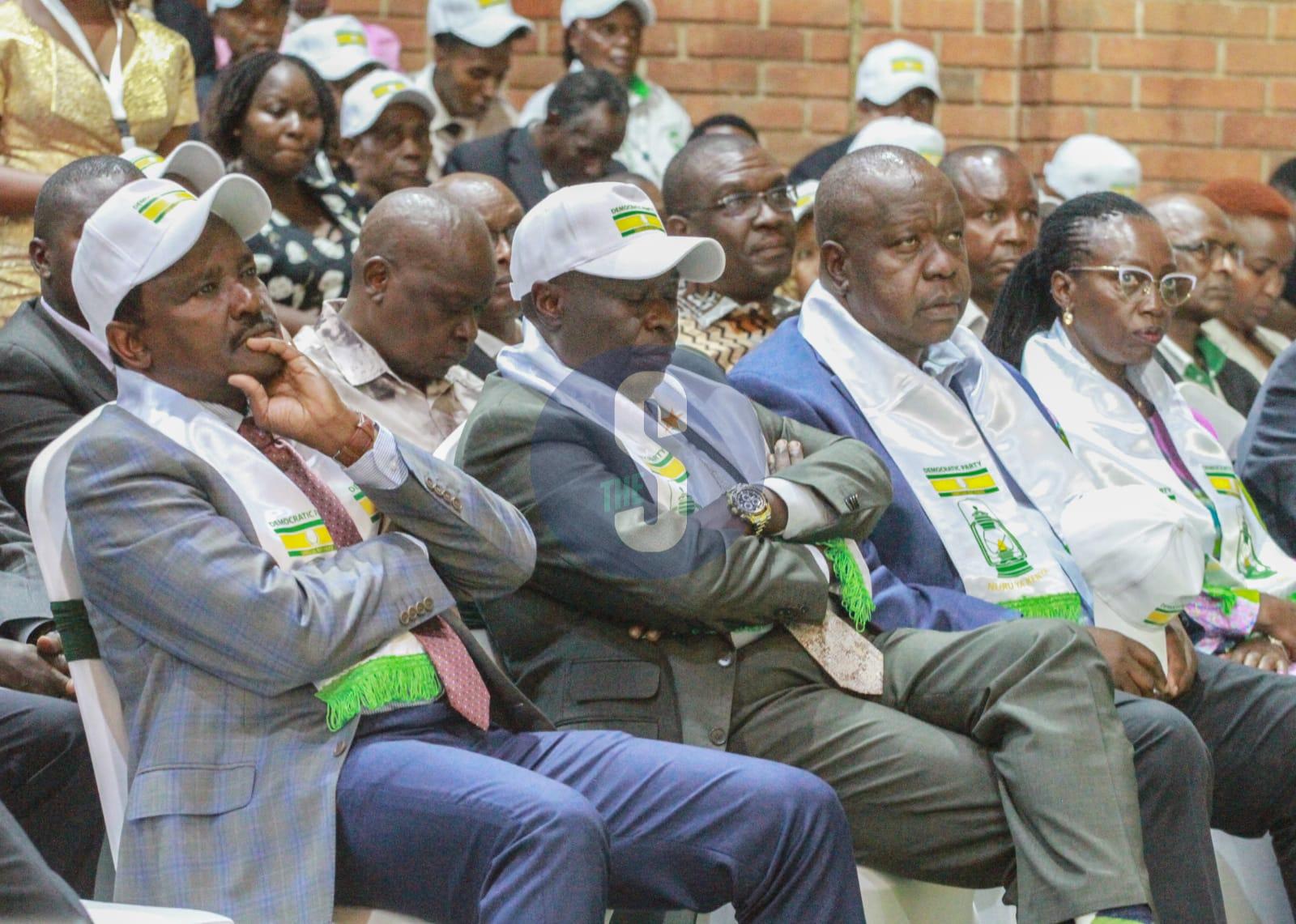
As they walked out of the chambers, they wore forlorn faces and cursed that the effort 149 of them put to initiate the process of removing the CS may have as well gone down the drain.
As it would emerge later, the committee had a majority – six, members who had voted to deny the removal motion a lease of life in the House that morning when Azimio and Kenya Kwanza MPs put a rare show of unity to kick out Linturi.
And tied to a corner, they grudgingly accepted the team after Wetang’ula warned that their plea for more time to review the nominees would have spelled a death knell to the motion.
Eyes are now cast on the team led by Marsabit Woman MP Naomi Waqo with many MPs clinging to the old saying that "it isn’t over until the fat lady sings".
If removed, the CS would join the shortlist of state and public officers who have faced the guillotine.
The central argument is that for the many occasions MPs have attempted to remove ministers, the processes have never yielded much outcome.
Only twice has Parliament – the Senate, successfully removed state officers from office, being the case of Mike Sonko who was kicked out as Nairobi governor and his Kiambu counterpart Ferdinand Waititu.
Kisii Deputy Governor Robert Monda has challenged his recent impeachment in court. Senators voted to remove him from office about a month ago.
Respective members of county assemblies have impeached a total of 11 governors and four deputies but only two have bitten the dust.
Among those saved by senators include Meru’s Kawira Mwangaza, Siaya Deputy Governor William Oduol, former Embu Governor Martin Wambora and Kirinyaga Governor Anne Waiguru – who also faced ouster in a motion that was sponsored by Linturi.
Former Makueni Governor Kivutha Kibwana and Mohamed Abdi of Wajir were also kicked out of office by MCAs but survived the impeachment bids.
President William Ruto was also accosted by impeachment threats – then as deputy president, at the height of his falling out with his then boss Uhuru Kenyatta.
National Assembly has a short string of successful censures, the most notable being July 2008 when MPs voted to remove then Finance Minister Amos Kimunya in a motion sponsored by Kakamega Senator Boni Khalwale.
The minister would then step aside to allow for investigations into the controversial sale of Grand Regency hotel – now Laico Regency, to Libyan oligarchs.
In May 1989, MPs voted to remove then Vice President Josphat Karanja in a process which then Speaker Moses Keino defended amid a barrage of attacks by lawyers.
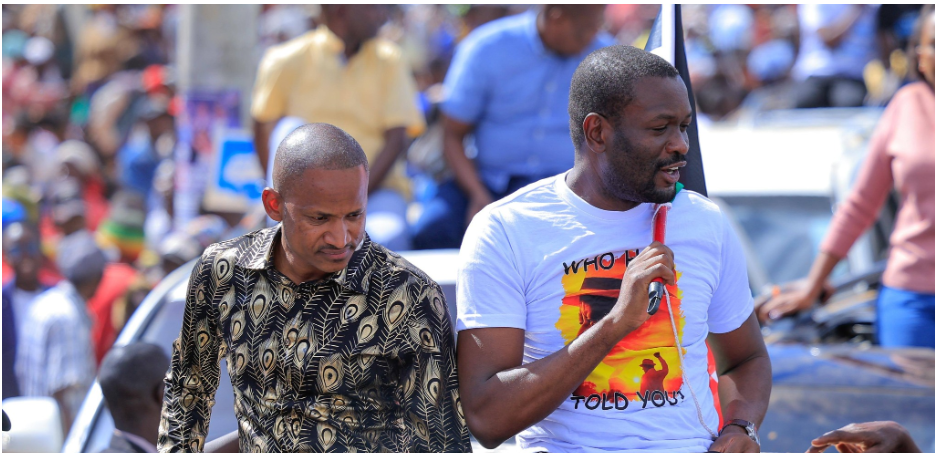
Censure motions against Jacob Kaimenyi – then Education minister, current Sports minister Ababu Namwamba – then as JLAC chairperson and Amos Wako – early removal as Attorney General, never materialised.
Justin Muturi, then as National Assembly Speaker, also in 2015 approved a censure motion against him sponsored by then Kibwezi West MP Patrick Musimba.
From the numerous incidents that have flopped, the question is whether MPs have employed impeachment effectively as a tool for accountability.
Lawyer John Khaminwa, while representing Bumula MP Wamboka Wanami in the Linturi impeachment, said the process is the only way to root out corruption.
“This country is under state capture because of corruption and it can only be minimised if Parliament rises to the occasion,” he said.
For the renowned lawyer, state officers found in such circumstances should "do the honourable thing and resign".
“If you listen to mama mbogas, they feel like Linturi should have resigned a long time ago as a matter of principle,” he said.
Nyando MP Jared Okello in an interview with the Star said resignations would save not only time, but also resources.
“The individuals can save Parliament a lot of time and money by resigning. The appointing authority is also supposed to gauge the scenarios and crack the whip,” he said.
“This is not to say that Parliament is not assuring but there is always a way out before we get to the daunting political process that characterises impeachments.”
For constitutional experts, the principle of impeachment is well founded in the country’s supreme law and with checks and balances against disuse.
Lawyer Bobby Mkangi holds that impeachment remains an effective tool for political accountability, and thus guarantees justice for political ends.
“It is a good tool to hold public officers accountable politically before the other processes kick in. Surviving a censure doesn’t mean the other processes will not be applied," he said.
For Mkangi, the question is not about how effective impeachment as a tool for accountability but whether it has been applied effectively in the country.
“It is effective, I would say so, because we have dismissed state officers for alleged crimes,” he said.
On the question of whether the process can be used as a tool to settle political scores, Mkangi, who was among the team of experts that negotiated the constitution, said there are sufficient checks.
“When we were looking at the aspect and whether it would be politically abused, we weighed all that and that is why senators ratify decisions of county assemblies that vote to impeach a governor, deputy governor, or senior executives at the county level," he said.
For the processes that end at the National Assembly, the affected persons have a leeway for redress at the courts – up to the Supreme Court.
Political observers hold that the culture of the country’s public service is also to blame for the unsuccessful impeachment attempts, as leaders tend to evade taking responsibility for errors and infractions committed in their dockets.
“Ours is not a normal society, so it will only work if the President wants it to be so. For it to work it requires the President’s goodwill,” Prof Gitile Naituli, former NCIC commissioner, said.
The political commentator said in a case where a President is in control of a House, it is not a walk in the park.
For Khalwale, impeachment as a tool for accountability, oversight and governance in general is very effective citing the case of Kimunya, Wambora, Sonko and Waititu.
“What is in question is that having worked, have people learned? Impeachment is supposed to serve as a deterrent so that subsequent leaders don’t dare commit the same mistake. That is subject to debate,” he said.
He added that for great success, “whoever is moving it must approach Parliament with facts.”
“They need to do thorough research to come up with a watertight case. MPs are not fools. There is also no room for being emotional as we saw in the reaction of the Leader of Majority when the vote was carried,” Khalwale said.
“People wanted to follow facts. It is a question of presenting watertight case with factual issues, politics aside and then the House will decide. And I am sure even on the ongoing case of Linturi, the committee of 11 will uphold the charges.”