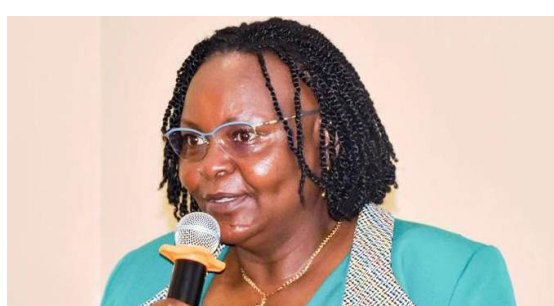
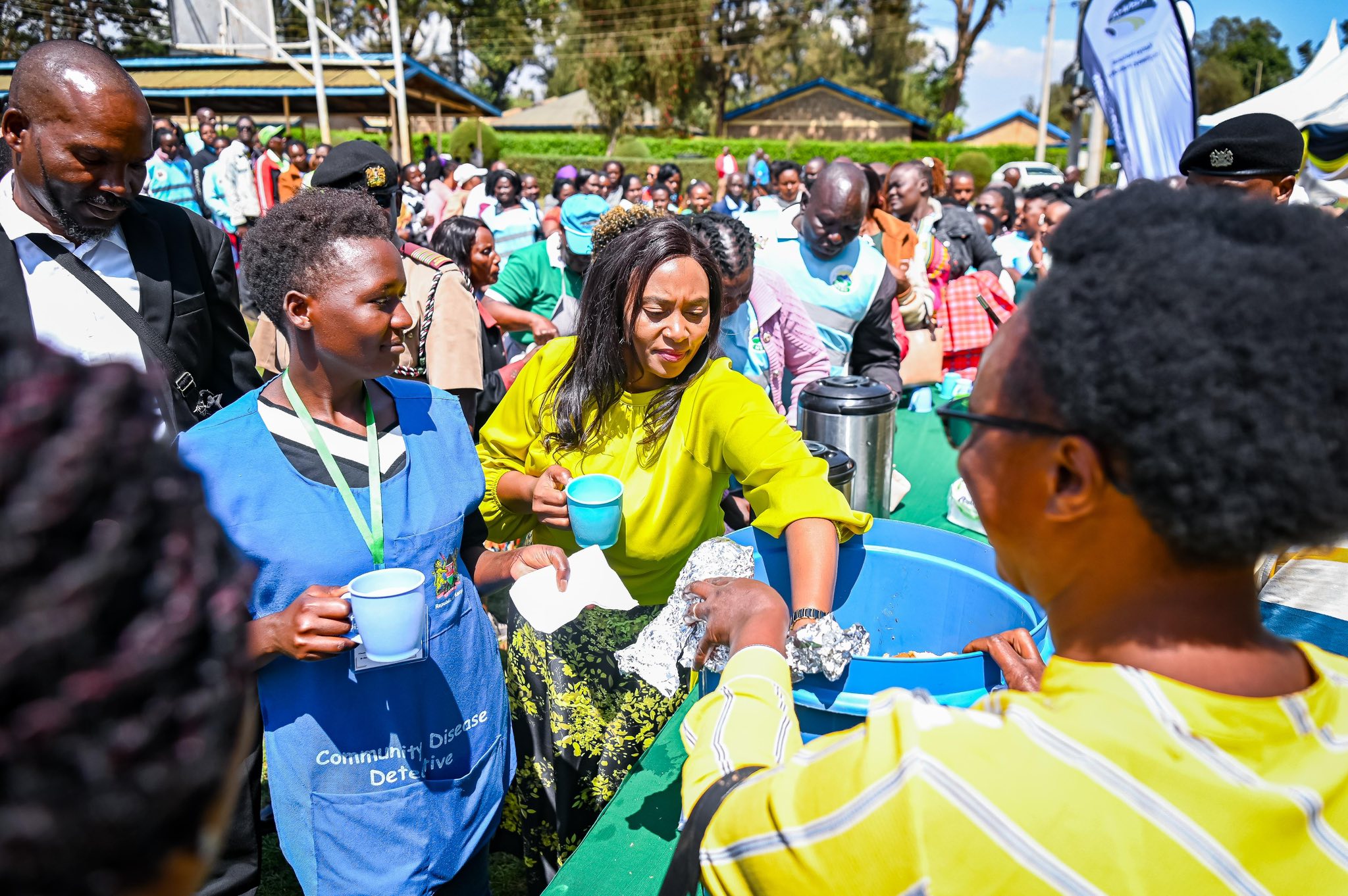
 Principal Secretary for Public Health and Professional Standards Mary Muthoni, in September, when she led the Jamii Imara Mashinani initiative in Meru County, a citizen-engagement platform designed to bring government services closer to the people.
Public Health is lived every day in households, villages, marketplaces, neighbourhoods where people raise families, earn their livelihoods and confront the realities that shape their being.
Kenya’s Jamii Imara Mashinani initiative recognises this truth by bringing the government closer to communities and ensuring that citizens are not distant observers of development but active participants in guiding it.
While the platform spans social, civic and economic priorities, its most tangible impact is emerging in public health where community voices and government action meet.
At its essence, Jamii Imara Mashinani is a people-first model. It creates a structured space for communities to express their needs, surface challenges and shape how public services reach them.
It also strengthens grassroots systems that already support everyday life in Kenya such as: NGAOs, Community Health Promoters, Huduma Centres, NYOTA youth groups, Local elders, women’s groups and faith networks. By aligning these structures with national health priorities, the initiative ensures that development is not only delivered but felt meaningfully at the grassroots.
This integration is already influencing public health outcomes. For example, CHPs, who understand the realities of the households they serve, bring forward genuine health concerns, from missed antenatal visits to gaps in immunisation or medicine availability.
These insights improve the accuracy of local health planning and guide targeted interventions such as vaccination drives, screening campaigns or community-based follow-up for chronic illnesses. In many areas, this coordination has helped identify pregnant women earlier, ensured timely antenatal care and created stronger support networks for mothers before and after childbirth.
The initiative is especially valuable for adolescents and young people. It is empowering them to resist drug and substance abuse through community awareness efforts, positive engagement and supportive local networks. This work is complemented by initiatives such as Epuka Uchafu, which promote cleaner, healthier environments and strengthen community wellbeing.
These local efforts mirror global and regional successes. Malawi’s Community-Directed Treatment Programme for river blindness demonstrated how local volunteers can transform disease control by taking ownership of distribution and health education.
Rwanda’s Community Health Worker system continues to improve maternal and child health by anchoring follow-up and referrals within communities. In Kenya, counties like Siaya have shown that when CHPs conduct regular household visits - tracking pregnances, ensuring immunisation and monitoring health risks - local indicators improve measurably.
Jamii Imara Mashinani builds on these lessons but introduces something new: a national framework that elevates local insights to government decision - making, enduring faster response, better alignment and stronger accountability. It is a direct line between community experiences and public service delivery.
As Kenya strengthens primary healthcare and expands reforms under the Social Health Authority, this model becomes essential. Public health systems work best when communities are empowered to lead simple but essential action, seeking early care, adopting preventive practices and holding services accountable for quality and access. Jamii Imara Mashinani helps to embed these habits in everyday life while ensuring that the government remains visible, responsive and accessible.
What the initiative ultimately demonstrates is that sustainable public health cannot be achieved by institutions alone. It requires a partnership where communities understand their role, contribute their knowledge and participate in sharing solutions.
When a mother receives timely advice from a Community Health Promoters, when a teenager learns about reproductive health from a peer mentor or when a family resolves a service issue through a Huduma Centre these are the building blocks of national health resilience.
Jamii Imara Mashinani reminds us that public health begins at home and that lasting progress depends on citizens who feel heard, supported and empowered.
By anchoring development in the lived realities of communities, the initiative shows what can be achieved when the government walks alongside the people it serves. It turns policy into practice and practice into progress. One household, one community and one conversation at a time.
Ms Mary Muthoni Muriuki is the Principal Secretary, State Department for Public Health and Professional Standards.
![[PHOTOS] The new Ngong –Naivasha Road viaduct](https://cdn.radioafrica.digital/image/2026/06/64d4f771-4432-4aee-ba3c-2f304c4436ec.jpg)