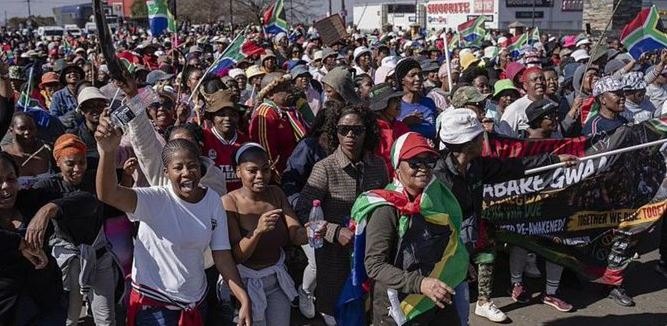
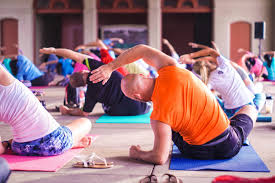
 People doing exercise in an open space.
The World Health Organization has advised that regular physical
activity is a protective factor for the prevention and treatment of diseases.
According to a Global Action Plan on physical activity
2018–2030: more active people for a healthier world report by the WHO, physical
activity will help prevent and treat noncommunicable diseases (NCDs) such as
heart disease, stroke, diabetes and breast and colon cancer. It also helps to
prevent hypertension, overweight and obesity and can improve mental health,
quality of life and well-being.
The WHO defined physical activity as any bodily movement produced by skeletal muscle that requires energy expenditure.
It can be undertaken
in many different ways, like walking, cycling, sports and active forms of
recreation such as dance, yoga and tai chi. Physical activity can also be
undertaken as part of work by lifting, carrying or other active tasks, and as
part of paid or unpaid domestic tasks around the home like cleaning, carrying
and care duties.
“All forms of physical activity can provide health benefits
if undertaken regularly and of sufficient duration and intensity,” the report
reads.
The WHO reports that globally, 23 per cent of adults and 81 per cent of
adolescents (aged 11–17 years) do not meet the WHO global recommendations on
physical activity for health. The report further says that Girls, women, older
adults, people of low socioeconomic position, people with disabilities and
chronic diseases, marginalized populations, indigenous people and the inhabitants
of rural communities often have less access to safe, accessible, affordable and
appropriate spaces and places in which to be physically active.
To realise the global action plan, the WHO calls for
addressing the disparities in participation in physical activities.
The report outlines a worrying high cost of physical
inactivity in healthcare. Globally, physical inactivity is estimated to cost $
54 billion in direct health care, of which 57% is incurred by the public sector
and an additional $ 14 billion is attributable to lost productivity. Estimates
from both high-income, as well as low- and middle-income countries (LMICs)
indicate that between 1–3% of national health care expenditures are attributable
to physical inactivity.
WHO notes that failure to recognise and invest in physical activity
as a priority within NCD prevention and treatment represents a missed
opportunity. Ongoing inaction will see the costs of physical inactivity
continue to rise, contributing to further negative impact on health systems, the
environment, economic development, community well-being and quality of life for
all.
The WHO reports that
physical activity has a myriad of health, social and economic benefits to the
people. “Across its many different forms, physical activity has multiplicative
health, social and economic benefits,” the report says.
The report says that walking and cycling are key means of transportation,
enabling people to engage in regular physical activity daily, but
their role and popularity is declining in many countries. The greatest changes
are occurring in LMICs where, for example, large numbers of people are switching
from walking and cycling to personal motorised transport.
It advises countries to prioritise policies that improve road safety, promote urban designs that prioritise access by pedestrians, cyclists and users of public transport to destinations and services, particularly educational, public open and green and “blue” spaces.
It notes that sports and leisure facilities can reduce use of personal motorised transportation, carbon emissions, traffic congestion, as well as health-care costs, whilst also boosting the micro-economies in local neighbourhoods and improving health, community well-being and quality of life.
![[PHOTOS] The new Ngong –Naivasha Road viaduct](https://cdn.radioafrica.digital/image/2026/06/64d4f771-4432-4aee-ba3c-2f304c4436ec.jpg)