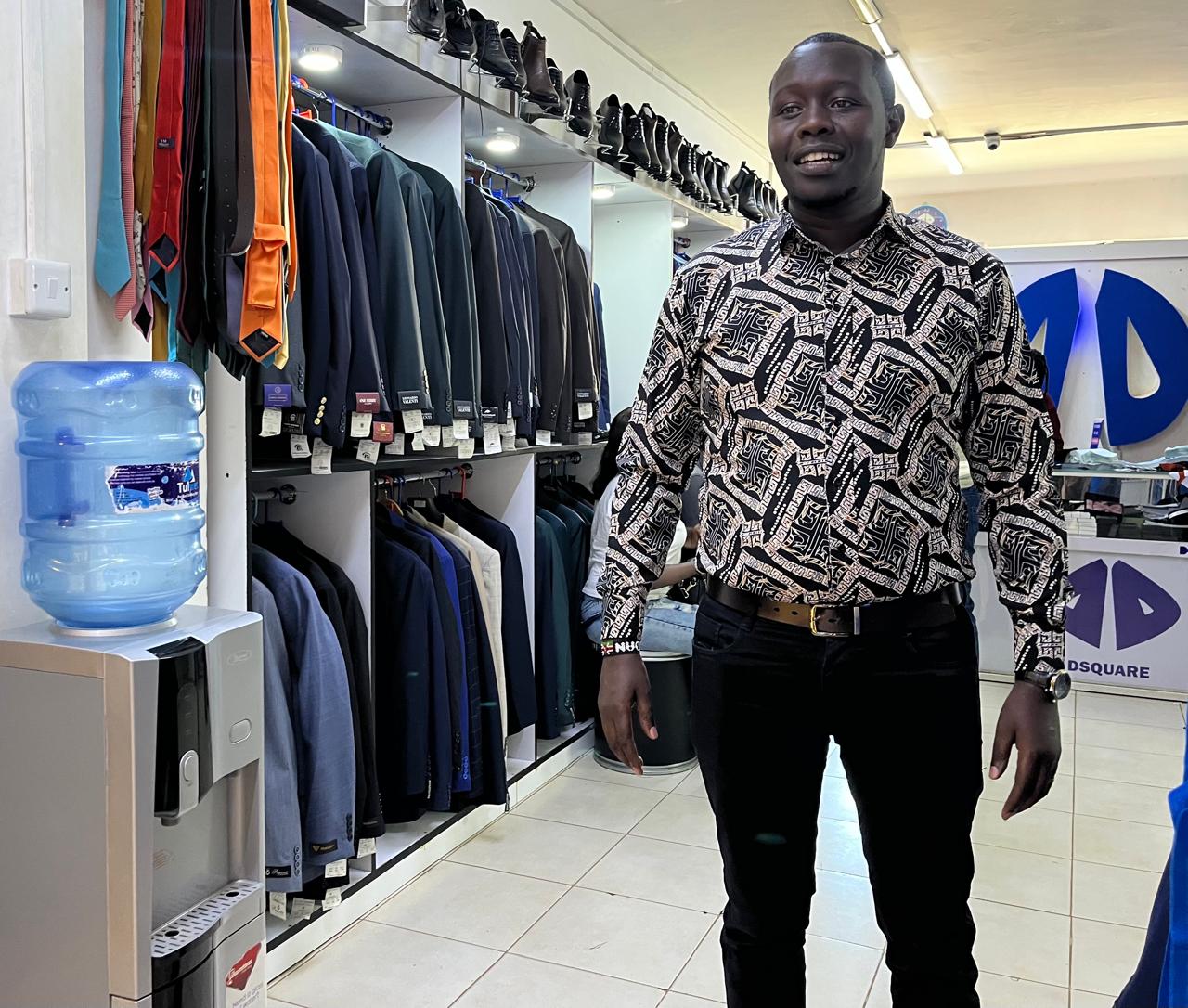
Dan Ruto, 32, has built a presence in Eldoret’s fashion and textile sector after starting out selling second-hand clothes from a small shop.
He now runs D-Square Official Wear Limited, a company that makes suits and uniforms for clients in Kenya and abroad.
Ruto began the business with a Sh300,000 loan and later left his accounting job at a hospital in Eldoret to focus on clothing production.
Over time, he expanded into manufacturing uniforms for schools, colleges, and other institutions, alongside producing designer suits.
“Our driving focus has been high-quality products because we know Kenyans like good things, and that is the same for our international customers,” Ruto says.
In 2023, he established D-Square Training College, which is now in its third year.
The institution offers courses in fashion and design, tailoring, interior design, cosmetology, and planning and management.
According to Ruto, many students gain practical experience while studying, with some working within his company and others starting their own ventures.
The college also places students on attachments with other institutions to help them gain industry exposure.
For several trainees, the programme serves as a pathway into the fashion and design sector, with some already producing their own items or continuing to build skills through attachments.
“We want to give young people the tools to succeed,” Ruto says, describing the college as a platform for developing skills and confidence.
The institution’s first graduation ceremony will take place at Central Primary School grounds in Eldoret City, where Tinderet MP Julius Melly, chair of the Parliamentary Education Committee, is expected to attend.
Ruto views the event as a milestone for both the college and the students who have completed their courses.
Kenya’s textile and apparel industry is one of the country’s most active manufacturing subsectors, supporting thousands of workers in both formal and informal settings.
Production ranges from large apparel factories to mid-sized uniform makers, community workshops and small tailoring businesses in markets and estates.
Demand for locally made garments—especially uniforms, suits, and customised fashion has been rising steadily, driven by institutions seeking tailored products and consumers looking for personalised designs.
At the same time, the second-hand clothing (mitumba) market remains a significant part of the country’s fashion economy and is often a starting point for many small entrepreneurs, reflecting the path Ruto took at the beginning of his career.
Training remains central to the sector’s growth.