

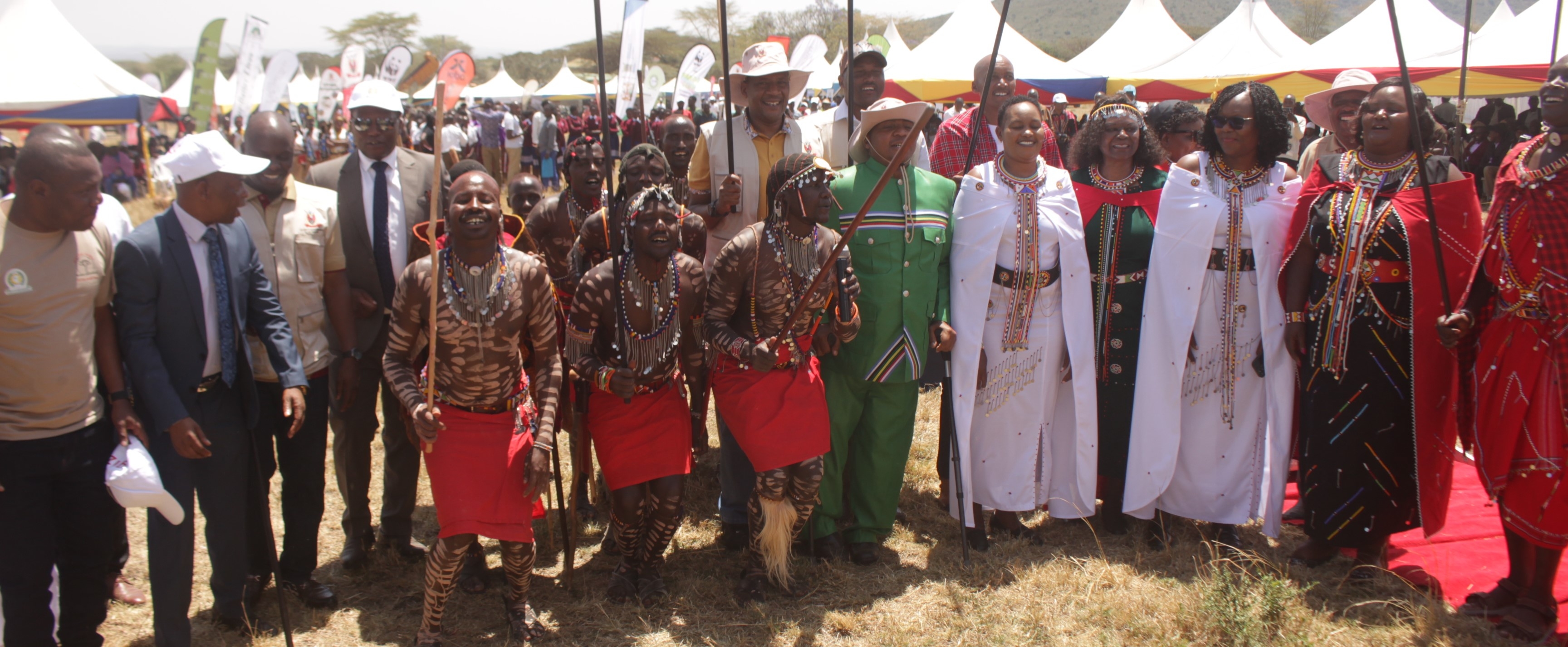
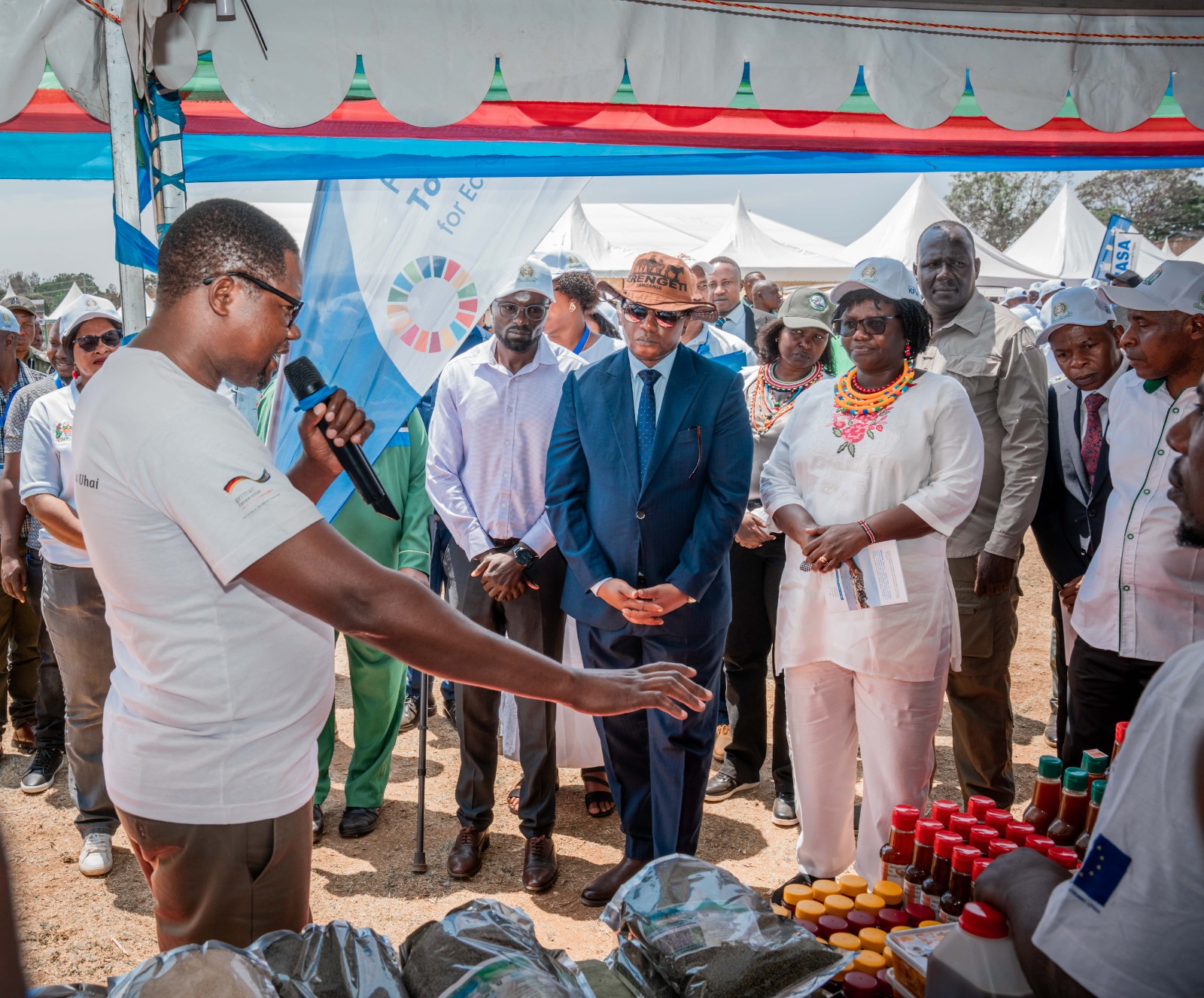
 An exhibitor explains a point to Water CS Eric Mugaa (L), Mara Region RC Evans Mtambi and Kenya's EAC Cabinet Secretary Beatrice Askul duting Mara Day celebrations.
Kenya is
committed to implementing the 2015 Memorandum of Understanding on the protection
and conservation of the Mara River Basin, which is faced with significant
challenges from human activities, Water Cabinet Secretary Eric Mugaa has said.
Some of the efforts include implementing the Mau Forest Restoration Programme.
The CS spoke at
Mwenge Grounds in Butiama District, Tanzania, during celebrations to mark the
14th Mara Day. He led the Kenyan delegation during the celebrations.
“These strategies
include reclaiming encroached land through the removal of illegal settlements,
reforestation with indigenous trees, and the protection of wetlands and
riparian zones,” said the CS.
The CS
further noted that in the Maasai Mau, over 21,600 hectares of forest land have
been reclaimed through two phases of restoration.
“Large-scale
initiatives such as the 15-billion Tree Programme, alongside community-led
actions, have resulted in the planting of more than 26 million indigenous
seedlings, supported by nurseries with the capacity to produce 4.8 million
seedlings annually,” remarked the CS.
The CS was accompanied by his East African Community counterpart, Beatrice Askul, and Lake Victoria Basin Commission Executive (LVBC) Secretary Masinde Bwire.
Tanzania’s Mara
Regional Commissioner, Evans Mtambi, was the chief guest. LVBC coordinates the
celebrations.
Bwire called
on the two partner states to implement recommendations of a scientific
conference that was held at Mwalimu Julius Nyerere University of Science and
Technology.
CS
Mugaa noted that reclaimed land is regenerating, forest blocks are showing
signs of recovery, and in Bomet County, rising water levels in the Nyangores
River have been linked directly to restoration of the Mau.
He further
noted that Kenya has also invested in sewerage systems to reduce wastewater
pollution in the Mara catchment.
The Narok
Town Sewerage Project introduced a modern sewer network and a treatment plant
with a capacity of over 3,500 cubic metres per day, helping to prevent raw
sewage from entering the Enkare Narok River.
“In Bomet, the existing sewerage system is protecting the Nyangores River. A larger system is being planned to expand coverage and improve treatment capacity within the town. These efforts are made to reduce the pollution of the river,” he added.
Askul
noted that despite good progress being made to address tree felling,
encroachment by human settlement, unsustainable agriculture practices,
abstraction of water and pollution, the need for sustained focus to attain a
balance between human development and environmental sustainability remains.
“Despite these successes, we are cognizant of the fact that as a transboundary ecosystem, the Mara-Serengeti ecosystem and Lake Victoria Basin in general have to constantly realign itself with the dynamism of developmental and environmental challenges that require the concerted efforts of all stakeholders,” she added.