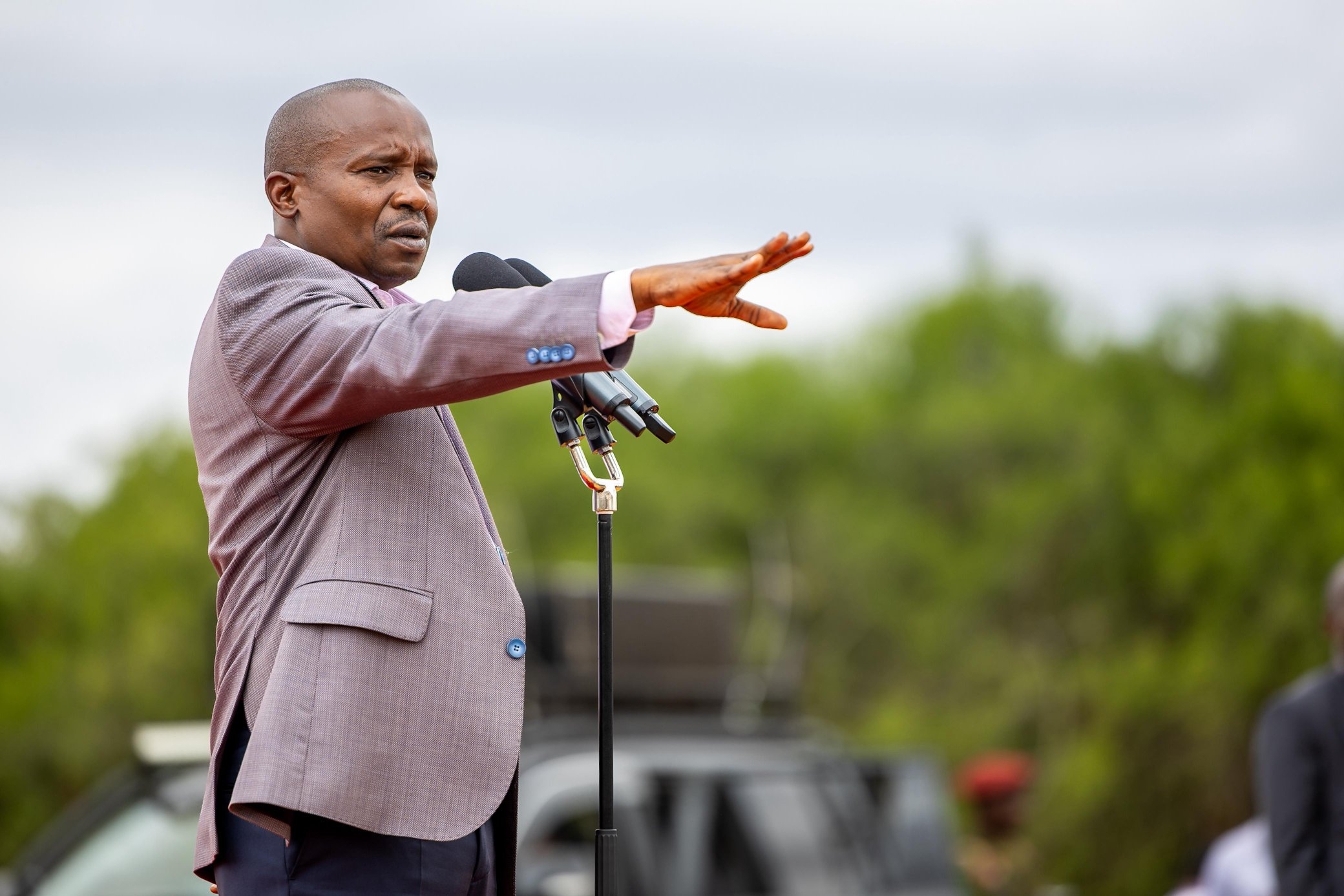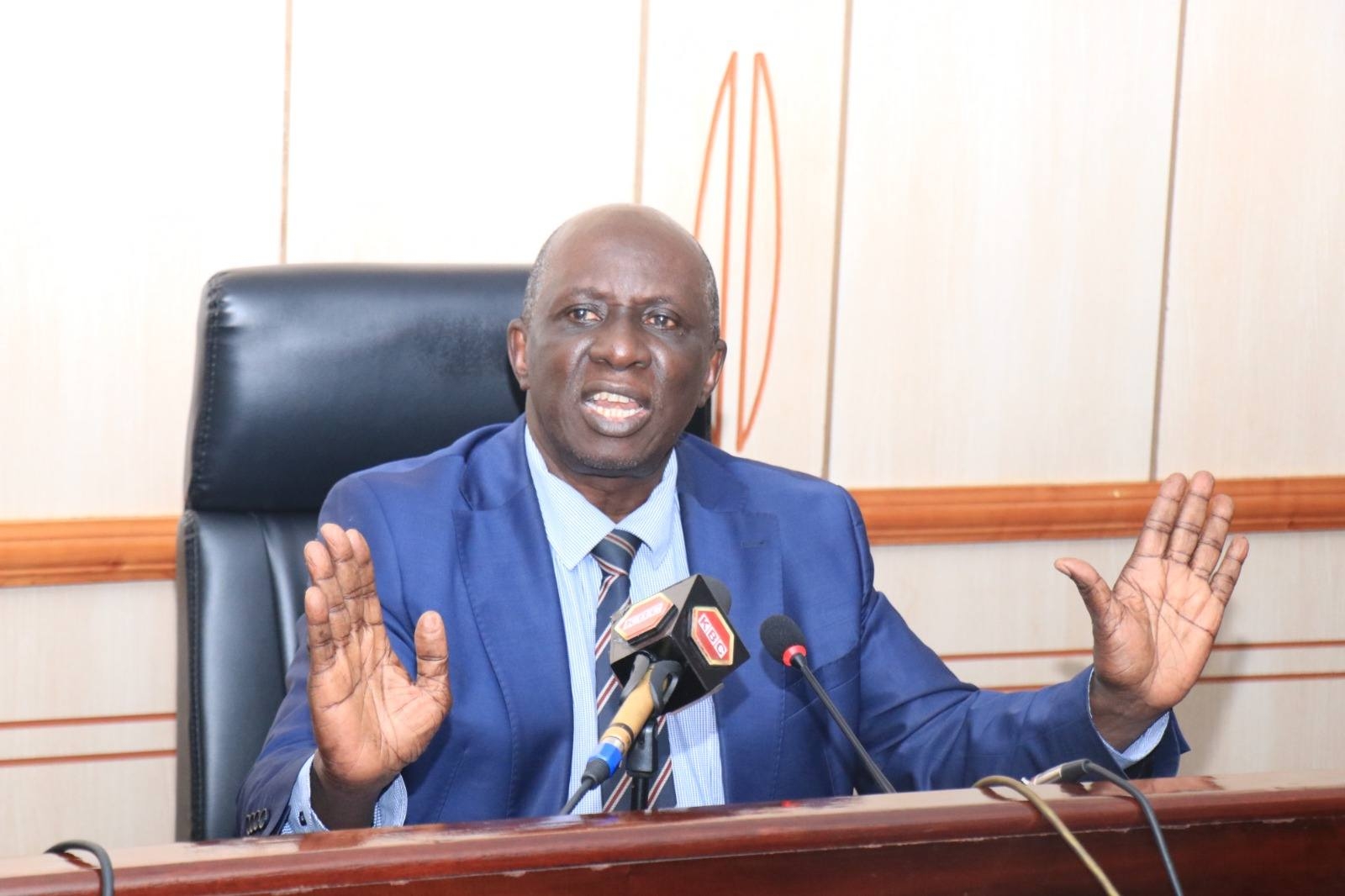


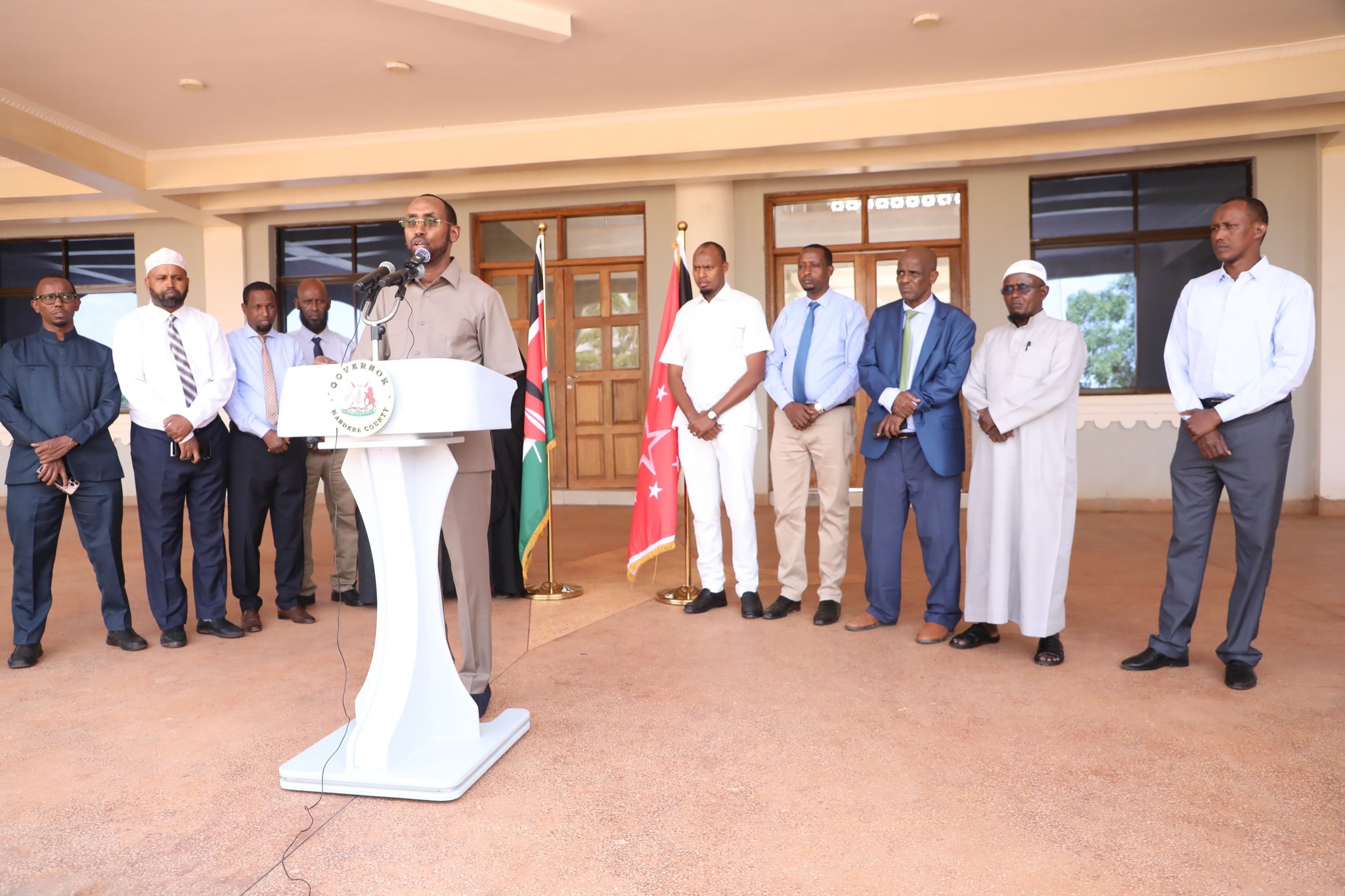
 Mandera Governor Mohamed Khalif speaking to the press
outside his office. He is flanked by senior county and national officials./STEPHEN ASTARIKO
Mandera Governor Mohamed Khalif speaking to the press
outside his office. He is flanked by senior county and national officials./STEPHEN ASTARIKO 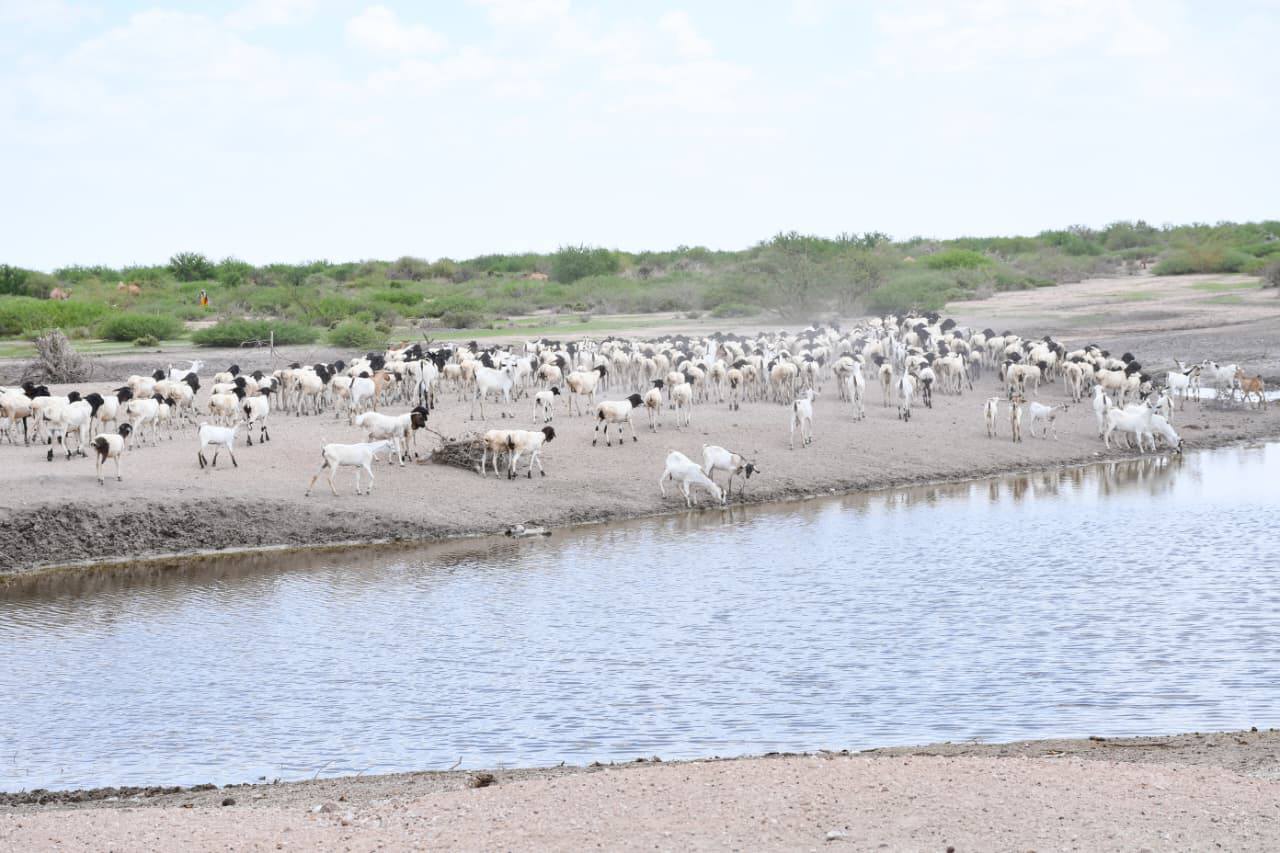 Goats and sheeps drinking water from one of the few
remaining water pans in Mandera North./STEPHEN ASTARIKO
Goats and sheeps drinking water from one of the few
remaining water pans in Mandera North./STEPHEN ASTARIKO 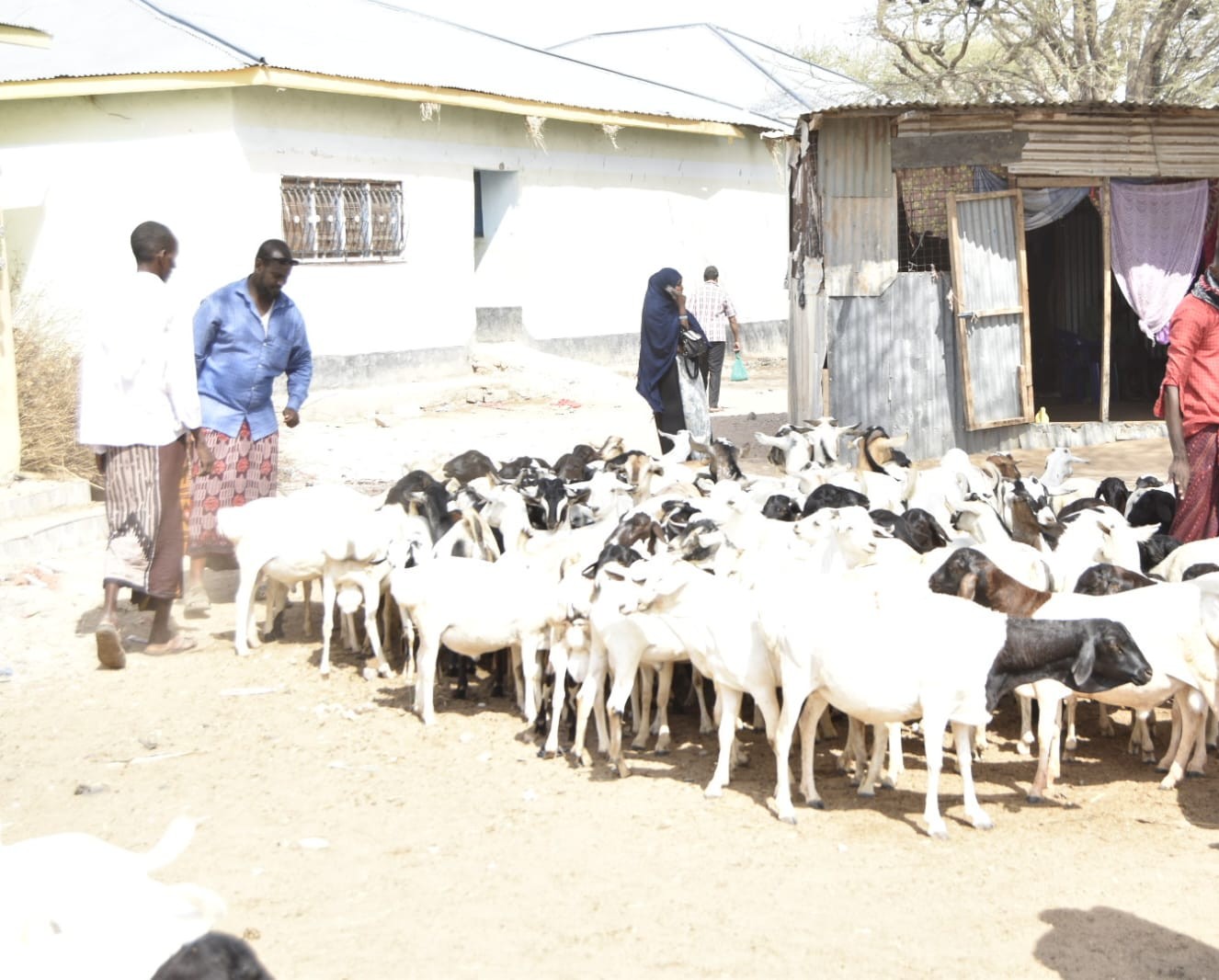 Goats and sheeps at Rhamu market on Monday. Mandera Governor
Mohamed Khalif has issued a special appeal for assistance./STEPHEN ASTARIKO
Goats and sheeps at Rhamu market on Monday. Mandera Governor
Mohamed Khalif has issued a special appeal for assistance./STEPHEN ASTARIKO Mandera
Governor Mohamed Khalif has issued a special appeal to the National Government,
development partners, humanitarian agencies, NGOs, the private sector and local
leaders to scale up their support for emergency interventions as the county
faces one of the worst droughts in recent years.
The
cumulative impact has left water sources depleted, livelihoods disrupted, and
families struggling to cope.
Speaking
to the press outside his office, Governor Khalif said the prolonged drought has
exerted immense pressure on households, livestock and essential social services
across all twelve sub-counties, warning that the county’s available resources
are no longer sufficient to meet the escalating needs.
The recent
assessments, carried out by the Department of Water Services in collaboration
with the NDMA, reveal a deeply concerning drought situation that is currently
sliding towards an emergency.
The report
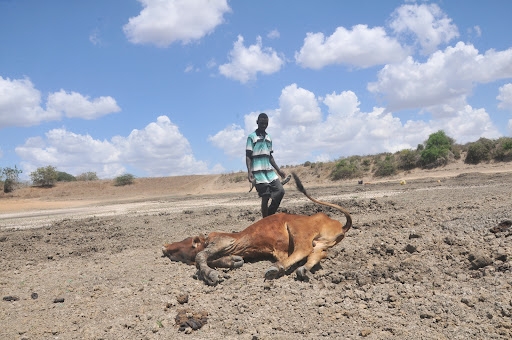
states that more than 95% of all surface water sources—including underground
water tanks, water pans, and traditional catchments—have dried up. Communities
now rely almost entirely on boreholes and emergency water trucking.
Governor
Khalif said the situation has taken a strain on boreholes disclosing that out
of the 232 boreholes in the County, only
225 remain functional, while 9 new boreholes require equipping.
He disclosed
that many of the active boreholes urgently need rehabilitation due to pump
failures, depleted motors, and structural deterioration.
He noted
that the county Rapid Response Maintenance Teams remain on standby, having
already responded to 18 emergency breakdowns in October and November.
Currently,
120,000 residents are receiving trucked water daily, and this figure is
projected to increase to more than 250,000 people by January 2026 if no rains
are received.
The
governor further noted that his administration has rolled out a number of
intervention through the Disaster Risk
Management Technical Working Group, which he noted was coordinating response
actions across all sectors.
In our
education sector, he noted his administration will disburse Sh437,678,000
during this financial year to support 13,804 students in secondary schools,
6,422 students in senior schools, and 8,517 students in tertiary institutions.
This
intervention, he noted are designed not only to keep learners in school but
also to relieve drought-stricken families of the financial burden of educating
their children.
Livestock
interventions include veterinary
services, disease surveillance and treatment.
He however, said despite all the county’s efforts, the scale of the crisis demands
resources beyond what the county alone can provide.
According
to the governor, the County Water Department requires Sh1.07 billion to
sustain emergency water interventions between December 2025 and March 2026.
Overall,
the county’s multi-sectoral drought response plan needs Sh4.7 billion to
adequately address urgent needs in water, food security, health, nutrition,
education and livelihoods.
The
governor used the opportunity to urge residents to remain calm and united
during this difficult period.
“Please
cooperate with our field teams, report emerging needs promptly, and support one
another during this difficult time. My administration remains fully committed
to protecting lives, safeguarding livelihoods, and strengthening the resilience
of our communities,” he said.
He emphasized that with collective action, Mandera County can weather the crisis and begin rebuilding stronger and more resilient communities.