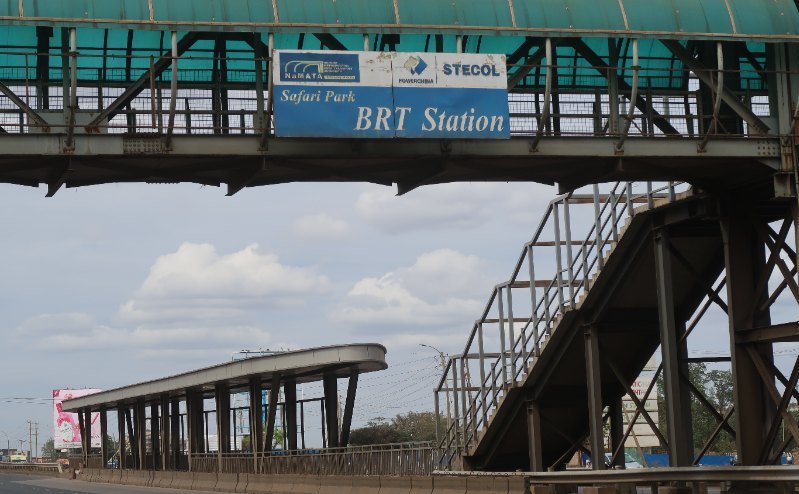
 A stalled BRT station along Thika Road at Safari Park footbridge on August 21, 2023. The project was stopped due to lack of funding
For millions of commuters in Nairobi, spending hours stuck in traffic has become part of daily life.
From the early morning gridlock along Thika Road to the evening snarl-ups stretching out of the central business district, congestion continues to drain time, productivity and patience.
But a major shift in how the city moves people could be on the horizon with Treasury Cabinet Secretary John Mbadi's budget that allocated Sh220.4 billion for the development of roads in 2026/27.
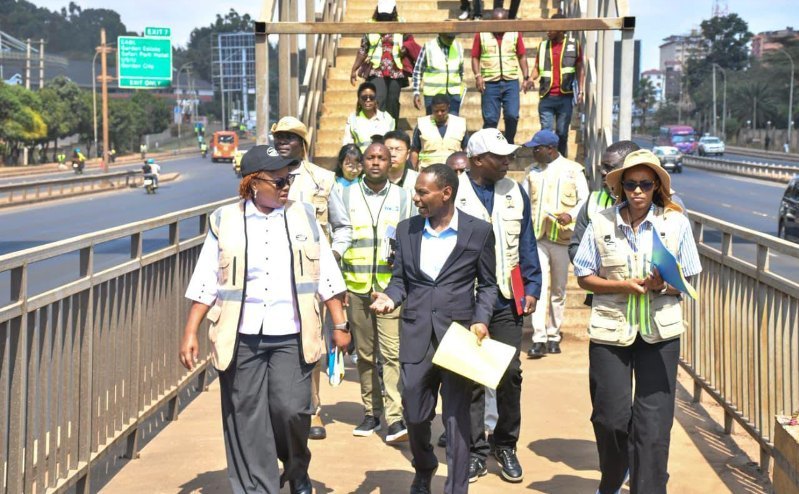 Senior officials from the Kenya National Highways Authority (KeNHA) and the Nairobi Metropolitan Area Transport Authority (NaMATA) Director General, Eng. Francis Gitau, conduct an inspection of the Bus Rapid Transit (BRT) Line 2 project. /HANDOUT
The allocation of Sh44.3 billion for the construction of roads and bridges, with an additional Sh58 billion for rehabilitation, Nairobians may soon benefit from the Bus Rapid Transit (BRT) system under Kenya’s Mass Rapid Transit System (MRTS), a project designed to transform the capital’s chaotic public transport network into a more efficient, predictable and sustainable system.
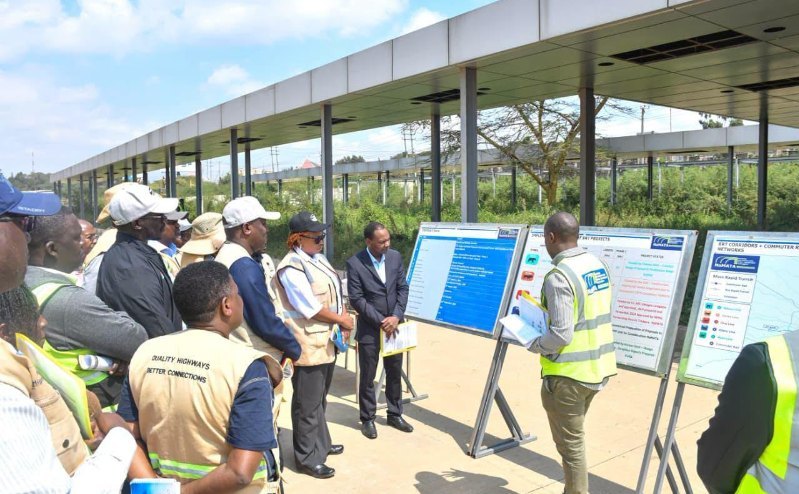 Kenya National Highways Authority officials and the Nairobi Metropolitan Area Transport Authority (NaMATA) Director General Eng. Francis Gitau at a BRT site in Nairobi on June 26,2026/HANDOUT
The MRTS concept was developed following a harmonisation study in 2014, which identified five Bus Rapid Transit corridors and seven rail corridors that could reshape mobility across the Nairobi metropolitan region.
The first phase of the BRT project was launched in 2018 and began implementation in 2020 during the administration of Uhuru Kenyatta.
The project aims to create an integrated network linking major transport corridors along Thika Road, Outer Ring Road and Juja Road with railway stations in Dandora, Makadara, Donholm and Nairobi’s Central Station.
Unlike conventional bus systems, the BRT model will be designed to operate with dedicated bus lanes, smart traffic signals and improved passenger facilities that will support women and persons living with disabilities.
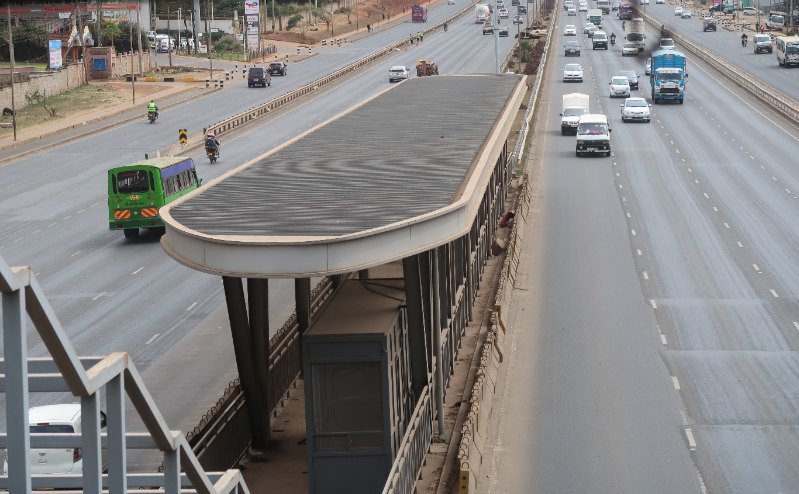 A stalled BRT station along Thika Road at the Safari Park footbridge on August 21, 2023. The project was stopped due to lack of funding/HANDOUT
Authorities say the system will rely heavily on technology to ensure efficient bus deployment and operations.
Smart traffic signals will prioritise buses at intersections, allowing them to move faster and more predictably through the city.
The smart traffic signals will ease the burden of the police traffic officers, whose work will only be limited to enforcing regulation, thus reducing the burden of the officers.
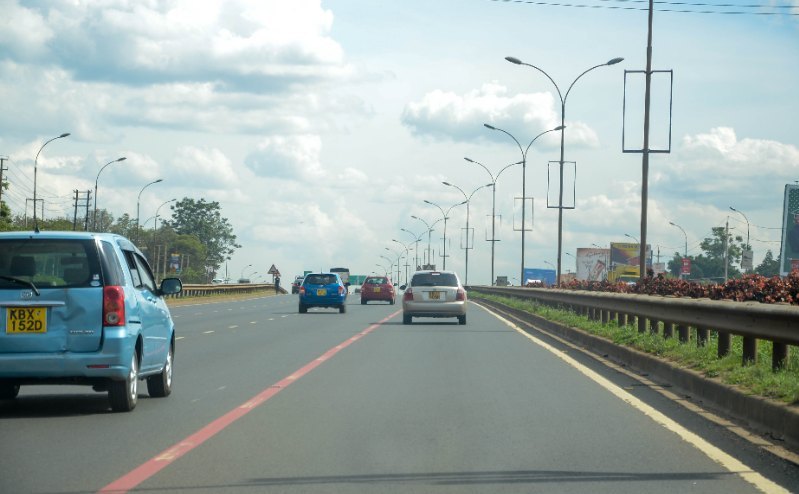 Bus Rapid Transit (BRT) road along Thika Road in Nairobi on May 15, 2019 / DOUGLAS OKIDDY
At bus stops, level boarding platforms will allow passengers to board and exit buses easily, improving accessibility for women, the elderly and persons with disabilities.
For many commuters, these improvements could significantly reduce the time spent navigating Nairobi’s congested roads.
Like Victor Kamau, a fruit hawker from Kasarani, the BRT system may present more than just improved transport, as it could transform his livelihood.
Kamau spends hours navigating traffic as he travels to the central business district and later to Marikiti Market to buy fresh fruits and vegetables for resale. The long delays, he says, often eat into his business hours and increase his daily operating costs. “Sometimes you spend so much time in traffic before even starting business,” he says.
Kamau believes the BRT system could help small traders like him reach markets faster and serve more customers.
Traffic congestion is not only frustrating commuters but also costing the Kenyan economy billions. According to a report by the Institute of Economic Affairs (2019), Nairobi loses an estimated Sh50 million every day due to traffic congestion.
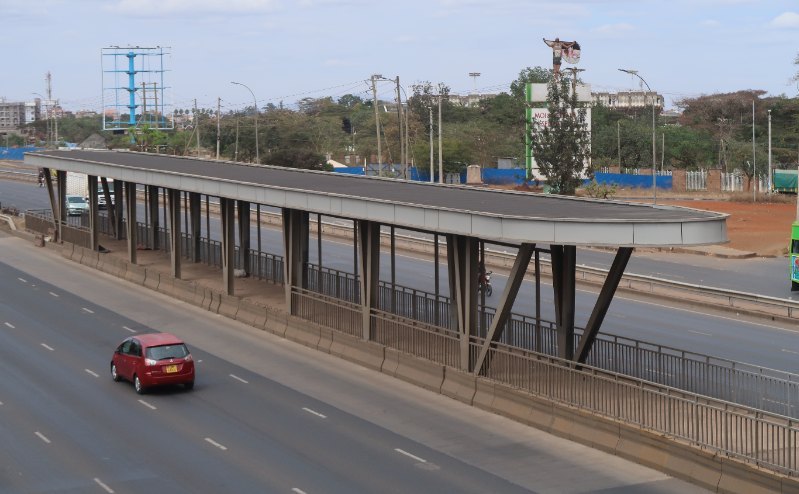 A stalled BRT station along Thika Road at Safari Park footbridge./FILE
Transport experts argue that improving public transport efficiency could significantly boost productivity by reducing the hours lost on the road.
The director general of the Nairobi Metropolitan Area Transport Authority, Eng. Francis Gitau, says the transformation of Kenya’s transport system is long overdue.
“The result will be tremendous for the economy of Kenya based on the productive time saved on the road,” he said during a presentation at his office.
Gitau explained that the MRT system is expected to serve more than 15,000 passengers per hour in one direction, forming a core component of Nairobi’s public transport solution.
"A sustainable urban mobility plan is necessary, with the MRT plan set to serve many commuting Kenyans within the Nairobi Metropolitan area. This will be complemented by BRT road services, which will service the urban population by integrating the last mile journeys of walkways and cycle paths." He explained
He also explained that the BRT system will comprise five corridors connecting the Nairobi metropolitan region. Named after different animals, each corridor is intended to facilitate movement along major commuter routes into and out of the city, as follows:
Line 1, known as Ndovu, will run from Limuru through Kangemi and Nairobi's Central Business District (CBD) before extending to Imara Daima, Athi River, and Kitengela.
The corridor will follow a route parallel to the Nairobi Expressway, providing a high-capacity transit option for commuters travelling along one of the city's busiest transport corridors.
Line 2, dubbed Simba, will cover approximately 27.4 kilometres, connecting Ruiru to Kenyatta National Hospital via Nairobi's CBD. The corridor is expected to be one of the flagship projects under the Nairobi Metropolitan Area Transport Master Plan, providing a modern, efficient, and high-capacity public transport system along the heavily congested Thika Superhighway.
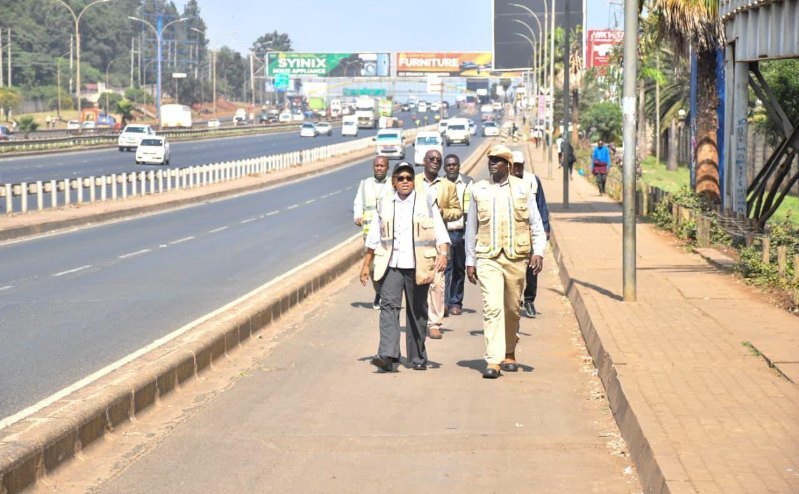 The Kenya National Highways Authority (KeNHA) and the Nairobi Metropolitan Area Transport Authority (NaMATA) have conducted an inspection of the Bus Rapid Transit (BRT) Line 2 project along Thika Road on June 26. HANDOUT
Line 3, known as Chui, will establish an east–west corridor linking Tala, Njiru, and Dandora to the CBD before continuing to Showground and Ngong. The route is expected to improve connectivity between eastern and western parts of the Nairobi metropolitan area.
Line 4, named Kifaru, will run along Jogoo Road from Mama Lucy Kibaki Hospital through the CBD before terminating in Karen. The corridor is designed to enhance mobility for commuters travelling between eastern Nairobi, the city centre, and the southwestern suburbs.
The implementation of the BRT system has involved several government agencies working together with the Kenya Urban Roads Authority, collaborating with the Nairobi Metropolitan Area Transport Authority to integrate BRT infrastructure into existing road corridors.
KURA Director General Elias Kinoti through their X platform announced a partnership with Korean contractor YOUNGJIN Joint Venture to implement Nyati dubbed corridor that will focus on the Outer Ring Road line five
This funding is set to jumpstart the BRT project that has faced a myriad of delays due to funding gaps, budget cuts and resistance from stakeholders in the informal matatu sector, with some transport operators openly objecting to the new system, fearing that it could disrupt jobs in a sector that employs thousands of young people.
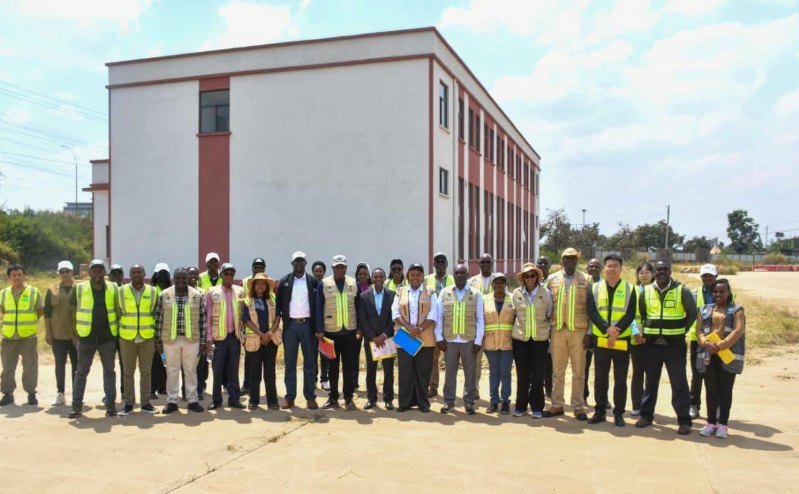 NaMaTa DG Eng. Francis Gitau with KeNha Team during the BRT inspection on June 26/HANDOUT
However, NAMATA DG has dispelled the fear, arguing that the BRT system will complement existing transport services rather than eliminate them.
“The Public Transport system in Kenya is fairly informal despite the existence of Saccos. The sector that has employed thousands of youths is also rocked with Unfair competition and solely private driven with no government Investment. As we learn from global best practices, we remain focused on building an integrated, efficient, and people-centered transport system" He said.
Adding that the partnership with local industry players will enable the use of existing public transport routes for 5 corridors, aligned with traffic demand forecasts through to the year 2045. The status of Kenya's transport system is chaotic and not well structured, just like many public transport systems in Africa.
Worth noting is how the sector is crowded with no proper entry rules. "We must focus on public transport and non-motorised transport, which accounts to between 80 and 90 per cent of all trips in Nairobi City.
The Mass Rapid Transit System will build the capacity to support mobility needs in a manner that is least damaging to the environment, economy and society at large," he explained.
The Mass Rapid Transit System is not just about moving buses faster but about reshaping the future of the city.
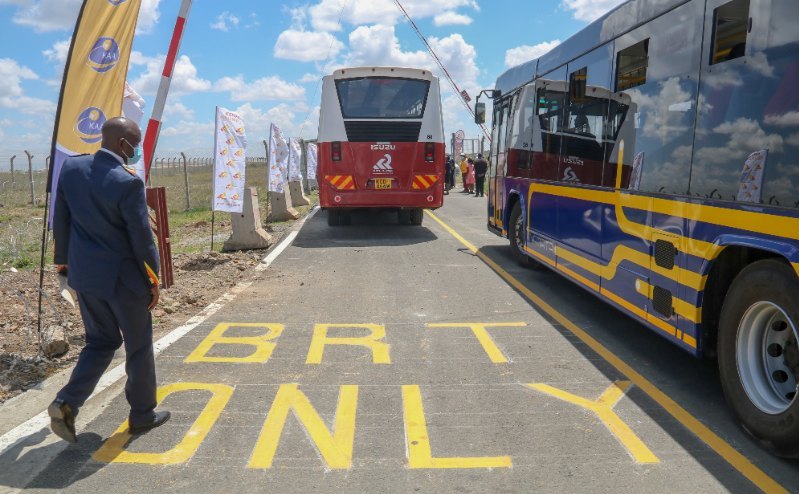 Bus Rapid Transit (BRT) way to the Jomo Kenyatta International Airport
At the same time, the United Nations is expanding its presence in Nairobi by relocating key global operations and agencies, including UNICEF, UNFPA, and UN Women, over the course of the year.
This expansion is expected to attract a significant influx of international personnel, reinforcing the need for a modern, efficient transport system capable of seamlessly connecting the growing UN hub with the wider Nairobi metropolitan area.
If successfully implemented, the BRT system could help transform Nairobi into a more efficient, sustainable and liveable city where commuters spend less time in traffic and more time building the economy.