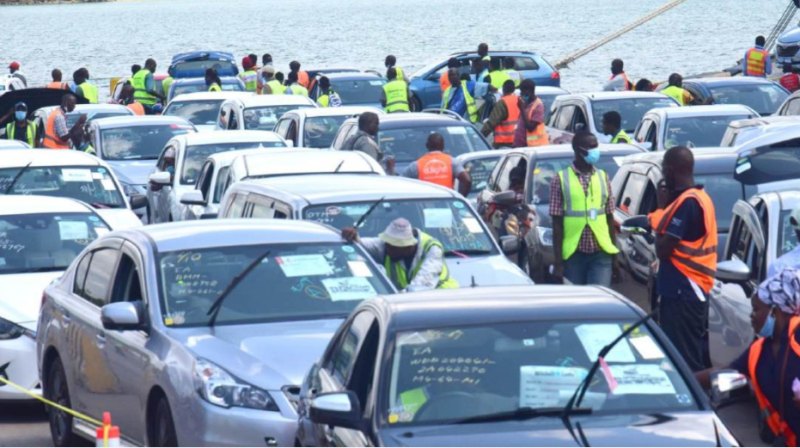
CAR importers are outraged over the new directive requiring all imported motor vehicles, and cargo, to be covered under mandatory local marine cargo insurance.
Through their lobby–Car Importers Association of Kenya (CIAK), the dealers have argued that the move is unconstitutional, economically punitive and in breach of international trade obligations.
The new regulatory requirement being implemented by the Insurance Regulatory Authority (IRA), effective today (July 1), requires all importers to obtain Marine Cargo Insurance digitally from insurers licensed under the Insurance Act (Cap. 487, Laws of Kenya) before customs clearance of imported goods.
In a protest
letter to the insurance commissioner and IRA chef executive Godfrey Kiptum seen
by the Star, CIAK described the directive as an “illegal administrative action”
that threatens to increase the cost of importing vehicles, while exposing
traders to multiple taxation and unnecessary bureaucracy.
The association argues that imported vehicles are already protected through comprehensive international marine insurance arrangements taken out at the point of export.
“Forcing importers to purchase an additional insurance policy locally amounts to duplicate coverage with no corresponding benefit to consumers or businesses,” CIAK national chairman Peter Otieno says in the letter copied to Kenya Maritime Authority director general, KRA Commissioner-Customs and Border Control and KPA.
According to CIAK, the directive undermines the constitutional guarantee of fair administrative action under Article 47 and violates Article 201 on prudent and responsible use of public resources, by imposing additional financial burdens on importers without adequate public participation.
The association further contends that the directive interferes with the freedom of contract, noting that international trade allows importers to procure insurance from insurers of their choice in the exporting country.
It argues that compelling importers to obtain local marine insurance effectively restricts market choice and amounts to an unjustifiable trade barrier.
“This letter serves as our final, unequivocal, and uncompromising notice to your office that our members will not accept, will not comply with and will not pay for any mandatory local insurance premiums artificially forced upon our imported units at the port of entry or through the Integrated Customs Management System,” Otieno says.
Importers also raised concerns over what they describe as multiple taxation within the vehicle importation chain.
They point out that vehicle imports already attract Import Declaration Fees (IDF), Railway Development Levy (RDL), customs duties, excise duty, Value Added Tax (VAT), port charges and numerous clearance fees.
Adding compulsory local marine insurance, they argue, will further inflate the landed cost of vehicles and ultimately push prices beyond the reach of ordinary Kenyans, CIAK warns.
This is after KRA’s revised motor vehicle taxes pushed up prices in April this year.
Under the updated Kenya Revenue Authority regulations for 2025–26, the general import duty rate rose from 25 per cent to 35 per cent, while excise duty for some categories climbed to as high as 35 per cent.
Additional levies—including VAT, Import Declaration Fee and Railway Development Levy—compound the cost.
CIAK says that the directive on insurance could discourage legitimate importation, drive more traders into informal channels and undermine Kenya's competitiveness as a regional trading hub.
The association further argues that the requirement conflicts with Kenya's obligations under international trade agreements, including the General Agreement on Tariffs and Trade (GATT), which promotes free movement of goods and discourages unnecessary restrictions on international commerce.
It also cited regional commitments under the East African Community framework, saying the directive risks disrupting harmonised trade practices.
The importers further cited international legal precedents, including a ruling by the European Court of Justice striking down discriminatory insurance requirements, as well as decisions by Indian courts affirming the right of businesses to procure insurance from providers of their choice.
CIAK has now issued an ultimatum to the regulator, demanding the immediate suspension and withdrawal of the directive pending meaningful stakeholder consultations.
The association warned that if the order is not revoked, it will pursue all available legal avenues, including constitutional petitions, judicial review proceedings and claims for losses suffered by importers.
The dispute now sets the stage for a potentially significant legal battle between Kenya's insurance regulator and the country's vehicle importers, with far-reaching implications for the insurance industry, international trade and the cost of imported vehicles in the local market.
Kenya's main second-hand vehicles import source is Japan (80 per cent), with other key markets being the UAE, South Africa and an emerging Chinese market on Electric Vehicles.
![[PHOTOS] The new Ngong –Naivasha Road viaduct](https://cdn.radioafrica.digital/image/2026/06/64d4f771-4432-4aee-ba3c-2f304c4436ec.jpg)