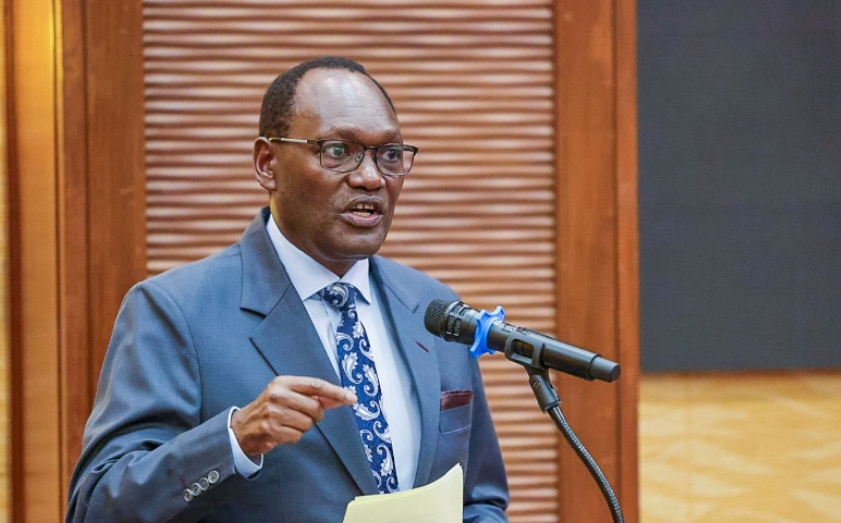
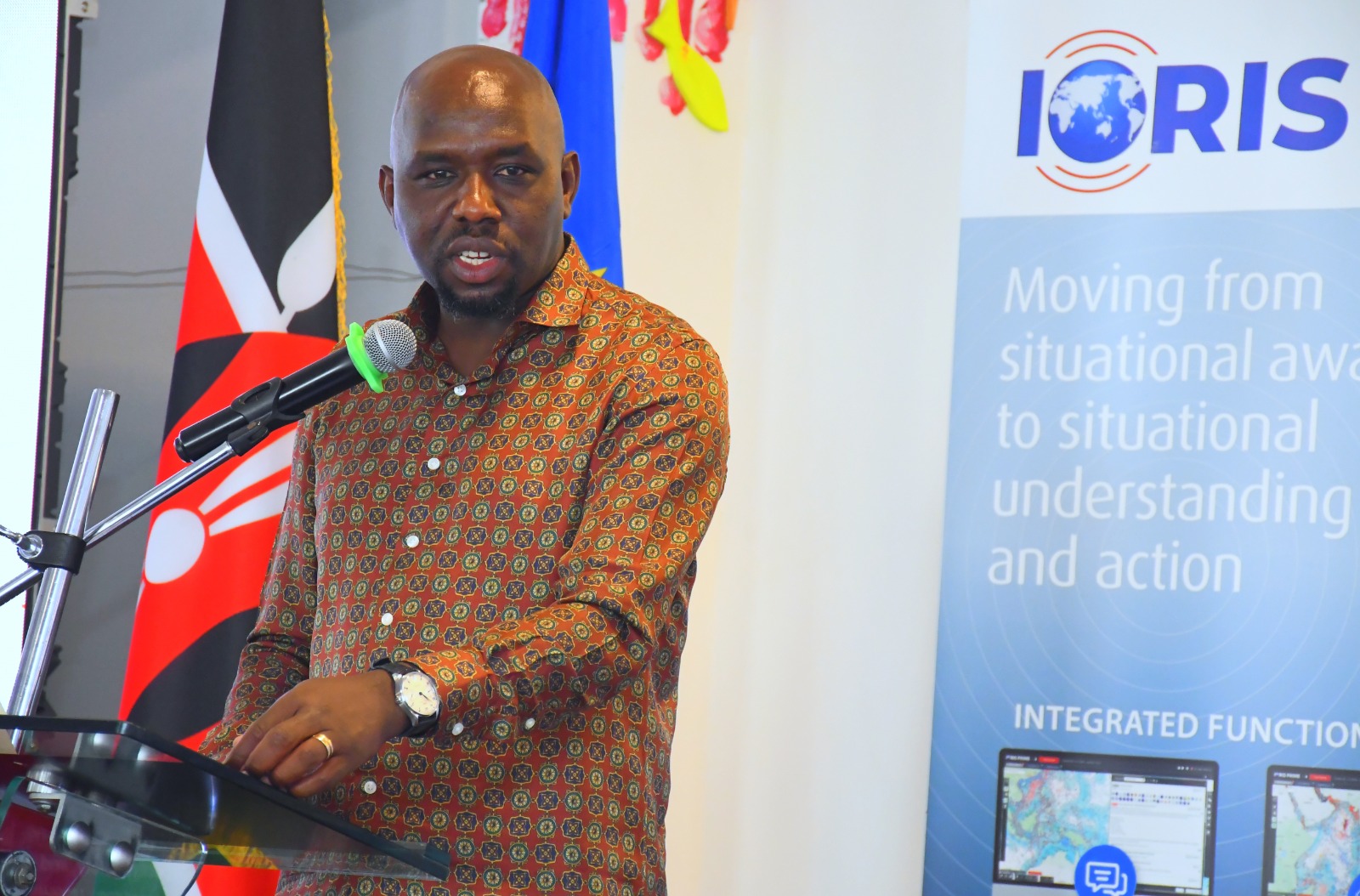
 Interior CS Kipchumba Murkomen during the opening of the fourth Indo-Pacific Regional Information Sharing (IORIS) Steering Committee High-Level Meeting in Mombasa on Tuesday.
Kenya has renewed its commitment to strengthening cooperation with countries across the Indo-Pacific region as part of efforts to enhance maritime security and combat emerging threats in the world's oceans.
The government says closer collaboration is essential in addressing challenges such as piracy, illegal, unreported and unregulated (IUU) fishing, armed robbery at sea, and other forms of transnational maritime crime that continue to threaten global trade.
Speaking in Mombasa during the opening of the fourth Indo-Pacific Regional Information Sharing (IORIS) Steering Committee High-Level Meeting on Tuesday, Interior Cabinet Secretary Kipchumba Murkomen emphasised the importance of international partnerships in securing maritime routes and protecting livelihoods.
Murkomen noted that disruptions to maritime transport corridors have far-reaching consequences on economies and communities worldwide.
“The ongoing Middle East crisis is a clear manifestation of how we all suffer when our sea lanes of maritime transport are disrupted. This also includes other maritime-based transnational threats such as piracy, armed robbery at sea, IUU fishing, and the dangers of dumping hazardous materials on seabeds, among others,” he said.
He warned that organised maritime crimes continue to pose a significant threat to humanity, particularly vulnerable populations that depend on marine resources and maritime trade.
“Such organised maritime threats pose an existential threat to mankind generally, and vulnerable populations in particular. This ought to be stopped. It is for this reason that proactive collaborations and partnerships, such as the current interaction happening now, are critical,” Murkomen said.
Kenya is among the countries utilising the Indo-Pacific Regional Information Sharing (IORIS) platform, a secure digital system developed under the European Union-funded CRIMARIO project to facilitate maritime information sharing and coordinated operations among partner nations.
The platform enables agencies to jointly plan and manage maritime operations, improve crisis response, and enhance regional cooperation through real-time information exchange and surveillance capabilities.
More than 150 maritime organisations and agencies from over 50 countries across the Indo-Pacific region are connected through the system.
Murkomen commended the European Union, through its Nairobi mission, for supporting Kenya’s efforts to strengthen maritime security and improve the country’s capacity to respond to threats within its territorial waters.
He said the platform has become an important tool in Kenya’s maritime security architecture by supporting safe navigation and enhancing coordination among security agencies.
“The platform has also enabled agencies to communicate and share critical information amongst themselves, and within the wider global community of members, hence securing our sea lanes, and ultimately boosting international maritime-based trade,” he said.
The Interior CS also highlighted a new technological innovation developed jointly by the Kenya Coast Guard Service (KCGS) and the EU CRIMARIO project.
The mobile application, known as Usalama Baharini, has been integrated into the IORIS platform to strengthen maritime surveillance and safety.
“Through this integration of technologies, KCGS can leverage the fisher-folks at sea in accessing critical security and safety information, enabling timely enforcement reaction. This effectively gives the KCGS a third eye on maritime domain awareness, hence helping improve maritime security,” Murkomen said.
EU CRIMARIO director Martin Inglot stressed the growing need for collective action in protecting critical underwater infrastructure, including submarine communication cables that underpin financial systems, government services and global commerce.
“No country can safeguard these infrastructures alone. It requires cooperation nationally, regionally and globally. It requires military and civilian actors to work together, and it requires a trusted information sharing system, and perhaps IORIS can bring a solution,” Inglot said.
The three-day meeting, co-hosted by KCGS and the EU CRIMARIO project, has brought together maritime experts and delegates from across the Indo-Pacific and Atlantic regions to discuss shared security challenges and identify long-term solutions through enhanced cooperation.