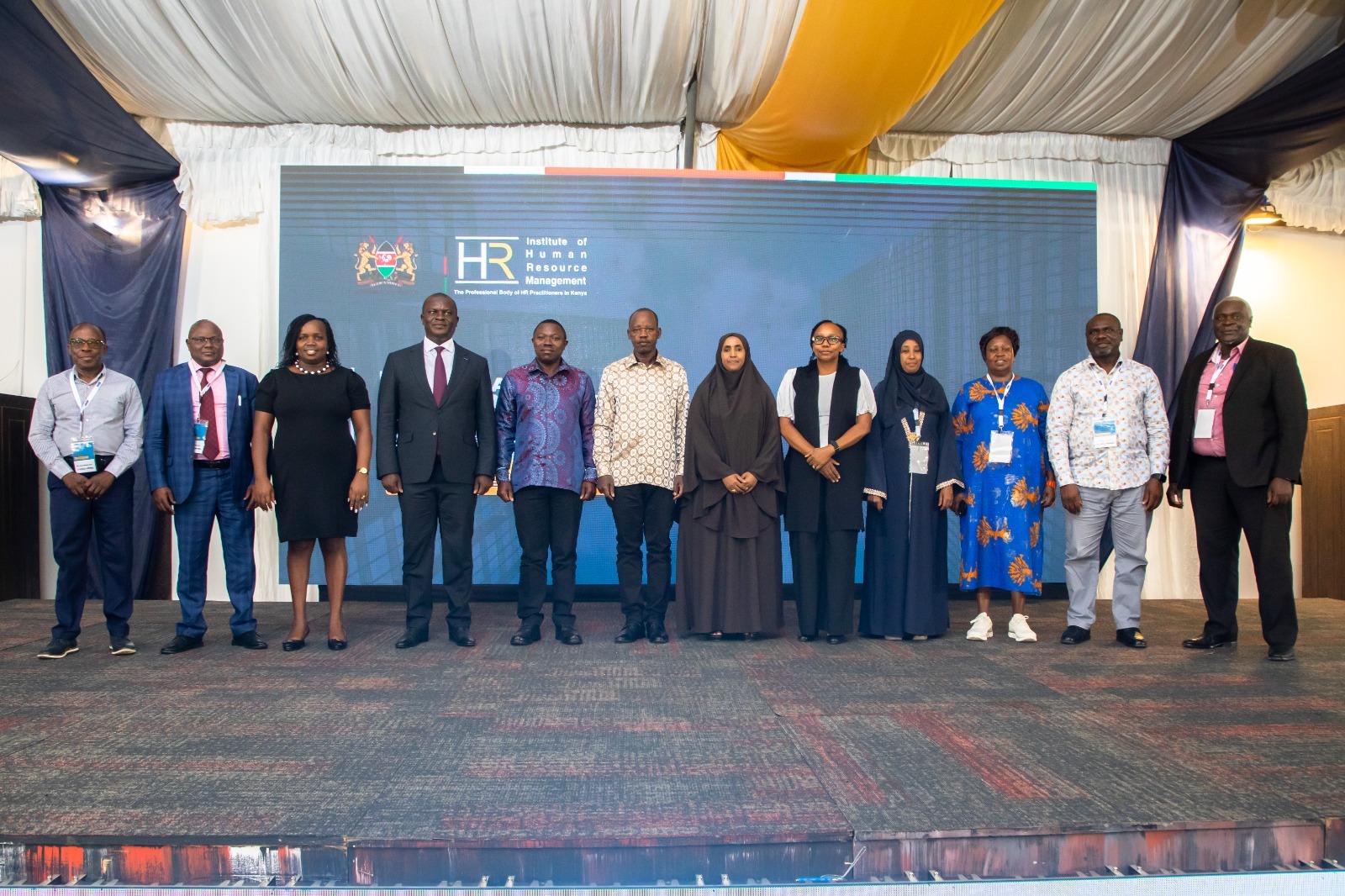
Human Resource professionals have been challenged to take a more strategic and transformative role in reshaping Kenya’s public service through innovation, accountability, and ethical leadership.
Speaking at the Human Resource Management Summit 2026 in Mombasa on May 26, Principal Secretary in the State Department for Public Service and Human Capital Development, Jane Imbunya, said the future of public institutions depends on HR leaders embracing reforms to enhance efficiency, professionalism, and service delivery.
The summit brought together policymakers, scholars, and HR practitioners from across the country under the theme, “Reimagining Human Resource Leadership: Accountability, Innovation, and Resilience in Public Service Transformation.”
Imbunya noted that governments across the world are operating in increasingly complex environments driven by rapid technological change, globalisation, economic uncertainty, and growing public expectations.
“The realities we face today demand a new approach to Human Resource leadership — one that is strategic, innovative, ethical, adaptable, and people-centered,” she said.
She emphasised that public service remains the engine through which government policies and development priorities are implemented, adding that institutional success is largely determined by the competence, integrity, resilience, and motivation of public officers.
According to the Principal Secretary, HR practitioners play a critical role in strengthening organisational culture, managing change, promoting accountability, and driving professionalism within public institutions.
“Public confidence in government institutions can only be sustained where accountability systems are strong, ethical standards are upheld, and public officers remain committed to serving citizens with dedication and professionalism,” she stated.
Imbunya further stressed the need for continuous investment in human capital through training, mentorship, succession planning, leadership development, and digital skills enhancement to prepare workers for the evolving world of work.
She identified digital transformation as one of the major shifts redefining workplaces and service delivery systems globally, urging HR leaders to champion the adoption of modern Human Resource Information Systems, automation of HR processes, virtual learning platforms, and technology-driven performance management systems.
At the same time, she highlighted the importance of employee wellbeing, mental health, inclusivity, and a positive workplace culture in building a productive and resilient workforce.
Imbunya urged participants to use the summit as a platform to exchange ideas and practical solutions that will help build a future-ready public service capable of accelerating Kenya’s socio-economic transformation and inclusive growth.
IHRM National Chairman CHRP Odero Philip Dalmas said the future of Kenya’s public service depends on HR leaders embracing transformational leadership and positioning human capital at the centre of governance and national development.
“It is a privilege to welcome you to this important summit. The significance of today’s gathering lies in the calibre of leaders assembled here — individuals entrusted with shaping the culture, capability, discipline, and performance of Kenya’s public service,” said Dalmas.
He noted that no institutional reform can succeed without visionary leadership and a motivated workforce, describing HR professionals as strategic partners in driving accountability, performance, and ethical governance.
Dalmas cautioned against complacency within institutions, warning that outdated systems, delayed reforms, and tolerance for inefficiency continue to undermine effective service delivery.
“The future of our public service will depend on whether HR leaders evolve from transactional management into transformational leadership. Yesterday’s approaches will not suffice for tomorrow’s challenges,” he said.
The summit was held under the theme, “Repositioning Human Capital as a Strategic National Development Driver in the 21st Century.” Dalmas noted that the theme aligns with Kenya’s Bottom-Up Economic Transformation Agenda, Vision 2030, and Medium-Term Plan IV, all of which require a skilled, ethical, and performance-driven public service.
He further called on HR leaders to strengthen accountability systems, prioritise employee wellness, improve workforce planning, and ensure responsible use of technology in human resource management.
Dalmas reaffirmed the Institute of Human Resource Management’s commitment to supporting public institutions through professional standards, capacity building, policy engagement, and strategic partnerships aimed at enhancing organisational excellence and national transformation.

![[PHOTOS] The new Ngong –Naivasha Road viaduct](https://cdn.radioafrica.digital/image/2026/06/64d4f771-4432-4aee-ba3c-2f304c4436ec.jpg)










![[PHOTOS] 'Mr Speaker Sir' Gen Z protester in court](https://cdn.radioafrica.digital/image/2026/06/b3e62d8e-25c3-4780-90f9-4eb48b1ce8a7.jpg)