


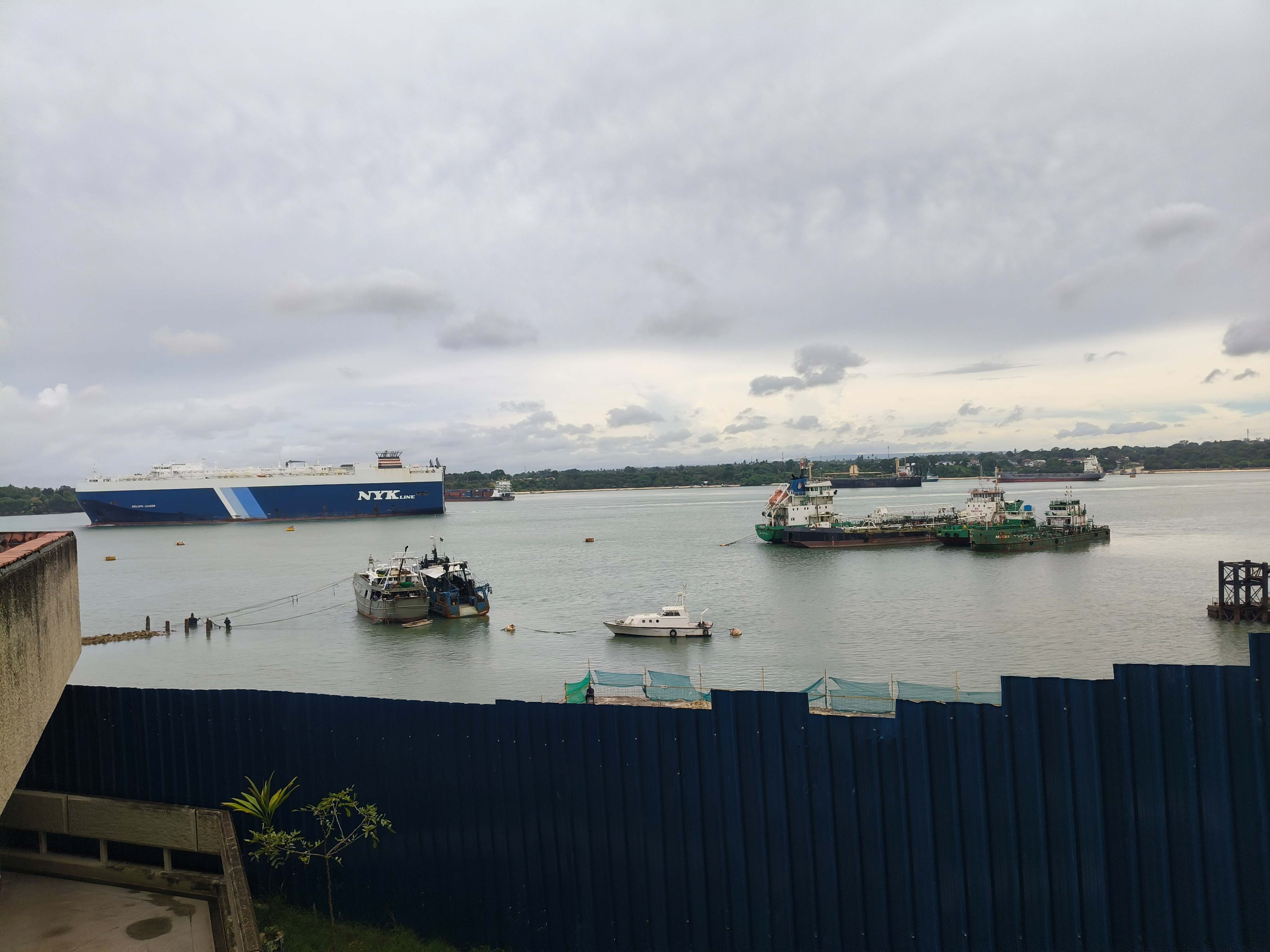
 Ships at the
entry point of the Mombasa port /BRIAN OTIENO
Ships at the
entry point of the Mombasa port /BRIAN OTIENOKenya and other East African countries now need to move away from traditional incentives to attract investors and instead focus on intelligence-led investment advisory, experts say.
Today’s investors are increasingly prioritising the safety and long-term sustainability of their investments in an unpredictable global environment.
For decades, African economies competed for foreign investment using familiar tools such as tax incentives, cheap labour, large markets and political goodwill.
However, according to Obobe Maina, a security and intelligence expert, global investors are now making decisions through a different lens shaped by intelligence, infrastructure resilience, geopolitical stability and long-term operational certainty.
“The era when capital alone determined investment destinations is fading. Today, investors want to know something deeper.
“Can a country protect and sustain billion-dollar investments in an unpredictable world? That single question is quietly redefining the future of industrial development across East Africa,” Maina said.
He spoke to the Star on Monday.
Governments across the region are aggressively positioning themselves as logistics, manufacturing and energy hubs.
Kenya is advancing the Lapsset corridor and expanding the Mombasa port. Tanzania is strengthening its maritime infrastructure and regional trade routes. Uganda is pursuing energy-led industrialisation ambitions.
Across the region, transport corridors, ports, rail systems and energy projects are becoming symbols of economic influence.
But modern infrastructure is no longer judged solely by size or engineering sophistication. According to Maina, it is now judged by resilience.
“Investors increasingly evaluate whether projects can survive political transitions, supply chain disruptions, regional instability, maritime insecurity, regulatory unpredictability and operational sabotage.
“In other words, they are evaluating intelligence environments as much as economic potential. This represents a major shift in how Africa must think about growth,” he said.
Maina said economic risks across East Africa are now deeply interconnected.
Instability in the Red Sea can immediately affect fuel and freight costs in Nairobi.
Security developments in Somalia can influence maritime insurance premiums for goods entering Mombasa. Election-related uncertainty can delay financing decisions for infrastructure projects worth billions.
Community tensions around land and compensation can also halt strategic developments before construction begins.
“These are no longer theoretical concerns. They are boardroom considerations shaping real investment decisions today,” he said.
He added that intelligence-led investment advisory is rapidly becoming one of the most important but least discussed pillars of economic development in Africa.
Sophisticated investors, he said, are no longer focused only on profitability projections. They are also assessing exposure.
“They want to understand political continuity,
insider risks, corruption vulnerabilities, regional diplomatic relations,
organised criminal networks, infrastructure continuity and long-term
geopolitical stability before committing capital,” he said.
Maina said that countries that will dominate Africa’s next industrial phase will not necessarily be those offering the lowest taxes or cheapest land.
Instead, they will be those capable of creating predictable, secure and intelligence-informed operating environments.
He said East Africa faces both a major challenge and opportunity in this regard.
The region has a young population, expanding
consumer demand, improving digital connectivity and strategic access to the
Indian Ocean.
The African Continental Free Trade Area further strengthens East Africa’s potential as a continental manufacturing and logistics gateway.
However, Maina warned that growth alone does not create investor confidence. “Confidence is built through continuity. And continuity increasingly depends on intelligence.”
He said many infrastructure failures begin long before construction starts, often due to procurement flaws, weak stakeholder mapping, insider collusion, land disputes and poor situational awareness.
Globally, corporations are already adapting through geopolitical forecasting, strategic risk advisory and executive intelligence, which are becoming core components of investment protection.
Maina said East Africa is now competing not only for foreign direct investment but for strategic trust.
“The nations that succeed will demonstrate operational stability, resilient infrastructure and predictable governance backed by mature intelligence capabilities,” he said.
“In today’s world, infrastructure without intelligence is not strength. It is exposure.”

![[PHOTOS] The new Ngong –Naivasha Road viaduct](https://cdn.radioafrica.digital/image/2026/06/64d4f771-4432-4aee-ba3c-2f304c4436ec.jpg)











![[PHOTOS] 'Mr Speaker Sir' Gen Z protester in court](https://cdn.radioafrica.digital/image/2026/06/b3e62d8e-25c3-4780-90f9-4eb48b1ce8a7.jpg)
