Female inmates at the Shimo la Tewa prison earning good pay
So far those who are earning from bakery are 15, while another 15 are earning from textiles and ICT
by BRIAN OTIENO
Audio By Vocalize
Shimo la Tewa prison staff showcase inmates’
products at the ACCA AMC convention in Mombasa on Friday / BRIAN OTIENOShimo la Tewa prison staff showcase inmates’
products at the ACCA AMC convention in Mombasa on Friday / BRIAN OTIENO
Some inmates at the Shimo la Tewa women prison are earning
handsomely as they serve their sentences.
The prison has a variety of programmes meant to equip
inmates with skills in preparation for life after they are released from the
facility.
Some of the programmes include formal education, carpentry,
bakery, ICT, welding, entrepreneurial programmes, among others.
“After training, they produce products like cakes, clothes
and other stuff which they sell to the community and prisons within Mombasa
county,” Shimo la Tewa Women’s Prison officer-in-charge Senior superintendent
of prisons Evelyn Kaliti, said on Friday.
She spoke on the sidelines of the Association of Chartered
Certified Accountants’ Africa Members Convention in Mombasa, where the prison
had been invited to showcase some of the products made by the inmates.
The programme was started in May and so far those who are
earning from baking are 15, while another 15 earning from textiles and ICT.
“The aim of doing all this is because we want inmates to
have that self-confidence, be able to self-rely when released,” Kaliti said.
The Shimo la Tewa women prison has a workshop where the
inmates manufacture the products and sell to the community.
“The good thing is that the inmates get 50 per cent of
proceeds from the business, while the remaining half is used for the running of
the business,” Kaliti said.
She noted that once an inmate qualifies for any of the
programmes after vetting, a special account is opened for them.
This is where their monies are deposited and the account
holder can decide what to be done with the money in the account.
When an account holder is released, all the money in the
account is given to them before the account is closed.
However, the main account that is used for the running of
the business in the prison is not touched.
The impact of the programmes is huge, with some inmates now able
to educate their children, pay their rents and attend to the healthcare needs
of their children, all while in prison.
“It is something that is giving them a lot of confidence.
This is what we want. We want to avoid them coming back when they are
released,” Kaliti said.
She called on the society to welcome them back after their
stint in prison, saying the stigma that most of them face when released usually
leads them to wanting to go back to prison where they feel loved and
appreciated.
Some of the inmates, she acknowledged, did not do what they
were accused of doing and that only circumstances led then to finding
themselves locked up.
Kaliti noted once an inmate arrives, they find out what they
were doing while outside prison so they can put them in the desired programme,
once they fulfill all the requirements.
She called on partners to help support the initiative and
consequently the inmates so that when they are released, they have somewhere
they can start from.
“We are here to showcase the products to our partners so
that if any of them is truly touched, they can support these women after
release,” Kaliti said at the convention.
The Shimo la Tewa Women’s Prison boss also thanked the
leadership of the prisons including the Commissioner General of Prisons Patrick
Aranduh for allowing such programmes in prisons saying they have had great
impacts.
“This is what we as the Kenya Prisons Service want. We want
to rehabilitate people and not punish them,” she said.
She noted that 80 per cent of inmates are usually
responsible people who were fending for their families when they found
themselves in the arms of the law.
Kaliti called on family members, partners and other
stakeholders to embrace those released from prison and treat them with love and
acceptance.
However, she said the cost of producing the goods in the
prison facility is high because of the amount of power used.
She called on any potential partner to come on board and
help the prison with solar panels to reduce of the cost of electricity.
“Any partner willing to come on board is welcome. We are going
green,” she said.


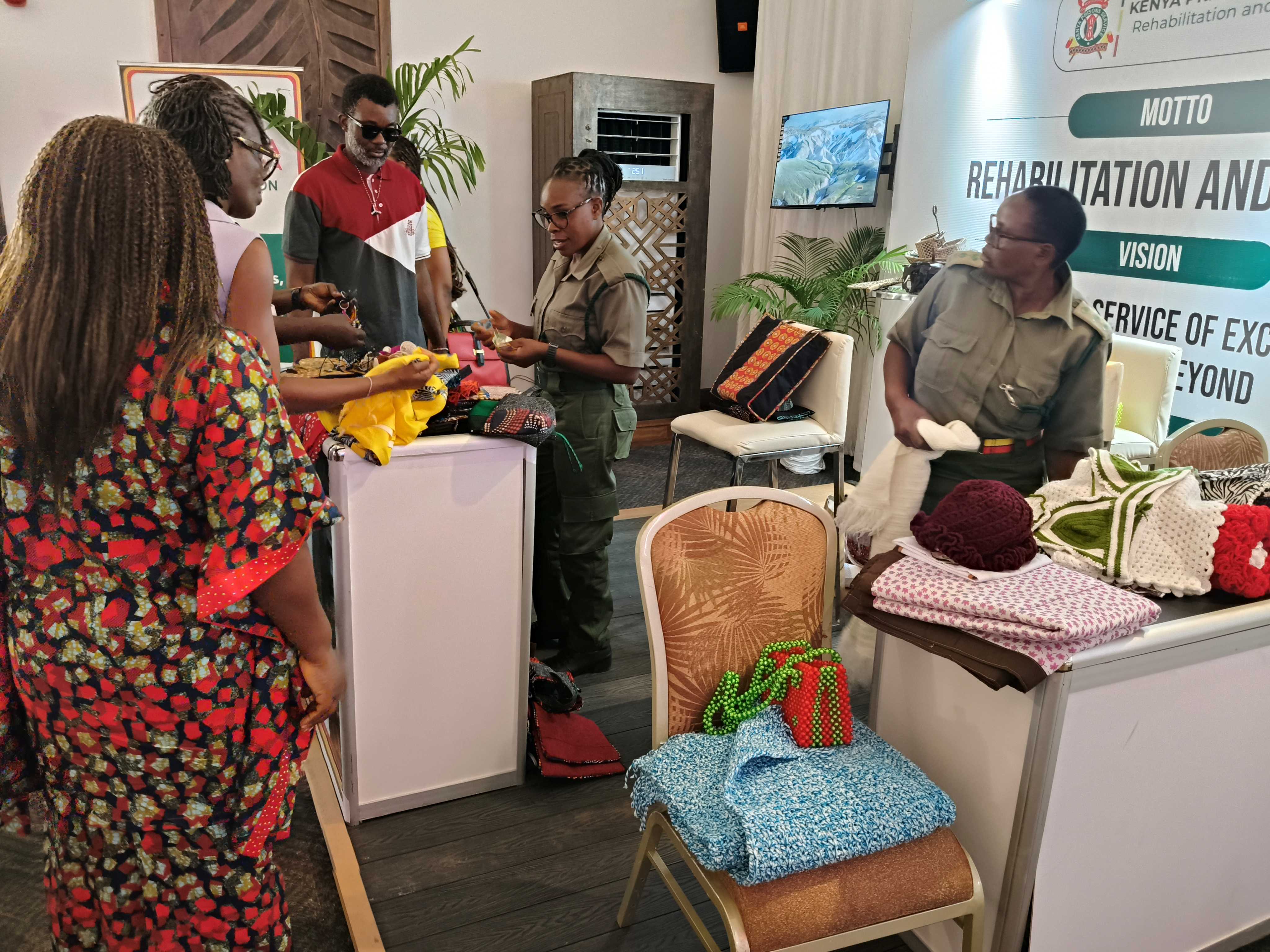 Shimo la Tewa prison staff showcase inmates’
products at the ACCA AMC convention in Mombasa on Friday / BRIAN OTIENO
Shimo la Tewa prison staff showcase inmates’
products at the ACCA AMC convention in Mombasa on Friday / BRIAN OTIENO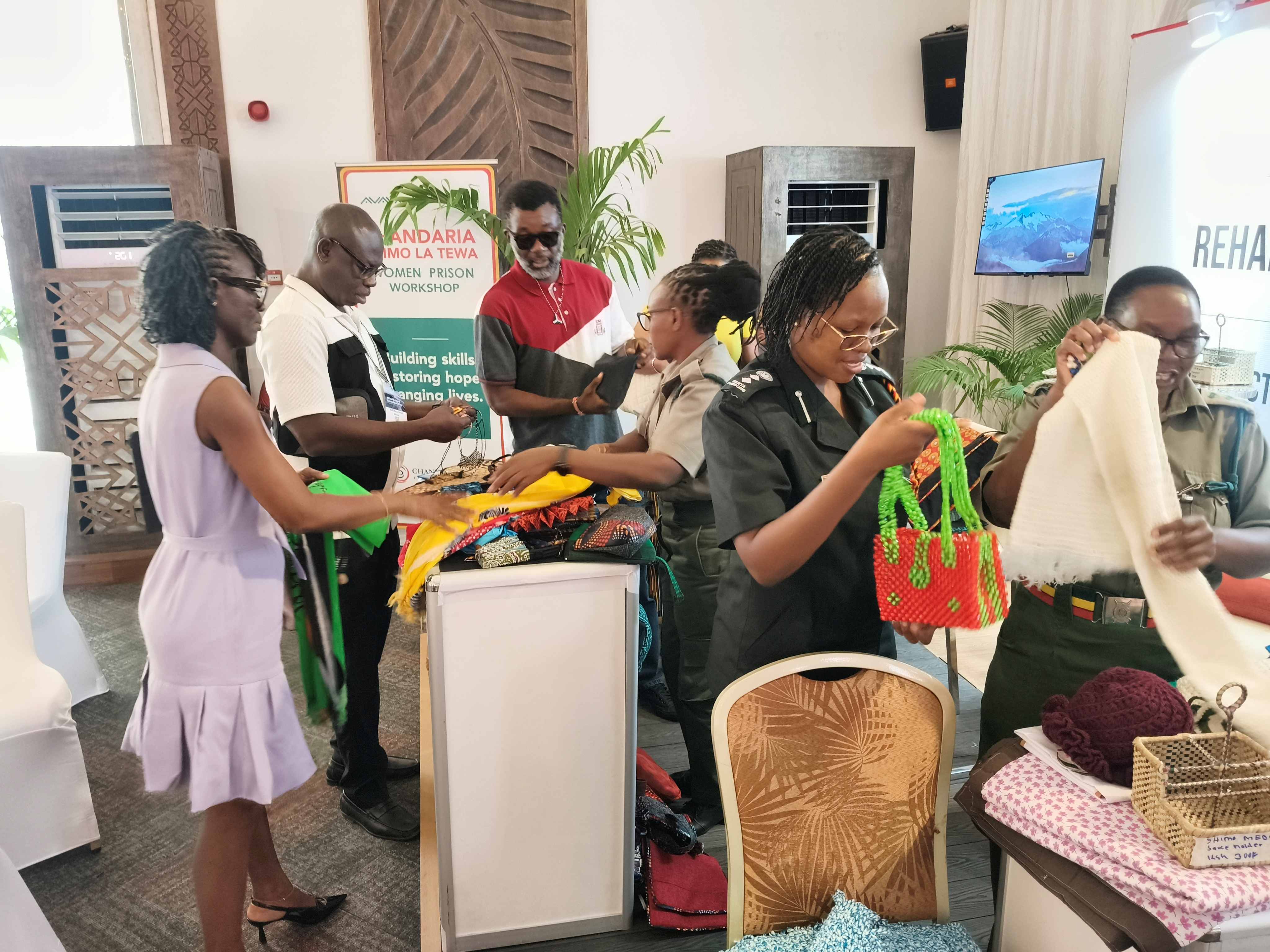 Shimo la Tewa prison staff showcase inmates’
products at the ACCA AMC convention in Mombasa on Friday / BRIAN OTIENO
Shimo la Tewa prison staff showcase inmates’
products at the ACCA AMC convention in Mombasa on Friday / BRIAN OTIENO