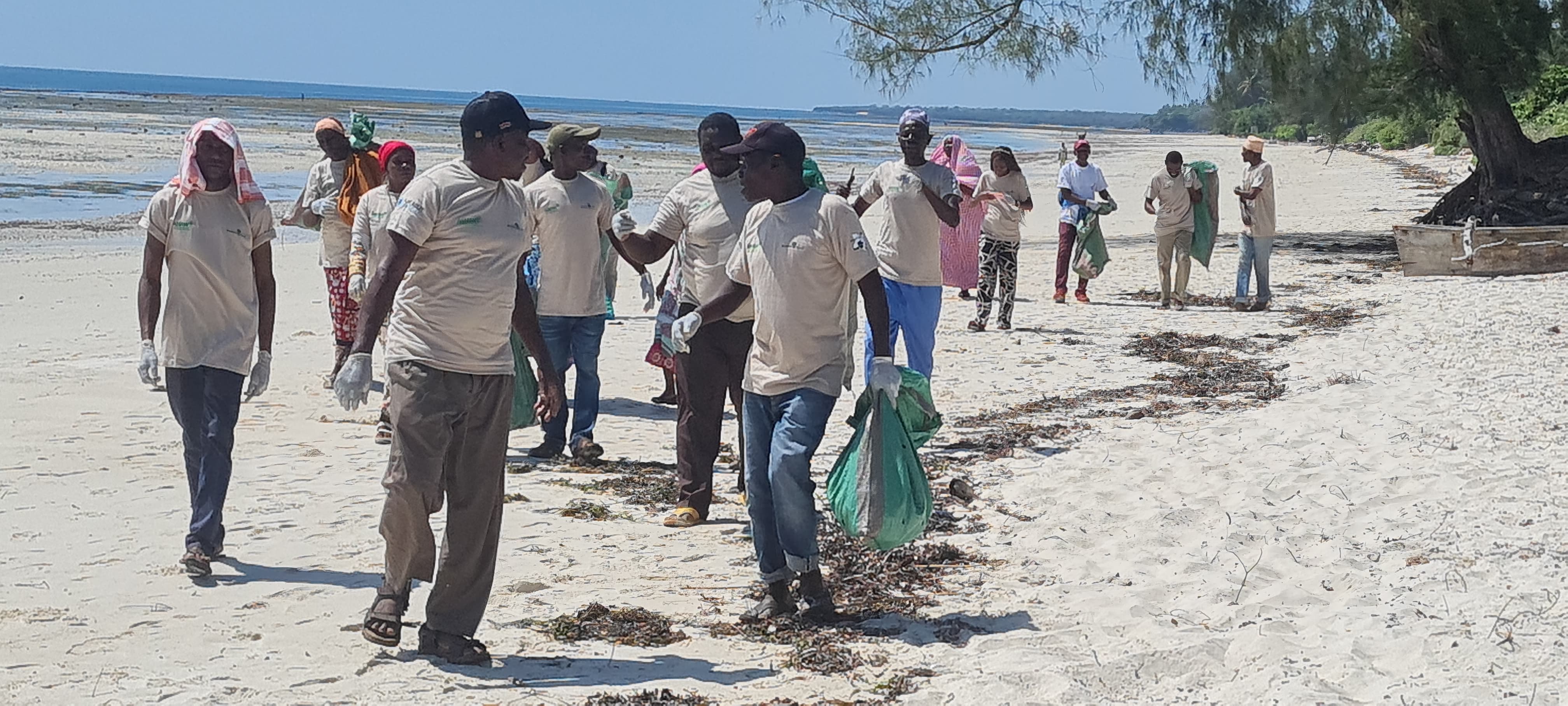
 Turtle ambassadors from Msambweni clean up the
beach on Sunday / BRIAN OTIENO
Turtle ambassadors from Msambweni clean up the
beach on Sunday / BRIAN OTIENO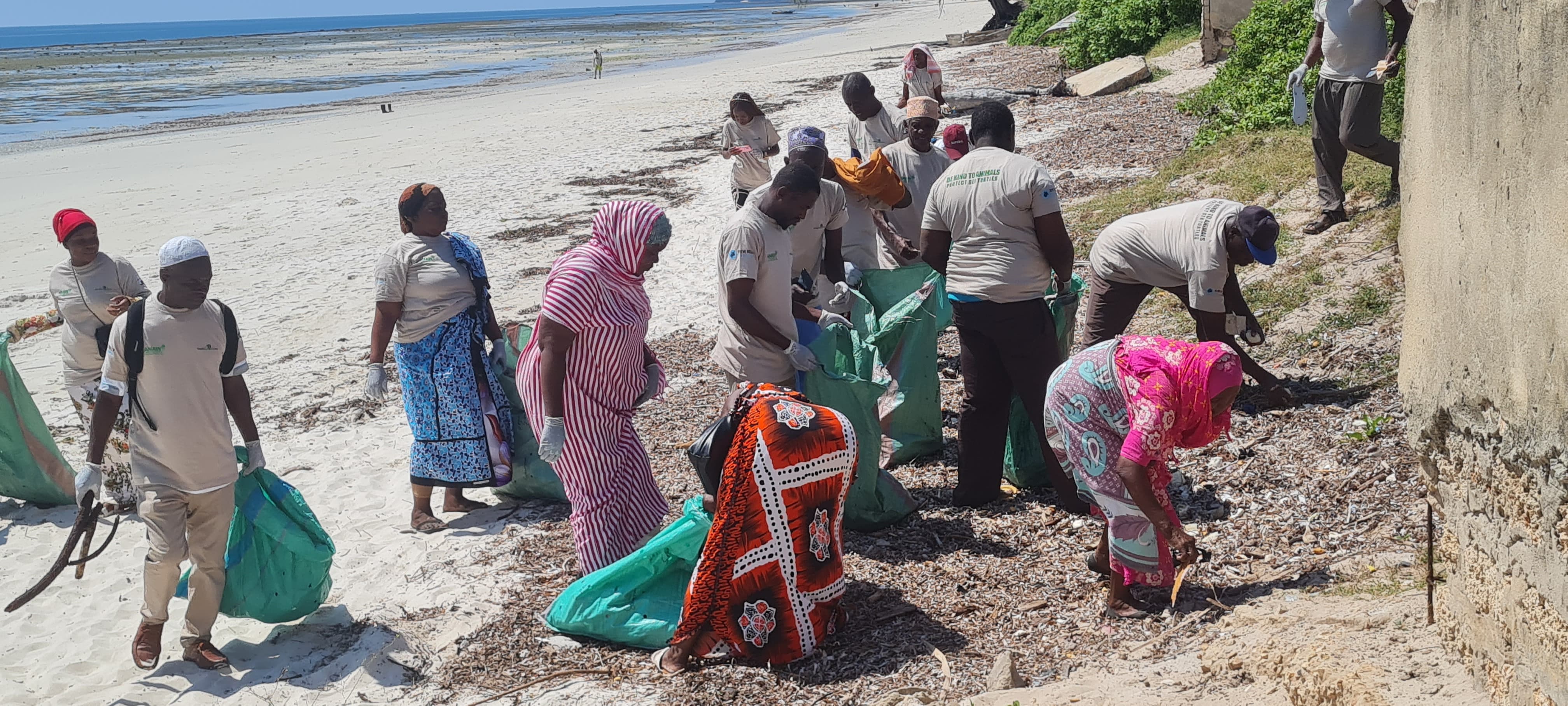 Turtle ambassadors from Msambweni clean up the
beach on Sunday / BRIAN OTIENO
Turtle ambassadors from Msambweni clean up the
beach on Sunday / BRIAN OTIENO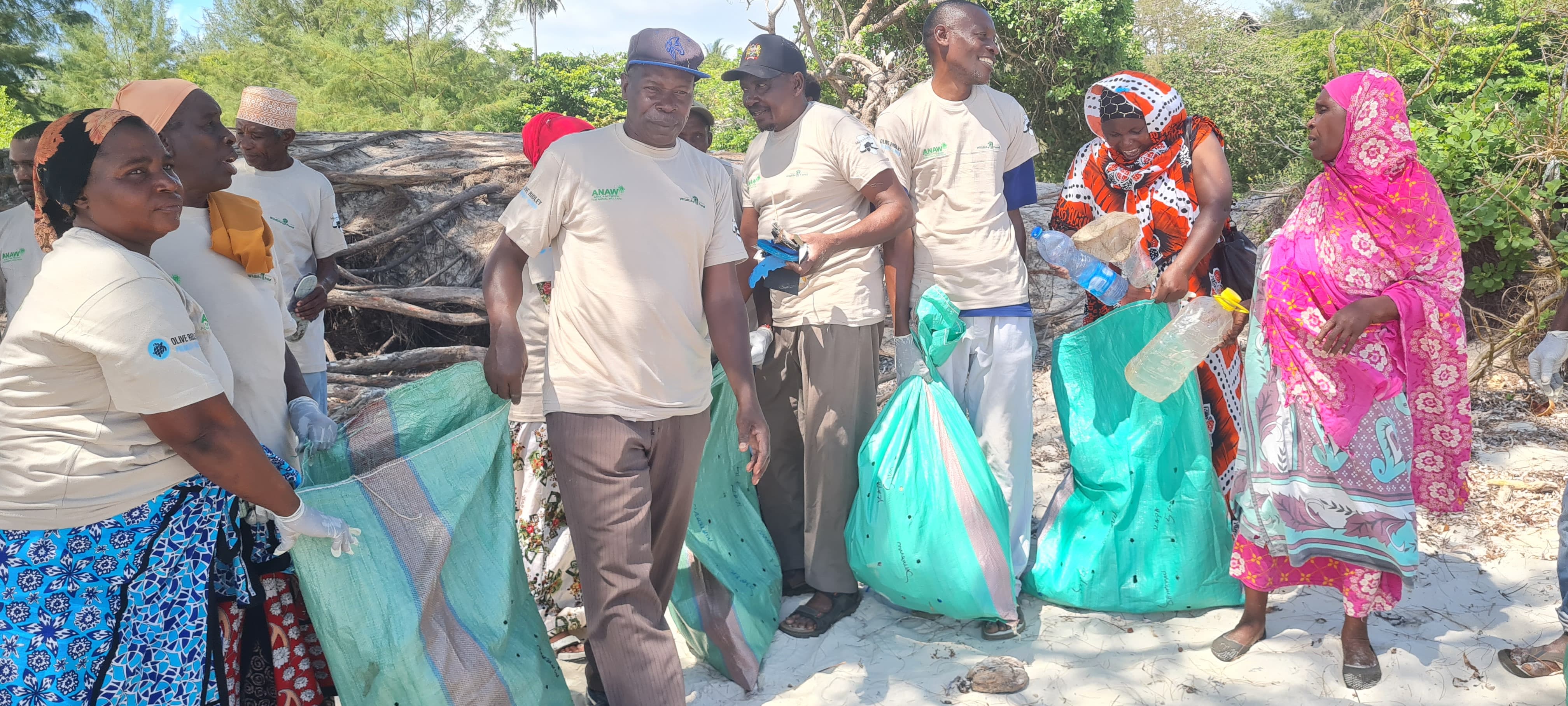 Turtle ambassadors from Msambweni clean up the
beach on Sunday / BRIAN OTIENO
Turtle ambassadors from Msambweni clean up the
beach on Sunday / BRIAN OTIENO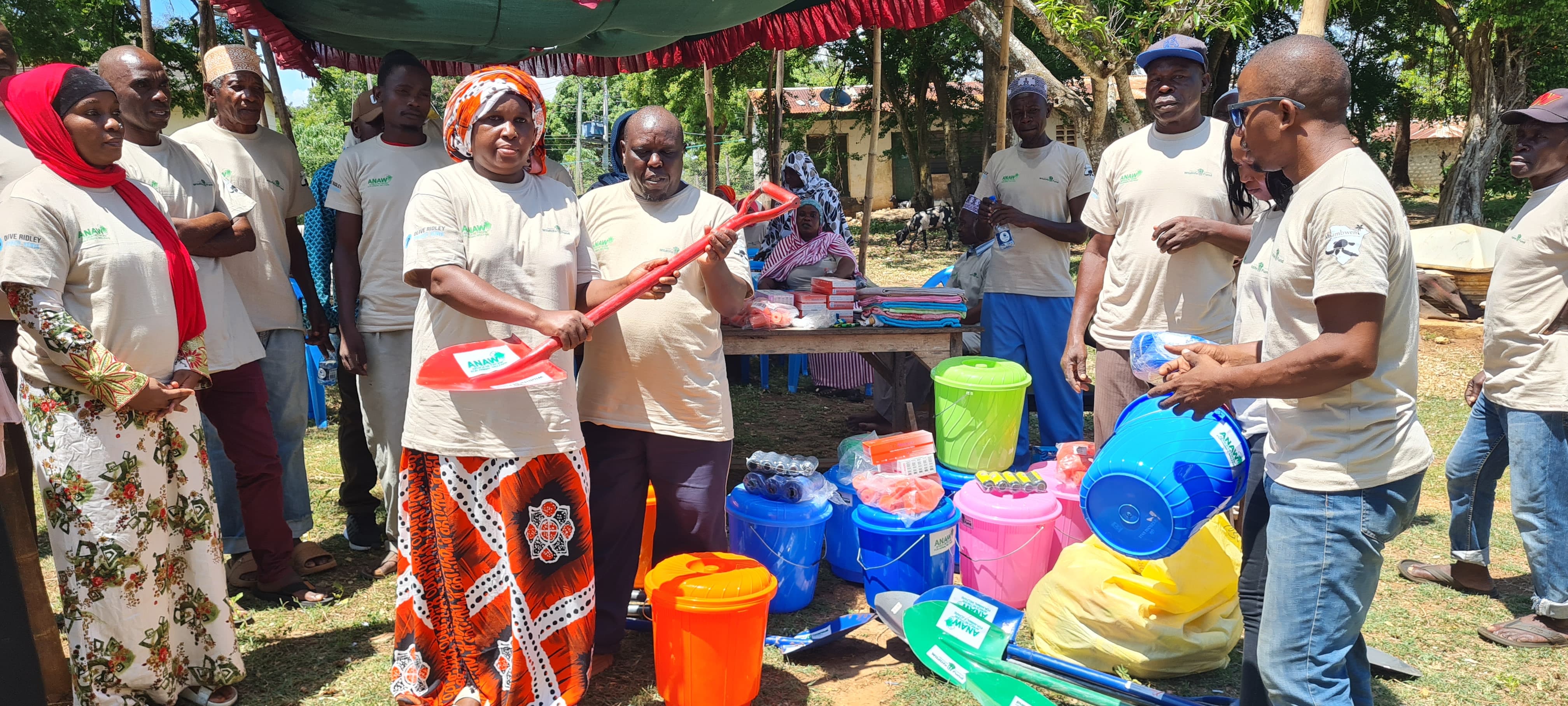 Msambweni BMU members receive turtle protection equipment
from ANAW on Sunday / BRIAN OTIENO
Msambweni BMU members receive turtle protection equipment
from ANAW on Sunday / BRIAN OTIENOTurtles have been listed as one of the endangered
species and human beings are their biggest threat.
This is because out of 10,000 eggs laid, only
about 10 survive, according to Africa Network for Animal Welfare (ANAW).
The rest of the eggs are eaten as meals by humans,
who also eat the turtles as delicacies.
“However, humans are not their only threats. Other
sea and land creatures also predate on the turtles and their eggs,” ANAW’s
Isaac Maina said.
Speaking on Sunday in Msambweni in Kwale county
after the completion of training for 10 Beach Management Units and other turtle
ambassadors on how to take care of turtles and turtle eggs, Maina said
pollution of the ocean is also a threat to the turtles.
“Plastic bottles are a big threat to turtles, who
help us identify any problems with the sea’s ecology,” he said.
He noted that the presence of turtles in an area
means there are also fish in the area.
“Where there are no turtles, it is hard for other organisms
to survive,” Maina said.
Five of the seven species of turtles are found
along the Kenyan Coast including the green turtle, the hawksbill turtle, the olive
ridley turtle, the loggerhead turtle, and the leatherhead turtles.
“These (BMU members) are the ones who will be
ensuring the turtle eggs are safe,” Maina said.
ANAW has also trained fisher folk on how to care for
the turtles at sea, so that whenever they encounter turtles that are trapped in
nets, they free them.
“We also have our doctor here in Diani who will be
regularly checking up on them whenever the turtles have problems,” Maina said.
The turtle ambassadors have also been equipped with
shovels, tape measures, towels, buckets and strings.
The shovel is used for digging two-feet holes in
which to bury the turtle eggs, the tape measure is used to ensure the holes dug
are at least two feet, the towels are for covering the eggs so as not to get
into contact with direct sunlight, the buckets are used for carrying the eggs
when transferring them and the strings are used to repair the nest that are cut
when freeing the ensnared turtles.
The BMU members and fisher folk were also given
gloves for handling the turtle eggs along the beaches.
Hussein Ali Mwabori, the chair of the Msambweni
Turtle Watch, said the training by ANAW will ensure the turtle is protected in
Msambweni.
He said they are working hard to spread
information about the importance of turtles to every corner.
“We have trained community members, school children,
madrassa children and others so as to understand the importance of turtles in
the ecosystem,” Mwabori said.
He said the tools they have been equipped with
will go a long way to helping preserve the turtles’ continuity.
“Sometimes these turtles lay their eggs in areas
that are not safe for them. In such cases, we literally transfer the eggs to
safer places thus we have to have the right tools and knowledge on how to
transfer the eggs without destroying them,” Mwabori said.
He said some turtles lay eggs in swampy areas or
areas that have a lot of roots.
“In such areas, the eggs will not hatch properly.
That is when the tools like buckets come in handy when it comes to transferring
the eggs,” he noted.
Mwabori said the campaign to save turtles are
bearing fruits, explaining that case of turtles being hunted for food in
Msambweni have significantly reduced.
“We have spread a lot of information through
sensitization campaigns that have helped communities understand better the
importance of saving the turtles,” Mwabori said.
Today, Mwabori said, not many people eat turtles because
they realize their importance.
“Now, whenever one is seen with turtle eggs, we
get reports almost immediately and we act accordingly,” Mwabori said.
Bakari Mshamanga Zonga, a turtle ambassador and member
of the Funzi BMU, said turtles play a key role in maintaining the marine
ecosystem balance.
Turtles, he said, also attract tourists who bring
in foreign exchange.
“The benefits of turtles are immense. But their tourism
strength takes the number one spot,” Zonga said.
Alfone Abbas, a Munje resident and turtle ambassador,
said he loves turtles because of their image and how they help communities get
income.
“If turtles help create a conducive environment for
fish to thrive in and we benefit from fish, then we are bound by duty to also
ensure we take care of their environment. It is a symbiotic relationship,”
Abbas said.
He said when they are about to lay eggs, turtles usually come to the fishing zones where fisher folk fish, meaning the area where turtles are is bound to have more fish.