

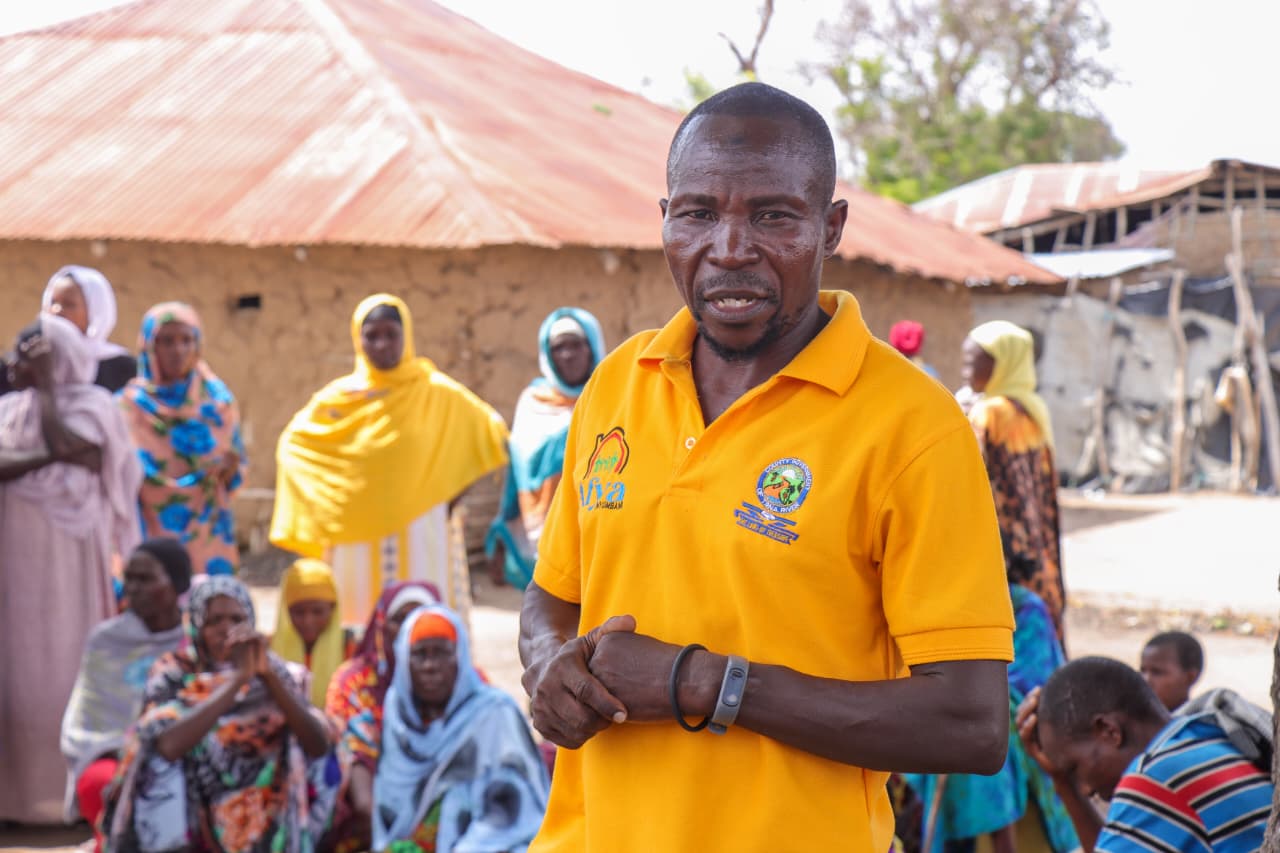
 Director in charge of health in Tana River county, Dr Oscar Endekwa, speaks in Mikinduni./BRIAN OTIENO
Historically, maternal health service uptake in Tana River, especially family planning, has been shaped by socio-cultural norms such as the “Mwenye syndrome”, which restricts women’s autonomy and requires approval or accompaniment by husbands or male relatives. This limited access to maternal health services for many women.
The county’s modern contraceptive prevalence rate is at 11 per cent, compared to the national prevalence of 57 among married women, according to the 2022 Kenya Demographic and Health Survey.
Speaking during a visit by the Council of Governors Secretariat to Pumwani Dispensary in Tana River, facility in-charge Mishi Haodo described the impact of these cultural constraints.
“Due to these cultural beliefs, women often take advantage of the market days to secretly visit the hospital to acquire family planning services. In the event that the husband finds out about the family planning, conflicts arise and women are in some instances, forced to remove the contraceptives.”
Among the Lafuma community, this situation is changing. Couples are now discussing family planning openly and making decisions jointly.
The shift has been partly triggered by mother-to-mother support groups and targeted male engagement activities implemented under the Danida-funded Primary Healthcare (PHC) support programme at Pumwani Dispensary.
One leader of the mother-to-mother groups noted the impact of bringing men into the conversation.
“Before, topics like women's health and childcare weren't things the men in our community would talk about. However, this began to change when the healthcare facility initiated meetings and dialogue days not just for women, but specifically for men and husbands," Haodo said.
"During this meetings, we are taught about maternal and child health. We are now better informed and nowadays, we can openly discuss these issues with our partners.”
These groups provide safe spaces for expectant and lactating women, and mothers with children under two, to learn, share experiences, and strengthen health-seeking behaviour.
In Bondeni village alone, seven groups have been formed, offering social support and consistent health information.
But male engagement has also grown. Several father-to-father groups have been formed, and community awareness activities are helping men understand their role in maternal health.
One male champion, James Kizito, explained, “Previously, women used to go the clinics alone but now we've learned that these visits aren't just for our wives, sometimes we need tests too, or the doctor might recommend special foods to improve her health."
"It is my duty as a man to make sure that my wife gets all that she needs and as men, we are now more involved in planning for our families.”
The director in charge of health in Tana River county, Dr Oscar Endekwa, says collaboration across community structures has accelerated this change.
He said progress has been driven by closer partnerships between health authorities, communities, and local leaders.
“The county government remains commitment to enhancing maternal and child healthcare services. We are also in the process of establishing maternal shelters within the hospital premises and in the community. This will provide comfortable and private spaces where our mothers can take care of their children,” he said.
A key component of the mother-to-mother support groups model has been the capacity building of Community Health Promoters, Community Health Committees and Traditional Birth Attendants (TBAs).
TBAs, who previously assisted home deliveries, have
undergone retraining, including sensitisation on harmful practices such as
massaging pregnant women’s bellies. Many now serve as birth companions,
mobilising mothers to join support groups and encouraging safe
facility-based care.