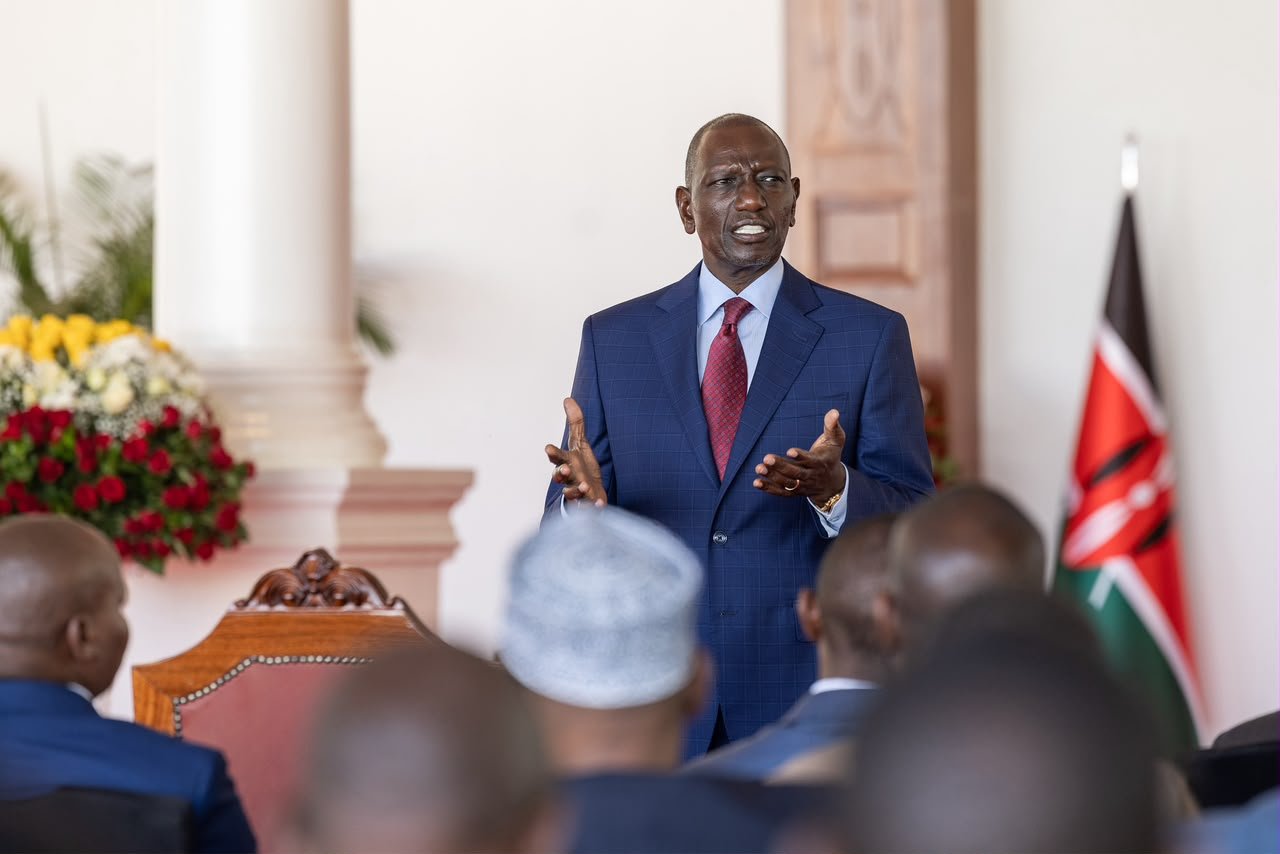
The cuts will affect spending on salaries and allowances, travel — both foreign and local — hospitality, communications, among other benefits supplied to special interest groups.
Government officials and workers earn handsome allowances on foreign and local trips, as well as for their jobs.
State functions are a mainstay for many hotel establishments that host the events, with hosts of guests
Ruto’s supporters have backed his call for the spending cuts, which are projected to be Sh900 billion by the three-year deadline.
National Assembly Deputy Speaker Gladys Shollei says cuts will be made in what she terms "unnecessary expenditures".
She would look at spending on fresh flowers in offices, tea, newspapers, snacks, airtime and so on.
“We have to tighten our belt. Look at how much food we eat at meetings. People can eat at home or carry their own lunches.
The Controller of Budget, in a recent report, painted a grim picture of heavy spending on non-priority areas.
The report revealed that State House alone spent Sh4 million daily to host delegations in the last financial year.
Ministries, Departments and Agencies spent Sh2 billion more than last year’s Sh4.3 billion on hospitality alone. Expenditure on foreign trips went up twofold to Sh6 billion.
Overall, the CoB report said government agencies spent Sh1.41 trillion on recurrent costs — Sh26 billion more than was spent in 2021.
Local travel also went up to Sh14 billion from last year’s Sh11 billion, Sh2.4 billion more on rent, Sh400 million more on vehicle maintenance, and Sh163 billion on items only indicated as "other expenses".
County officials, the COB said in an earlier report, spend an average Sh22 million daily on local travel, costs running to about Sh2 billion in three months alone.
COB Margaret Nyakango sounded the alarm on recurrent expenditure has undermined the development budget a great deal.
“This trend indicates that recurrent expenditure deprived development of resources, resulting in low investment in capital projects that would enhance economic growth,” she said.
In the current financial year, MDAs were allocated Sh2.9 trillion for recurrent spending, only Sh100 billion shy of Sh3 trillion mark.
Of the total amount, Sh1.5 trillion was allocated to Consolidated Fund Services — public debt (Sh1.3 trillion), pensions (Sh171 billion) and Sh4.5 billion for salaries and allowances drawn from CFS.
Ministries, Departments and State Agencies were provided with Sh1.17 trillion, of which they were projected to raise a Sh225 billion internally.
Even so, economic experts are worried that the budget cap will further strain economic activities, hurting productivity and job creation.
Economist David King'oo sais there is a general assumption that recurrent spending by the government has a big impact on the economy.
''They say the government is the biggest spender, inclusive of recurrent expenditure. Cities like Nakuru and towns like Naivasha are sustained by government agencies conducting workshops there. When you reduce spending on such sectors, then you hurt the economy of that town," King'oo said.
Maseno University don Charles Nyambuga said when you unplug that in favour of a Sh50 billion Hustler Fund, you are just creating capital.
"His [Ruto's] people are heavy on capital, such as savings. But it is not addressing the current crisis. The savings are simply being redistributed. We need deep economics advice on this," Nyambuga said.
Financial market analyst Jacob Olang agreed, saying the public must brace for even tougher times in the coming days as the government implements budget cuts.
He said budget cuts mean no cash for suppliers that are owed more than Sh500 billion and have either closed businesses or are on the verge of collapse.
"This is the sad state of affairs. That order and the huge pending bills are bad for business. Let us observe how those cuts will be implemented," Olang' said.
Central Bank Governor Patrick Njoroge, however, welcomed the move to effect budget cuts, saying it will prevent the creation of new bills.
Speaking during the post-Monetary Policy Committee media briefing on Friday, Njoroge termed the high pending bills as a glaring economic problem, adding that a move to limit more debt is good.
"Pending bills is a big problem. The move to cut the budget means the government is not going to accumulate more debt," Njoroge said.
Speaking to the Star on phone, economist Ezekiel Nyambega is worried that the move to hike the base lending rate and the order to cut the budget will see businesses close.
The government is the biggest spender. Budget cuts mean less money supply in the economy. This, together with the 75 percentage point increase in the base lending rate on Thursday will hurt the private sector," Nyambega said.
He said it will be more prudent for the government to cut the huge wage bill that takes away almost half of the recurrent budget.
The National Treasury has frequently been urged to maintain its public sector wage bill within the stipulated target and international benchmark of 7.5 per cent of GDP for sufficient fiscal space.
Speaking during a two-day National Conference on 'Transforming Kenya's Economy Through a Fiscally Sustainable Public Sector Wage Bill in 2019', outgoing Treasury CS Ukur Yatani said the country's wage bill is too high and is draining resources for development.
He added that due to the negative impact of a high wage bill, it is important that effective public sector wage bill management strategies be put in place to achieve the wage bill to revenue target of not more than 35 per cent.
"The wage bill at the current level of 48.1 per cent of revenue is consuming much more revenue than the recommended requirement of not more than 35 per cent, stipulated in the Public Finance Management Act," Yatani said.
Questions abound as to whether Ruto would be able to succeed , especially in the wake of the failures of his predecessor to contain wanton spending.
The Parliamentary Budget Office, in a review of the Budget Policy Statement 2022, was not impressed with Treasury’s achievements in attaining austerity.
“It is unlikely the National Treasury’s target of reducing the fiscal deficit to deficit (including grants) to 3.5 per cent (3.2 per cent) in the medium term will be met,” the PBO said in its report.
It poked holes in the measures aimed at curbing the growth of expenditure through reduction of non-priority expenditures such as hospitality, training, travel and freezing of employment in non-priority sectors.
PBO, at the height of the calls for the current budget cuts, said such measures must be taken cautiously.
(Edited by V. Graham)