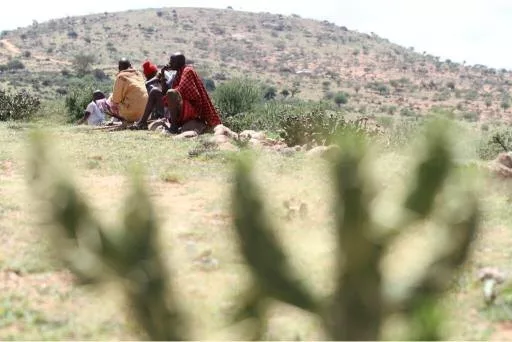
 Pastoralists amongst invasive cactus, opuntia stricta / CABI.
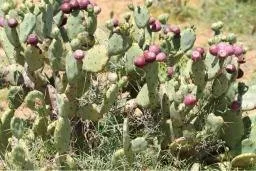
Invasive cactus, Opuntia stricta / CABI.
For years, Moses Lekupaa, a pastoralist in Laikipia county, watched helplessly as an aggressive invasive cactus spread across grazing fields where he once freely grazed his livestock.
Like many families in the county, Lekupaa depends on livestock for his livelihood. But the invasive opuntia stricta cactus increasingly made that difficult.
“Cattle that fed on its fruit often fell sick, while others suffered painful injuries from the plant’s thorns,” he says.
“As grazing land disappeared, I was forced to travel farther in search of pasture, increasing the cost and hardship of keeping livestock.”
But there is hope for the pastoralist, not through chemicals or heavy machinery, but through a tiny sap-sucking insect known as the cochineal.
Scientists working with the Centre for Agriculture and Bioscience International (Cabi) and local partners introduced the naturally occurring insect as a biological control agent against the cactus.
The cochineal bug feeds exclusively on the invasive cactus, sucking its sap and gradually weakening the plant until it stops flowering, producing fruit and eventually dies.
A recent study published in the journal Biological Invasions shows the biological control programme is transforming landscapes in parts of Laikipia, with communities reporting significant reductions in cactus infestations and improvements in grazing conditions.
According to Cabi, the invasive cactus, originally introduced as an ornamental plant, has become one of Kenya’s most destructive invasive species.
It has spread across millions of acres of rangelands in counties including Laikipia, Samburu, Baringo, Taita Taveta and Kajiado, reducing pasture availability, injuring livestock and wildlife, and disrupting livelihoods.
Researchers interviewed 155 residents around Il Polei village in Laikipia, where most households rely on livestock for food and income.
The findings reveal strong community support for the biological control approach.
Nearly 80 per cent of respondents said the cochineal was more effective than cutting or spraying the cactus, while 88 per cent believed it was also the cheaper option.
Importantly, 94 per cent reported they had never observed the insect feeding on any other plant, reinforcing confidence it is safe for crops and native vegetation.
The study also found local communities have become active partners in restoring degraded rangelands.
More than 80 per cent of respondents said they had helped spread the insect by transferring infected cactus pads to new areas or encouraging neighbours to do the same.
With support from the Northern Rangelands Trust, some residents have also been trained to rear and release cochineal, turning landscape restoration into a community-led conservation effort.
Most respondents reported a decline in cactus density over the past five years.
More than 90 per cent said grazing conditions had improved, while 96 per cent observed healthier livestock.
Nine out of 10 respondents reported improvements in their livelihoods and many noted land values were beginning to recover as pasture returned.
The economic toll of the invasive cactus has been substantial.
Previous studies estimated that affected households were losing between Sh10,000 and Sh500,000 annually due to reduced grazing opportunities, livestock injuries and declining productivity.
A 2026 economic assessment further estimated that opuntia stricta reduced access to livestock forage in Laikipia by about Sh1.1 billion ($8.4 million).
Nationally, the invasive plant is estimated to cause economic losses of about Sh16.6 billion ($127.4 million) through reduced livestock production, land degradation and the loss of ecosystem services.