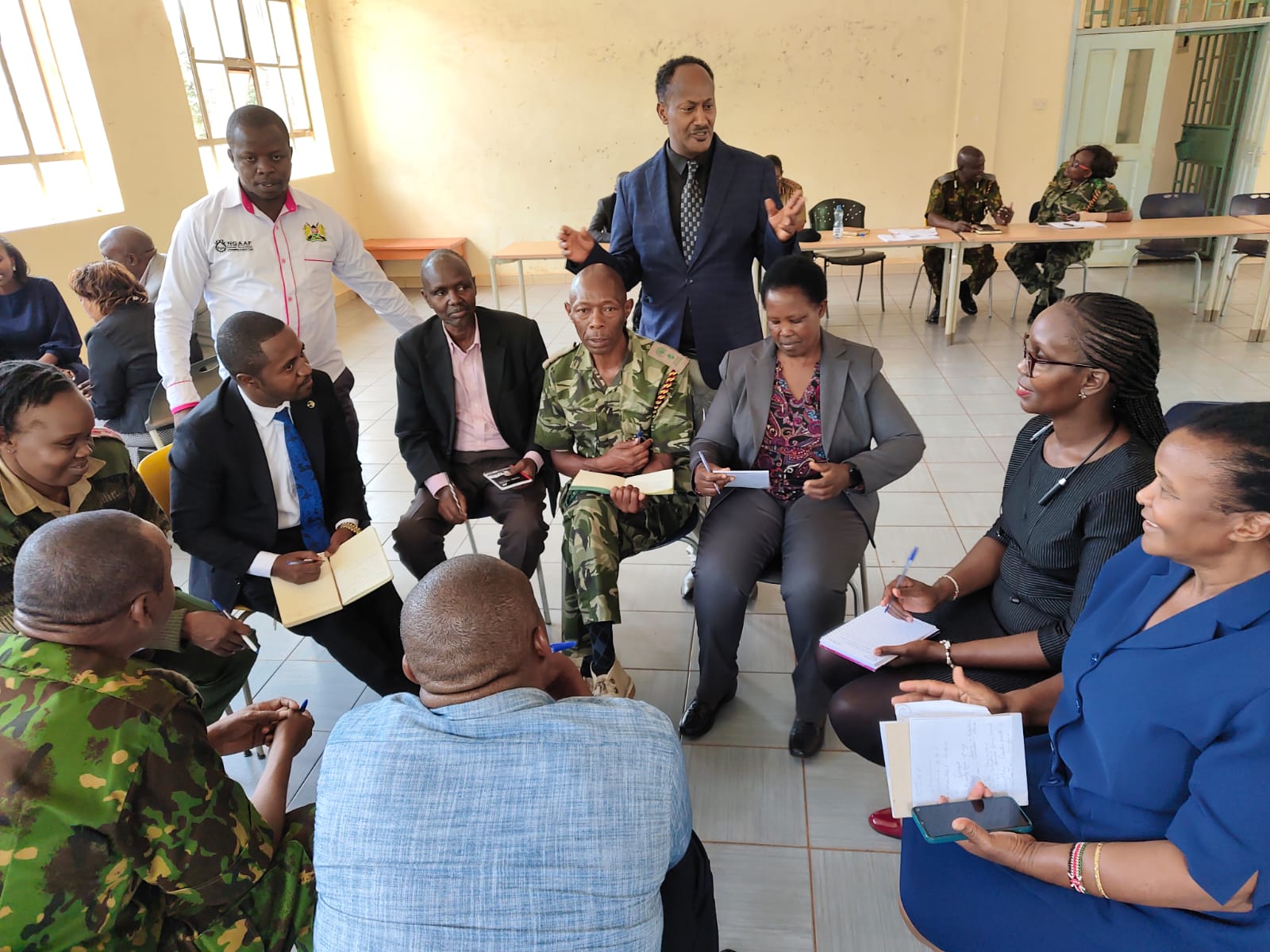
 Murang'a county commissioner Hassan Bule (R) addresses a discussion group during the launch of 100-day RRI on May 28, 2026 / ALICE WAITHERA
Security agencies in Murang'a have expressed concerns over rising cases of female genital mutilation and sexual and gender-based violence in the county, prompting the launch of a 100-day rapid results initiative aimed at curbing the vice.
Murang’a county commissioner Hassan Bule said the county is witnessing worrying trends in retrogressive cultural practices and violence targeting women and children.
He spoke during a meeting that brought together security officers, officers from departments dealing with children and gender issues and subcounty administrators.
Bule said FGM prevalence in Murang’a stood at 17 per cent, above the national average of about 14 per cent, making the county one of the worst affected in the Mt Kenya region.
“We must put our heads together and ensure leaders and all government departments work together to fight this problem because it is a retrogressive culture that is dragging society backwards,” he said.
The county commissioner observed that gender-based violence is affecting not only women and girls but also men and boys, adding that cases of defilement and abductions involving minors have become increasingly common in parts of the county.
He warned that harmful cultural practices and sexual violence are threatening the safety and wellbeing of children, even as he called on parents to be more vigilant in protecting minors from abuse and exploitation.
Bule further urged schools to ensure learners report to school after sunrise and leave early enough in the evening to avoid exposure to insecurity and criminal activities.
“Any cultural practice that conflicts with the constitution must be abandoned. Even the Bible only talks about circumcision of men and not women,” he added.
The administrator said the 100-day campaign will involve intensive public sensitisation forums across all parts of the county targeting issues such as FGM, defilement, alcohol abuse and drug abuse including marijuana and chang’aa.
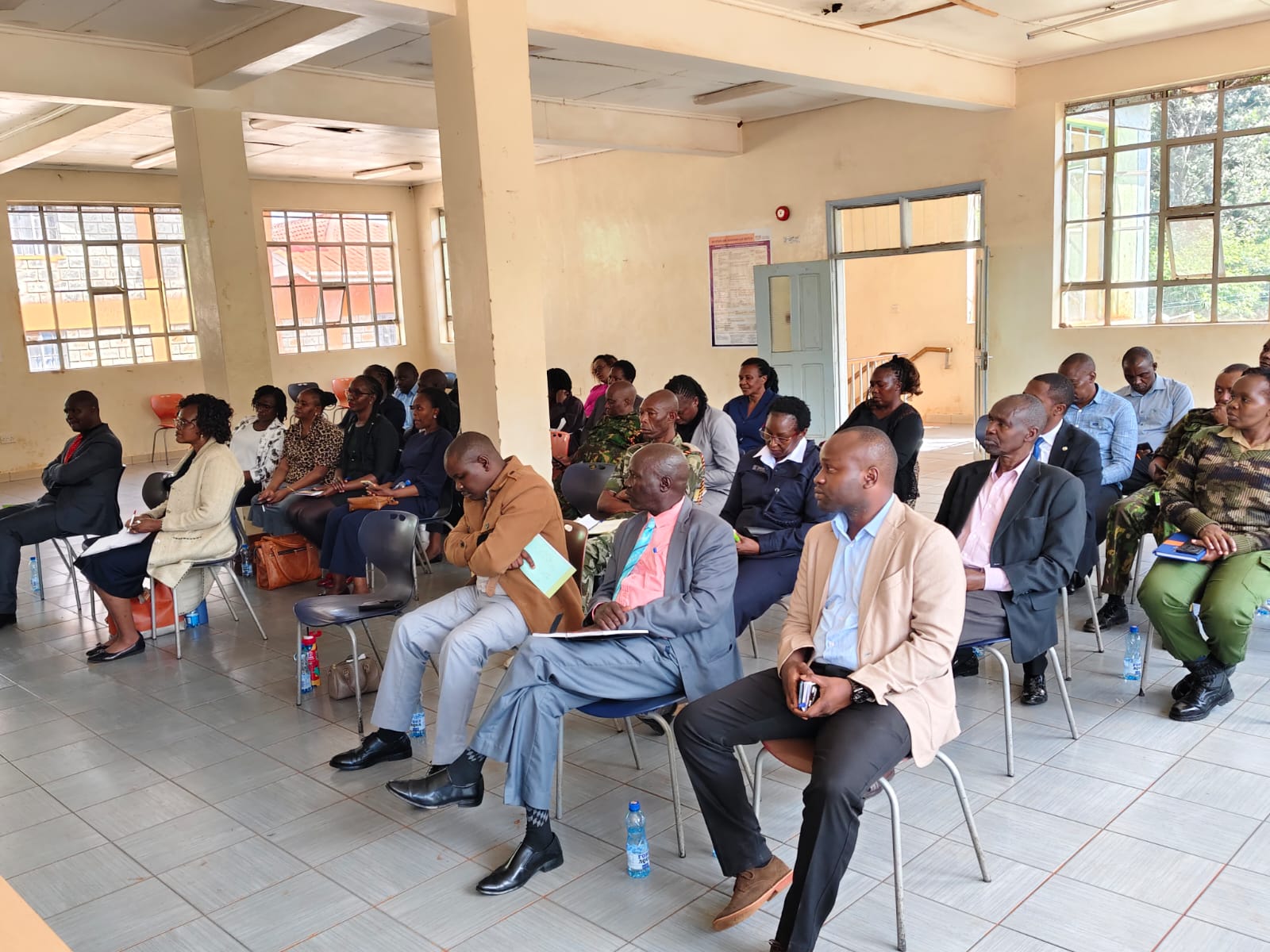 Security stakeholders during the launch of 100-day RRI against SGBV, alcoholism, FGM and drug abuse in Murang'a county on May 28, 2026/ ALICE WAITHERA
He appealed to religious leaders, cultural elders, women groups, community leaders and the media to support the initiative through awareness creation and advocacy against SGBV and harmful cultural practices.
As part of the intervention, female deputy county commissioners and women police officers will be deployed to mentor girls and educate women during public forums and community barazas.
Subcounty leaders blamed the vices on alcoholism, drug abuse, poverty and cultural cults operating in several parts of the county that require their female members to undergo the cut while compelling male members to marry women who have undergone FGM.
Murang’a county gender director Peter Muhia said the rapid results initiative, which began on May 21, will involve a multi-sectoral approach bringing together government agencies, churches, traditional groups and community champions.
He said Murang’a ranked as the second worst county in Kenya in cases of physical and sexual violence, citing findings from the 2022 Kenya Demographic and Health Survey (KDHS).
“Actually we are above the national average at 34 per cent and 24 per cent respectively. We are not even doing bad, we are doing much worse,” Muhia said.
He said the county has resolved to intensify awareness campaigns through churches, mosques, barazas and Nyumba Kumi meetings while shifting focus from merely addressing symptoms to tackling the root causes of GBV.
Muhia identified culture as one of the leading drivers of FGM in the county, adding that authorities will conduct investigations to identify hotspots and establish why the practice appeared to be resurging after years of decline.
“FGM being a retrogressive cultural practice, it is driven by culture. We want to understand the hotspots and drivers so we can address the problem effectively,” he said.
Despite decades of anti-FGM campaigns in Kenya, the practice remains prevalent in several communities, particularly in rural areas where cultural beliefs and rites of passage continue to sustain it.
Kenya outlawed FGM through the Prohibition of Female Genital Mutilation Act of 2011, with offenders facing heavy penalties including imprisonment.
According to national statistics, thousands of girls remain at risk of undergoing the cut annually, especially during school holidays when ceremonies are secretly conducted.
Human rights organisations have repeatedly linked FGM to school dropouts, early marriages, psychological trauma and long-term reproductive health complications.
Authorities in Murang’a now hope the newly launched initiative will strengthen community awareness, improve reporting mechanisms and help protect vulnerable groups from violence and abuse.
![[PHOTOS] The new Ngong –Naivasha Road viaduct](https://cdn.radioafrica.digital/image/2026/06/64d4f771-4432-4aee-ba3c-2f304c4436ec.jpg)








![[PHOTOS] 'Mr Speaker Sir' Gen Z protester in court](https://cdn.radioafrica.digital/image/2026/06/b3e62d8e-25c3-4780-90f9-4eb48b1ce8a7.jpg)