


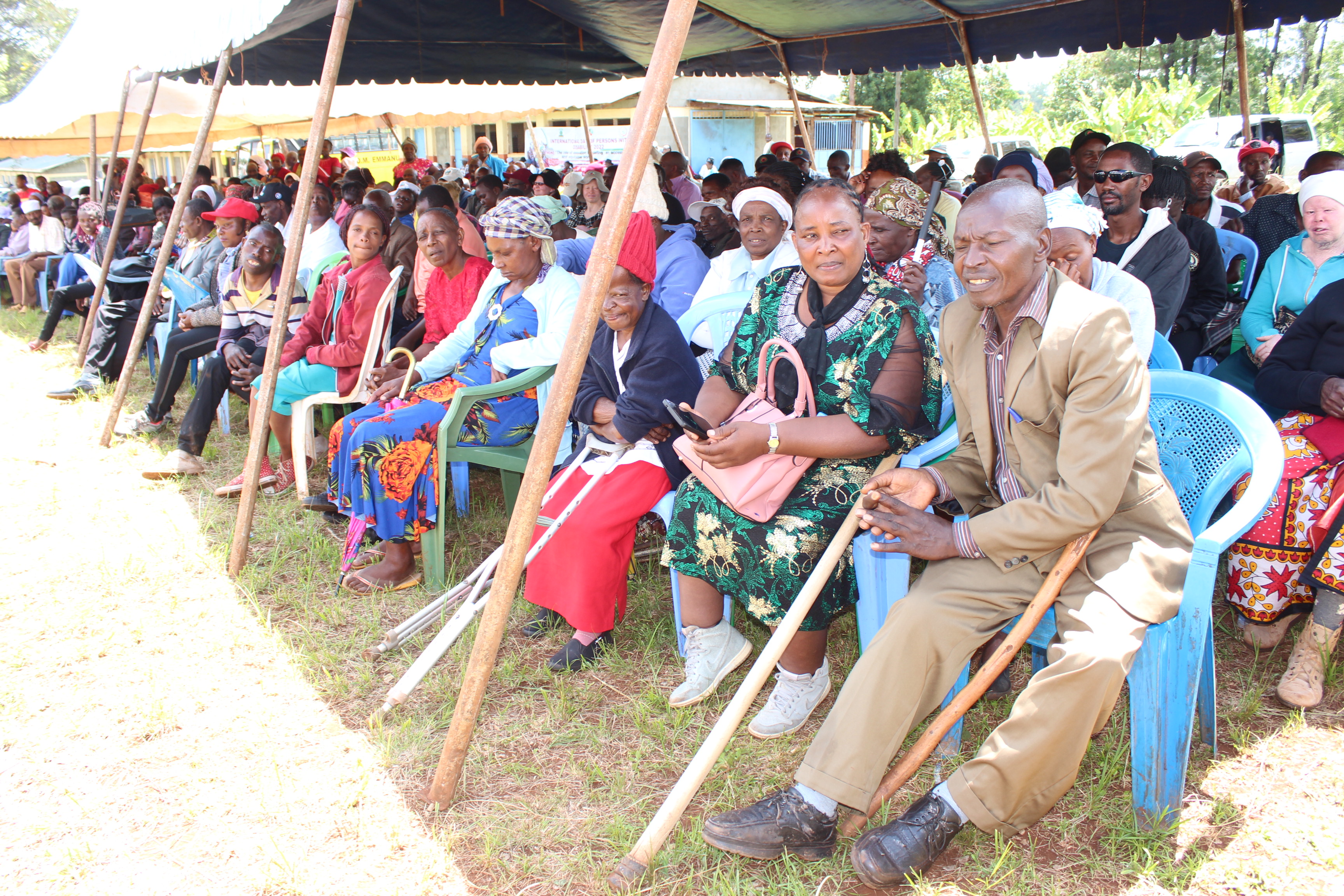
 Persons with disabilities during the international PWDs day organised by Murang'a county government last year at Gaichanjiru /ALICE WAITHERA
Murang’a has launched an intensive training programme for healthcare workers aimed at improving the assessment and classification of persons with disabilities.
Forty medical officers underwent a four-day training facilitated by the county government, Action Foundation and the Ministry of Health.
The initiative decentralises disability assessment services, previously concentrated at referral hospitals, to subcounties and rural communities.
Action Foundation said the training
equips health workers with standardised skills to identify, assess and
categorise disabilities, enabling PWDs to obtain certifications required for
government support.
This includes assistance from the
National Council for Persons with Disabilities, which provides funding for
small businesses, assistive devices and educational bursaries.
Victor Ligaya from Action Foundation
described the programme as a major step towards bridging long-standing gaps in
disability recognition and service delivery.
“Now they have gained skills that
will enable them to carry out assessments in the subcounties and even deep in
the villages,” he said.
The 2019 national census recorded
about 1.3 million PWDs in Kenya, representing about 2.2 per cent of the
population, with Murang’a accounting for roughly 102,527.
Officials believe the actual number
is higher due to underreporting, particularly among children under five and
individuals with intellectual disabilities.
Murang’a deputy county director of
health Kairu Kimende said the training allows assessments in all eight
subcounty health facilities, a major shift from when services were only
available at Murang’a Level 5 Hospital.
Proper classification is key to
unlocking opportunities, including tax exemptions and social protection
benefits.
The programme also addresses
persistent challenges for PWDs, such as stigma, limited mobility and poor
infrastructure.
Many public buildings remain
inaccessible and assistive devices like wheelchairs are often scarce.
The county currently holds about 300
specialised wheelchairs, distributed only after proper assessment and
certification.
Josephine Kaburu, a physiotherapist
from the Ministry of Health’s rehabilitation department, said the initiative is
part of a broader rollout across seven counties aimed at standardising
disability assessment nationwide.
The programme also engages community health promoters to identify hidden cases and encourage families to seek help,
particularly for children.
Medics urged full implementation of
the Disability Act, 2025, to strengthen protections and support for PWDs,
emphasising that initiatives like this are critical to ensuring no one is left
behind, particularly in rural areas.
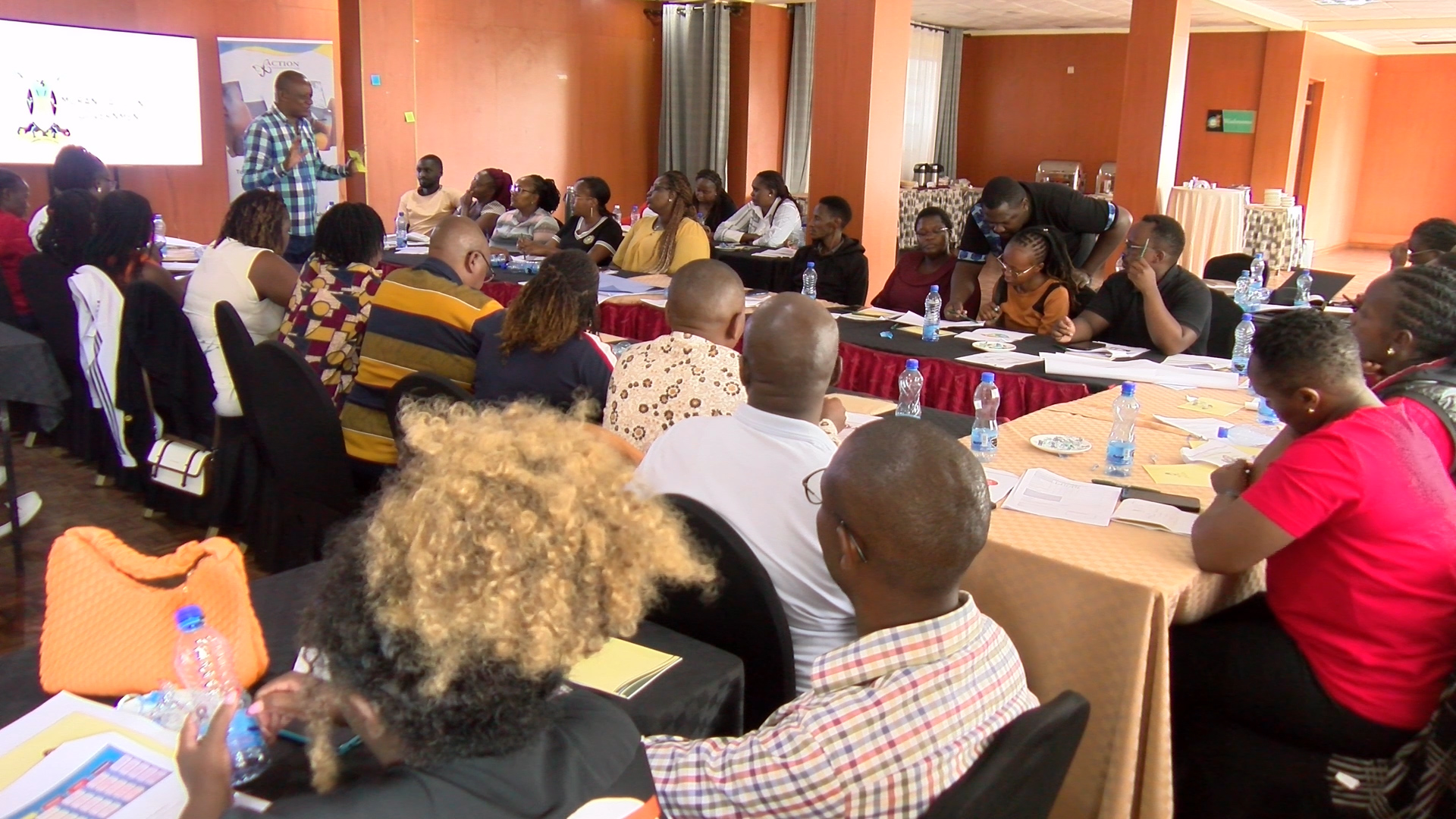 Health workers during a training session on PWDs assessment organised by Murang'a county government /ALICE WAITHERA
![[PHOTOS] The new Ngong –Naivasha Road viaduct](https://cdn.radioafrica.digital/image/2026/06/64d4f771-4432-4aee-ba3c-2f304c4436ec.jpg)










![[PHOTOS] 'Mr Speaker Sir' Gen Z protester in court](https://cdn.radioafrica.digital/image/2026/06/b3e62d8e-25c3-4780-90f9-4eb48b1ce8a7.jpg)
