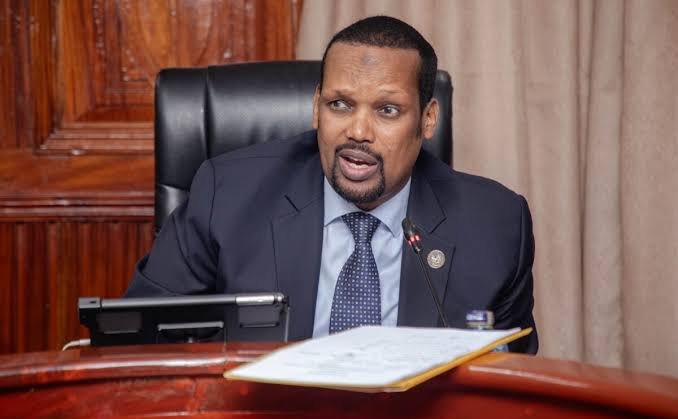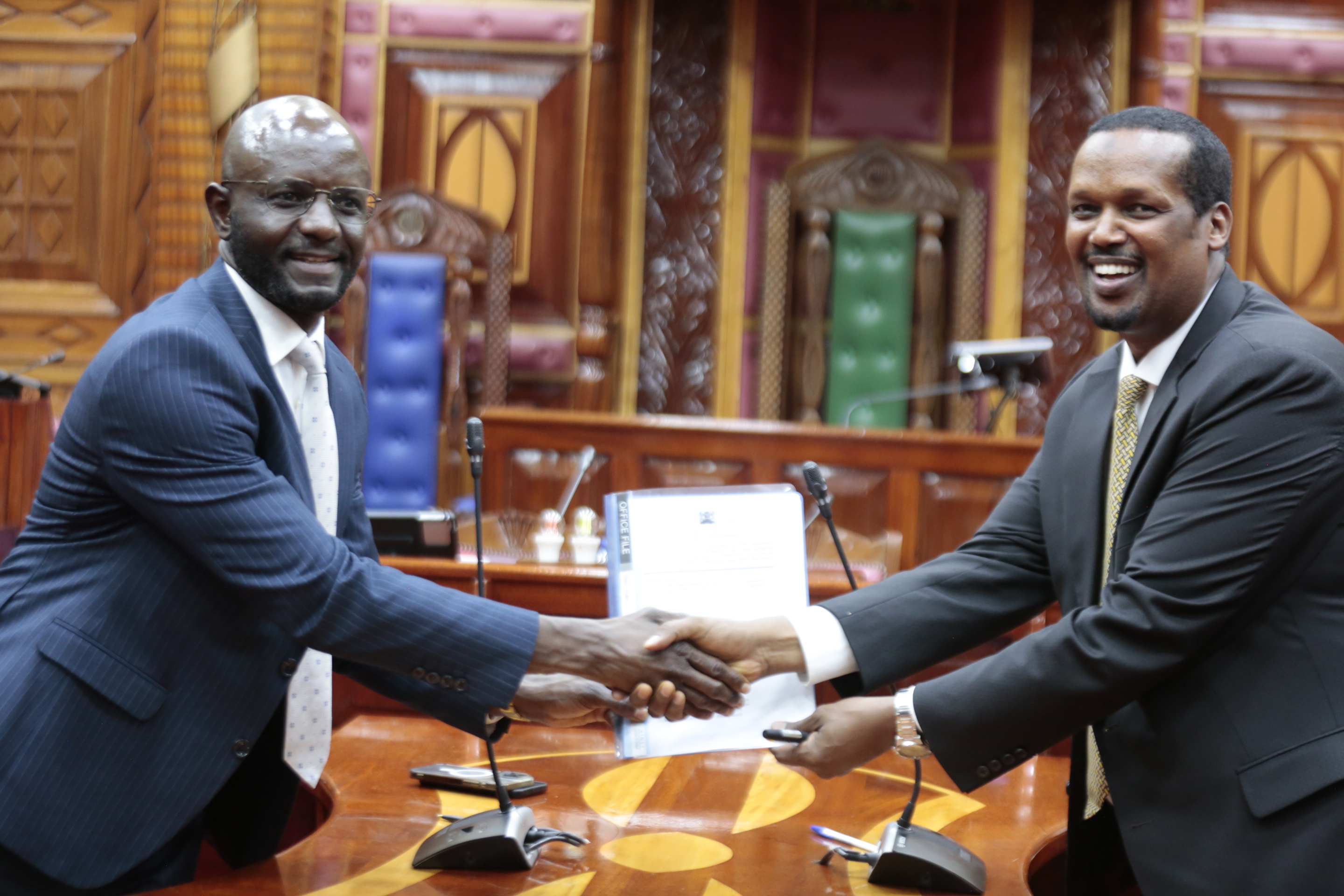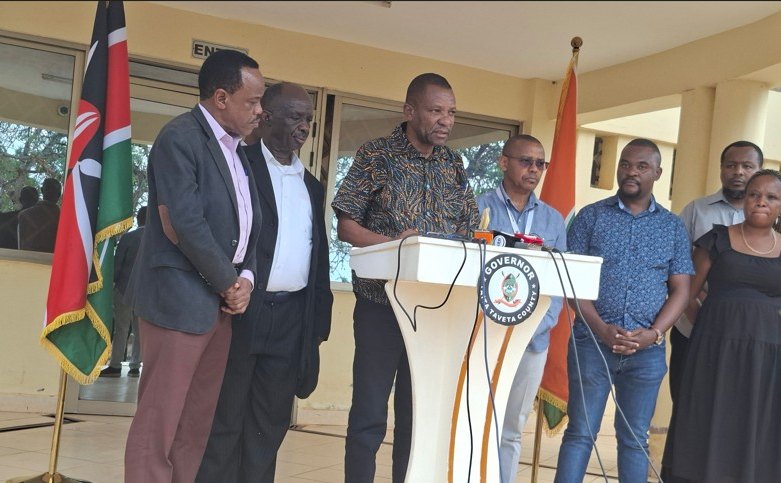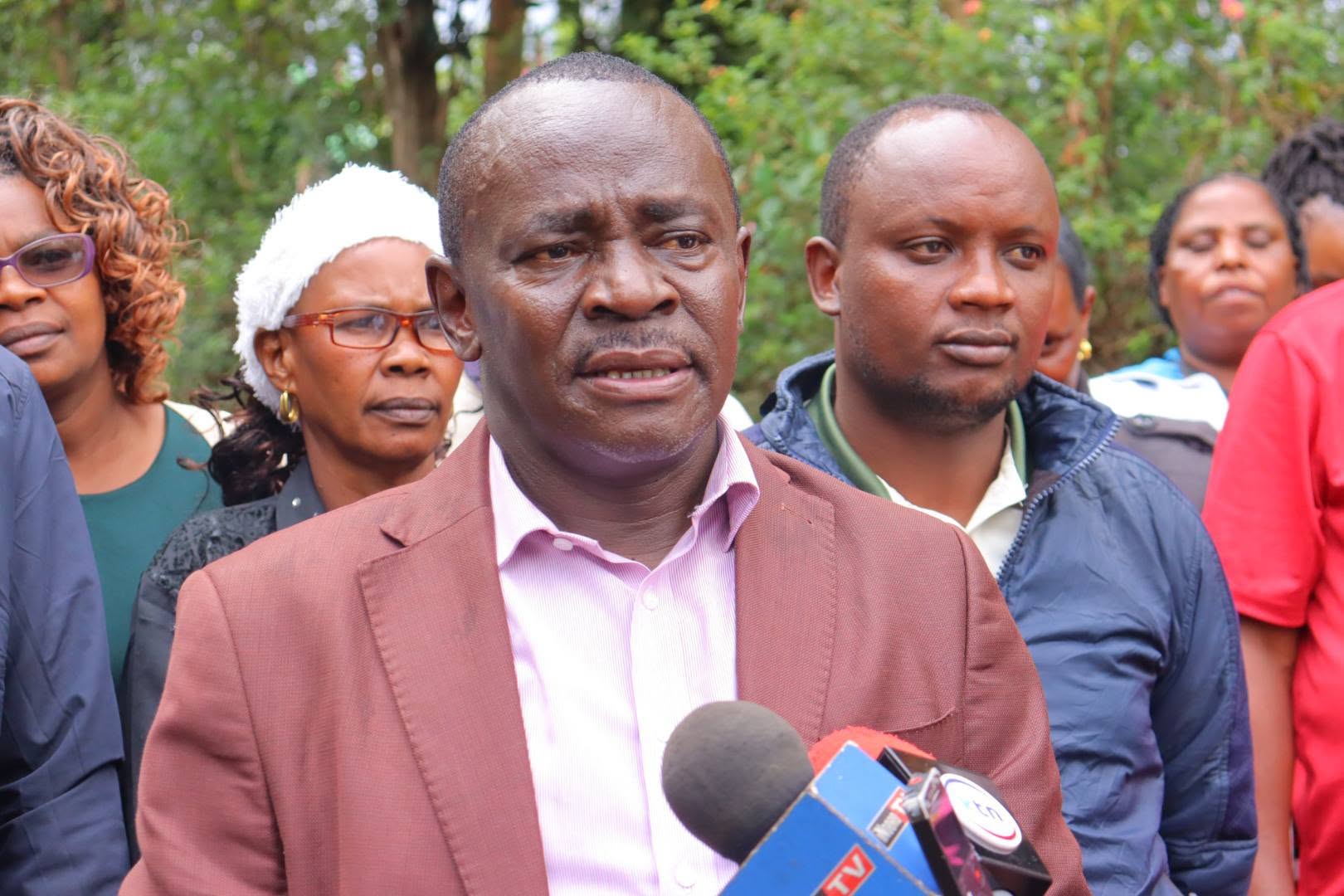
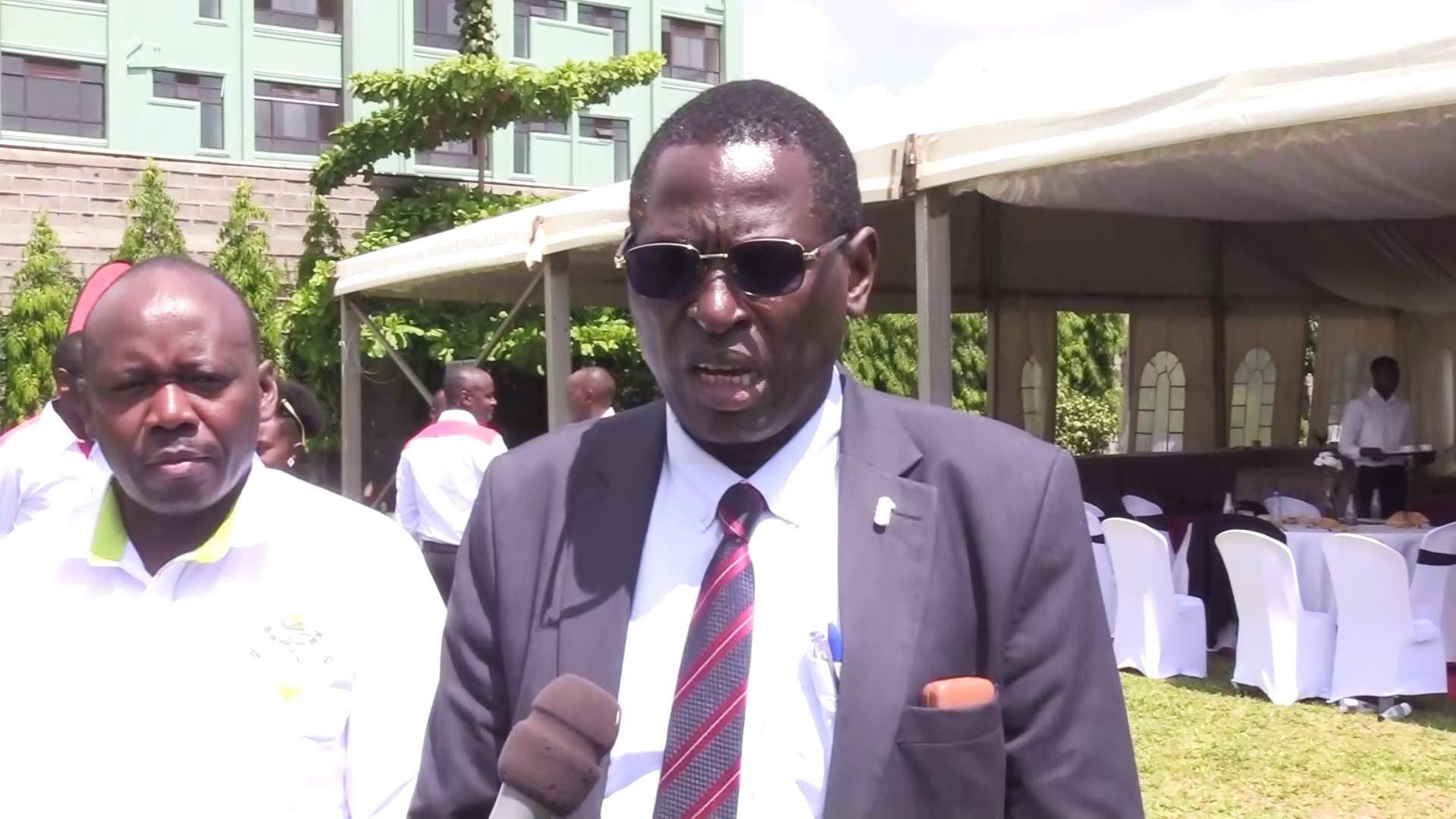
 The Commissioner of Co-operatives, David Obonyo, at Kagio in Kirinyaga during the opening of a new branch of Unaitas Sacco on November 28, 2025/HANDOUT
The government has assured farmers that proper public participation will be conducted across the country before implementation of the Direct Settlement System. This follows a ruling made by Kerugoya High Court on November 18.
Justice Edward Muriithi issued the orders suspending implementation of the system until May 20, declaring that public participation was not conducted in 16 coffee-growing counties.
The ruling followed a petition filed by farmers challenging the DSS system, and told the court that they were not consulted when a commercial bank was appointed to handle direct payments.
The DSS system was introduced in 2023 and allowed payments made through the Nairobi Coffee Exchange (NCE) to be routed through a settlement account managed by a bank after which a percentage of the money is sent to farmers while the remainder is submitted to coffee co-operative societies.
Commissioner of Co-operatives David Obonyo said the government will obey the court’s orders.
“We will not impose regulations that farmers don’t want. We will ensure there are proper mechanisms for participation and dialogue with farmers so we can have an amicable solution,” he said.
In November last year, the co-operatives ministry issued a directive indicating that DSS would take effect in June and urged coffee co-operative societies to submit farmers’ data for payments.
Farmers, however, strongly rejected plans to pay them directly through their mobile phones, saying this would impoverish them by discouraging saving and cause the collapse of co-operatives.
Currently, the payments are made directly to the coffee co-operative societies that make deductions for their operations and payment of loans taken on behalf of farmers before forwarding the rest to farmers’ bank accounts.
Obonyo said there is need for coffee co-operative societies with a production of below 500,000kg to merge with stronger ones.
He said lower volumes of coffee raise the overhead costs for an individual co-operative, eating into farmers’ earnings.
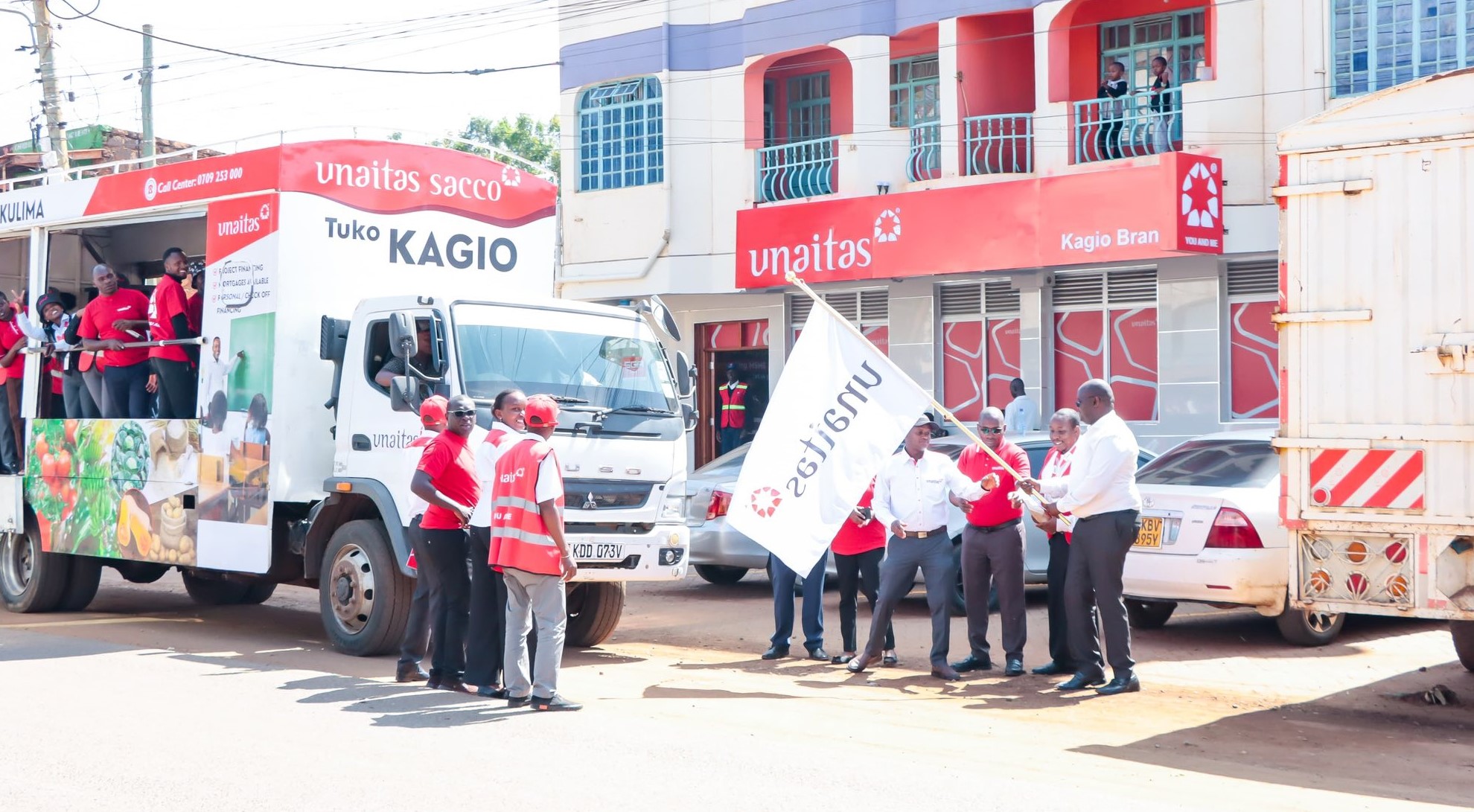 The new Unaitas branch opened at Kagio in Kirinyaga County on November 28, 2025/HANDOUT
The challenge is especially rife in
Western and Rift Valley regions, resulting in many co-operatives that struggle
to stay afloat as farmers earn minimal returns.
“In
Kirinyaga, however, one sacco is producing more than one million kilogrammes.
Only one sacco is struggling and we’re working with the county to support it to
improve its production,” Obonyo said.
The
county is the largest coffee producer in the country, with 8.9 million
kilogrammes sold last year at Sh5 billion. This year, some local co-operatives
have paid at Sh150 per kilogramme, the highest pay recorded in years.
The
commissioner announced that a review is being undertaken on all saccos to
ensure those underperforming are merged with stronger ones.
“In
the past few months, we have been unable to register new saccos because of the
review and will release the report once its ready”.
He
said the ministry is working with county governments and Sacco Societies
Regulatory Authority (Sasra) to enhance inspections and ensure saccos are well
run.
Any
sacco under which members’ money is misappropriated, he said, is immediately
put under investigation and officials involved sare urcharged.
Obonyo
spoke during the opening of a new Unaitas Sacco branch in Kagio, Kirinyaga
County, on Friday.
CEO
Martin Muhoho said the county, one of the richest in the Mt Kenya region
agriculturally, is filled with innovators willing to take risks to advance
their farming and business activities.
“This
is our 34th sacco
and we plan to raise this number to 60 in the next five years,” Muhoho said.
He
said the 32–year–old sacco has been recording accelerated growth in the recent
past, with its assets base growing by more than Sh2 billion annually.
The
sacco has an assets base of Sh30 billion, a loan book of over Sh21 billion and
deposits worth Sh16 billion.
“In five years, we plan to raise the asset base up to Sh60 billion. Our mission is to transform lives through financial empowerment,” Muhoho said.