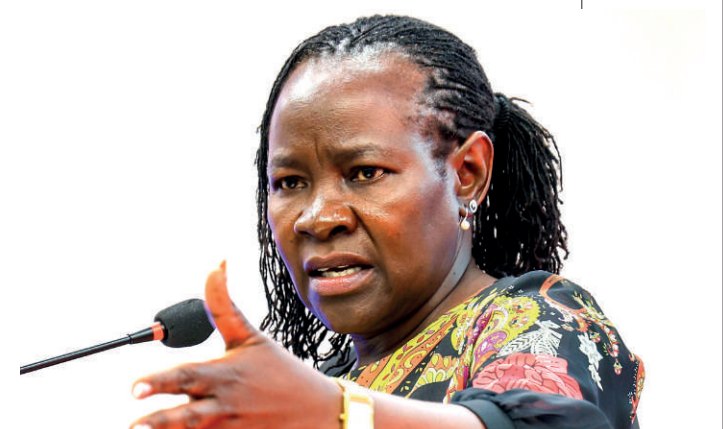
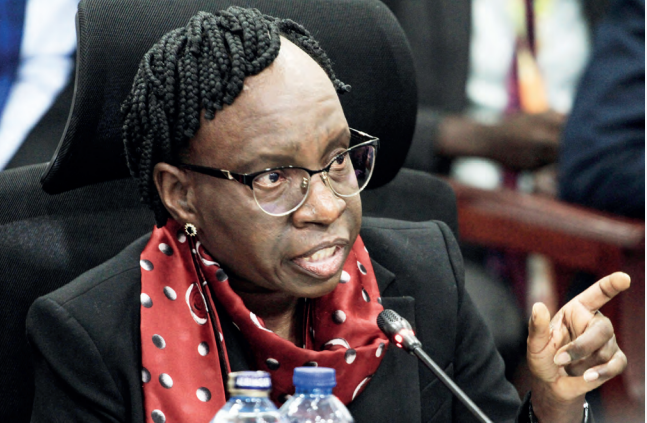
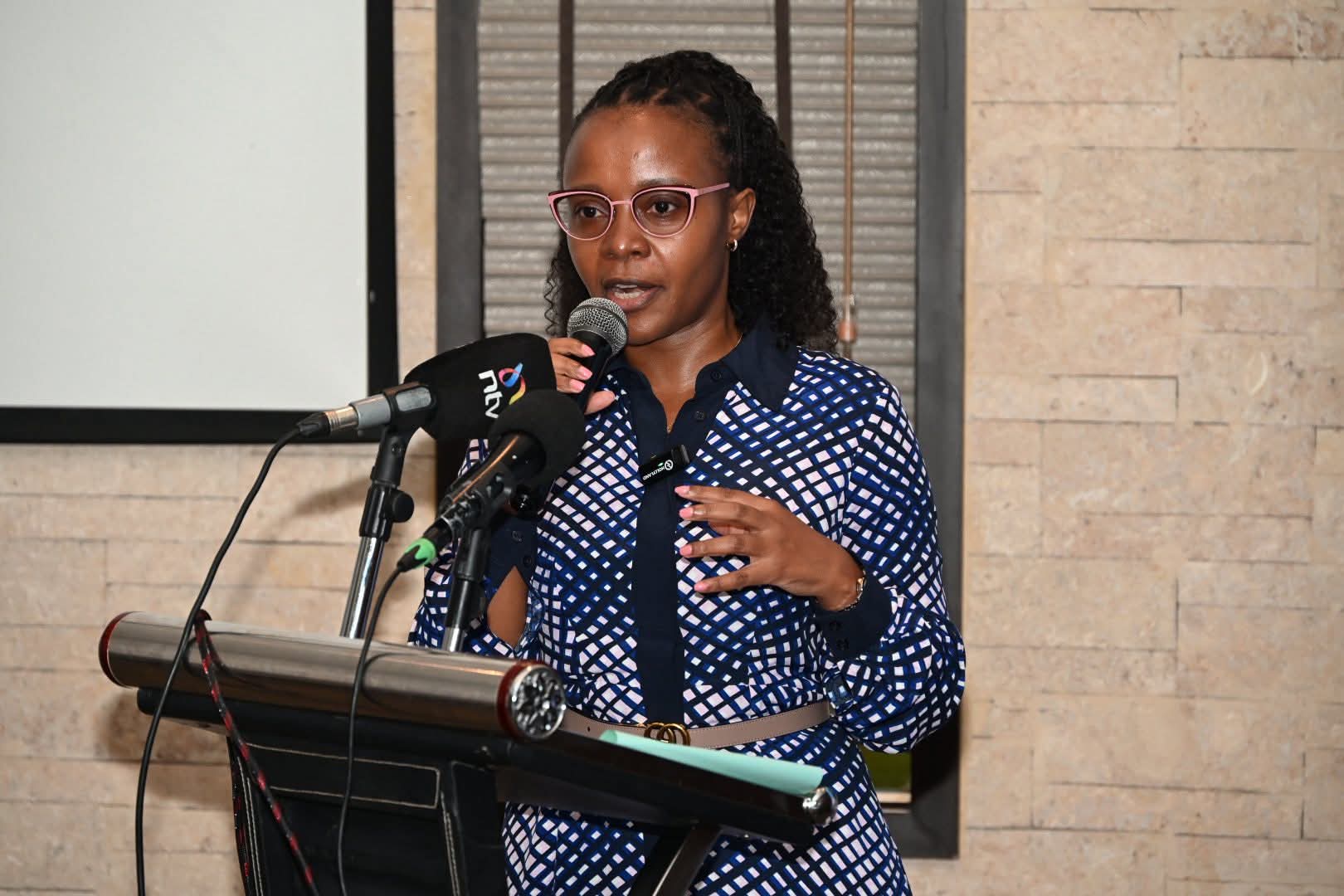
 The State Department for the Blue Economy and Fisheries PS Betsy Njagi during the press briefing ahead of the 11th edition of the ocean conference/handout.
The government will use the global platform during the upcoming Ocean Conference in Mombasa to unlock Sh350 billion opportunities in the blue economy sector.
Blue Economy and Fisheries Principal Secretary Betsy Njagi said Kenya is ready to showcase innovation, strengthen regional and global partnerships, and drive meaningful action towards unlocking opportunities within the sector.
“The potential for a blue economy in Kenya is Sh350 billion. Currently, we have Sh39 billion, so you can see there's 300 billion shillings that are still untapped,” Njagi said on Monday.
She was addressing a press conference in Nairobi, accompanied by East African Wildlife Society executive director Nancy Ogonje.
Kenya will host the 11th Ocean Conference from June 16 to 18, 2026, marking the first time the global ocean summit is held on African soil.
The conference will take place in Mombasa under the theme ‘Our Ocean, Our Heritage, Our Future’.
Over 4,500 delegates are expected to grace the event with over 20 ministers expected.
The thematic areas include sustainable fisheries, green economy, marine protected areas, maritime security, marine pollution and climate change.
Kenya’s oceans, lakes, rivers, and groundwater systems represent an underutilised frontier for national transformation.
The vast untapped potential can drive sustainable economic growth, create jobs, and improve livelihoods while preserving marine and inland ecosystems.
The National Blue Economy Strategy 2025-2030 shows that fisheries and aquaculture contribution to GDP is 0.7 per cent.
Over four million people are supported in the fisheries value chain while the fish production is valued at Sh30.4 billion.
According to the strategy, maritime trade is valued at over Sh388 billion annually, while illegal, unregulated and unreported (IUU) fishing losses are approximately Sh90 billion.
The strategy shows that aquaculture production potential by 2030 is 450,000 metric tonnes, while the annual fish production is 163,605 metric tonnes.
Some of the opportunities that the sector offers include coastal and marine tourism that has enormous potential through cruise tourism, water sports, deep-sea expeditions, cultural tourism and ecotourism.
However, challenges such as climate change, infrastructure gaps, pollution and security require targeted interventions.
The Port of Mombasa is a key trade hub, but capacity constraints, outdated infrastructure, and congestion impact efficiency.
Modernisation, automation, and regional integration offer opportunities for growth and competitiveness.
The Lamu Basin presents prospects for offshore oil and gas discoveries, while untapped renewable energy sources like tidal, wave, wind, and solar power can strengthen Kenya's green energy future.
Agriculture in coastal regions is underutilised due to water scarcity and poor infrastructure, the strategy notes.
Innovations in irrigation, value addition, and desalinisation can transform food security.
Mangrove and coastal forest conservation efforts such as Mikoko Pamoja showcase global leadership in carbon offsetting and ecosystem protection.
PS Njagi said three segments will be held between June 14 and 15.
She said there will be a youth symposium that will involve young people in the sector as well as a session on academia that will attract at least 300 scientists who will share their studies.
The other session will be on business and investment.
The PS said the blue economy strategy that was unveiled in February will be unpacked during the conference in order to attract investments.
Njagi said the strategy was to unpack all the blue economy activities in fishing, aquaculture, maritime, oil and gas, mining, and many other components within the blue economy.
There will be a Commonwealth Ocean Ministers meeting June 16, with the opening ceremony for the conference a day later.
Njagi said the government has in the last three years invested over Sh20 billion in coastal and lake regions to spur growth in the sector by supporting the infrastructure, governance, and communities in the blue economy and fisheries sector.
The PS said commitments totalling Sh1.1 billion will be made by the government during the conference.
Ogonje said communities must be placed at the forefront of ocean governance while strengthening national and regional policy frameworks.
She said there is a need to accelerate action against marine pollution, strengthen marine protected areas and community conservation and enhance maritime security and ocean governance.
She called for investments in climate resilience and nature-based solutions, secure sustainable fisheries and coastal food systems and building an inclusive and equitable blue economy.
“East Africa Society is championing the Our Ocean, Our Voice campaign. We went to the grassroots to be able to collect what the community is actually saying, and we wanted their voices to be included in the decision-making processes, and that is why we became the link between the communities and those who are discussing at the international level,” Ogonje said.