The Africa Forward Summit comes at a
particularly unsettling moment in the global system. Economic fragmentation is
deepening, supply chains are shifting, climate commitments remain uneven, and
trust in multilateral institutions is under pressure.
In that environment, Africa’s role
cannot be peripheral. It has to be central to the global conversation. That is
what the Africa Forward Summit in Nairobi is seeking to achieve.
Co-hosted by President William Ruto
of Kenya and President Emmanuel Macron of France, this is the first time the
summit is being held in an Anglophone African country. Beyond geography, it
signals a subtle but important shift in how Africa engages with global partners
— not just in setting, but in terms of influence.
For years, Africa’s external
relations have been shaped by a donor-recipient framework that no longer
reflects current realities. Today, the continent sits at the centre of global
growth, energy transition and the future workforce. Yet this position has not
always translated into influence over financing, market access or
decision-making. That is the gap Nairobi is attempting to address.
Africa is not asking to be included;
it is already part of the solution. From climate resilience to food systems and
technology, global challenges cannot be solved without Africa’s full
participation. The real question is whether that participation is reflected in
outcomes.
That brings us to the most important
shift under discussion: delivery.
There have been many well-crafted
communiqués over the years. The challenge has never been agreement, but
implementation. What stands out in Nairobi is an attempt to ground discussions
in execution — with greater focus on bankable projects, investment pipelines
and measurable delivery.
The priorities are not new, but they
are being framed with greater urgency.
The first is economic transformation
that retains value on the continent. Africa has long exported raw materials
while importing finished goods, a model that has constrained industrialisation
and job creation.
Green industrialisation offers a
potential pathway, especially given Africa’s renewable energy potential.
Kenya, for example, already
generates nearly 90 per cent of its energy from green sources. But potential
alone is not enough.
Scaling industrialisation depends on
reliable power, affordable financing and consistent policy frameworks. Without
these, Africa risks exporting yet another form of raw potential rather than
industrial value.
The second priority is value
capture. Africa produces at scale but often retains only a small share of the
value generated. This is particularly evident in agriculture, where producers
bear the risk but do not always benefit fully from returns.
Initiatives such as geographical
indication frameworks aim to correct this imbalance by recognising origin,
protecting quality and strengthening pricing power.
However, their impact will depend on
implementation. Without proper certification systems, market access and enforcement,
the benefits will remain limited.
With them, they could significantly
shift value distribution in Africa’s favour.
The third priority is participation
in the technologies shaping the next phase of global growth.
Africa cannot afford to remain on
the margins of the digital and artificial intelligence economy. With the
world’s youngest population, the stakes are immediate and long term.
The ambition is clear: to build, not
just consume. The challenge lies in whether systems are in place to support
that ambition — through sustained investment in education, infrastructure and
regulatory frameworks that allow innovation to scale.
Across all three priorities, the
issue is not direction but delivery. The summit is expected to reinforce a
broader shift in how Africa engages globally, with expanding partnerships
across the Global South creating more room for negotiation and balance.
However, diversification of
partnerships does not automatically guarantee better outcomes. Some
relationships risk replicating extractive patterns under new forms. Without
clear terms and strong governance, expanded engagement could dilute rather than
strengthen Africa’s position.
This brings us back to a fundamental
question: if Africa is so central to global stability and growth, why does that
not consistently translate into fairer trade, finance and mobility outcomes?
The Nairobi summit does not resolve
that contradiction, but it sharpens it. It forces the conversation into clearer
focus — that Africa’s centrality only matters if it changes outcomes.
Nairobi’s emerging role, therefore,
will not be measured by how many summits it hosts, but by what follows. Do
commitments become projects? Do projects reach completion? Do they generate
real economic value?
That is the standard against which
this moment will ultimately be judged. The expectations are clear. The test now
lies in what comes next.
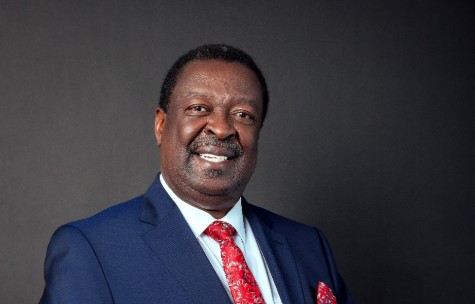
The writer is the Prime Cabinet Secretary
and Cabinet Secretary,
Ministry
for Foreign and Diaspora Affairs of the Republic of
Kenya




![[PHOTOS] The new Ngong –Naivasha Road viaduct](https://cdn.radioafrica.digital/image/2026/06/64d4f771-4432-4aee-ba3c-2f304c4436ec.jpg)









![[PHOTOS] 'Mr Speaker Sir' Gen Z protester in court](https://cdn.radioafrica.digital/image/2026/06/b3e62d8e-25c3-4780-90f9-4eb48b1ce8a7.jpg)