


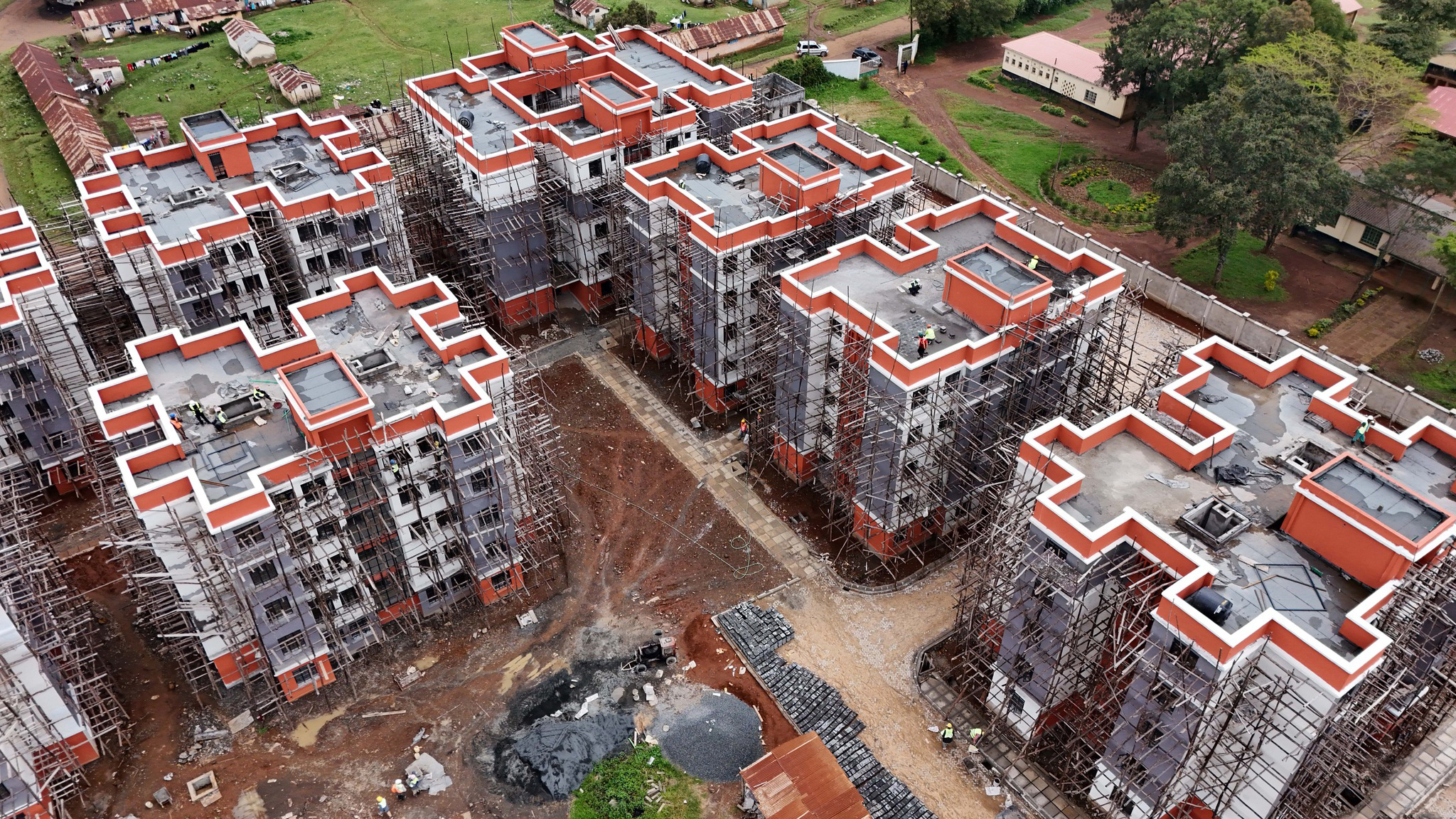
Investors from around the world may soon be able to invest in Kenya’s real estate projects as experts explore how blockchain can finance local real estate.
Kenya’s real estate and finance sectors, developers, financiers and technology firms and capital-market innovators convened in Nairobi to discuss how the conversion of real-world assets into digital units (tokenisation) could reshape how people buy, sell and invest in property.
Under the proposed model, a developer in Nairobi could list a project as digital tokens, allowing both local and international investors to buy fractional units.
This could widen the pool of available capital, especially for mid-sized developers who often struggle to secure financing.
Experts at the forum said tokenisation could drastically reduce reliance on costly bank loans and eliminate bottlenecks created by slow, paperwork-heavy investment processes.
“We are bringing together leaders, developers, financiers and tech companies to discuss how to change the landscape of traditional finance. The big conversation here is about tokenisation of real-world assets, turning fixed assets like houses or apartments into digital assets that can be easily transferred and traded,” said Nanochain co-founder Nderitu Waithaka.
Kenya’s real estate market has faced credibility challenges in recent years, with stalled housing projects, land fraud and “ghost” developments eroding investor trust.
Waithaka said blockchain’s transparency could restore confidence by creating a tamper-proof digital trail for every transaction.
“Blockchain ensures no data can be altered in secret. Investors can see what they’re buying, track project progress, and verify ownership. This is how we rebuild trust,” said Waithaka.
He explained that tokenisation could allow local developers to access global capital markets without the traditional barriers that limit foreign investors.
“You as a developer can expose your project to investors globally, even those who cannot ordinarily participate in real estate markets. We are asking, how does this technology affect an investor in Europe? How do they benefit? How does it help a Kenyan looking to buy or build?”
The push comes as Kenya prepares to implement new regulations under the Virtual Assets Bill, expected to give the Central Bank of Kenya and the Capital Markets Authority oversight over blockchain-based asset platforms.
“The bill already covers taxation and the protection of the public. Regulation helps in two ways, protecting the capital markets and shielding the public from scams. Once we are all operating under regulation, trust will grow,” Waithaka said.
He noted that although many genuine projects exist, public confidence has been eroded by fraudulent schemes.
“The bill is creating a better environment. People are genuinely working, but the bad cases overshadow that. Regulation fixes this.”
Waithaka pointed out that Kenyans collectively hold an estimated Sh1.7 trillion in dormant or idle assets, a potential resource that could be mobilised through tokenisation.
“That money where is it? Tokenisation allows people to use partial assets to invest in real contracts, infrastructure or real estate,” he said. “The government is talking about Sh5 trillion in projects. Where do we get the money? Kenyans and the global community can finance that using tokenisation.”
He added that debts, funds, equity and large-scale infrastructure projects can all be tokenised to attract investment more easily.
Waithaka said tokenisation could drastically increase investment in Kenya’s real estate sector by eliminating the trust issues that have fuelled ghost projects and land fraud.
“Real estate attracted about Sh637 billion last year. With transparency and liquidity from blockchain technology, we can triple or even quadruple that. Most people want to invest but are scared—tokenisation changes that,” he said.
He argued that blockchain’s immutable public ledger could be a game-changer in land and property registration.
“If our land register was on blockchain, every transaction—from the first to the latest—would be easy to verify. You cannot change data on blockchain, you can only amend it, and everyone sees the history,” he added.