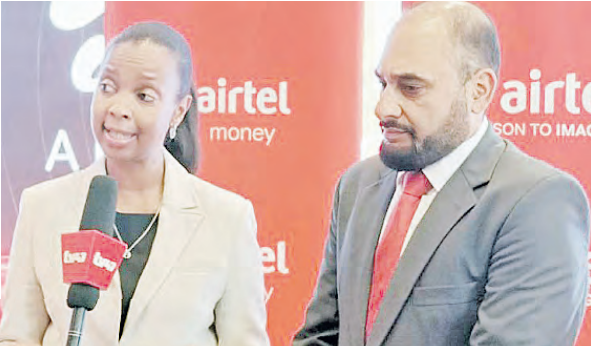
Airtel
Money has hit double-digit market share for the first time, piling pressure on market leader Safaricom’s M-Pesa, which has slipped below 90
per cent for the first time.
Sector
data for the first three months of the government year, compiled by the Communications Authority (CA), shows that Airtel Money's market share extended its climb in the September 2025 quarter, reaching 10.3 per cent, a sustained growth noted since 2023.
Safaricom’s M-Pesa slipped
to 89.7 per cent, its first reading below 90 per cent, marking a shift in a
market long shaped by near-total dominance.
M-Pesa’s share has been
slipping from roughly 95 per cent in 2023 to about 90.8 per cent in early 2025,
while Airtel Money rose from about six per cent to 9.1 per cent on the back of
lower fees, wider agent coverage and aggressive pricing.
Smaller platforms like
Telekom’s T-Cash remain marginal at below a percentage.
Overall, active mobile
money subscribers grew during the period under review to 47.7 million active
users, a penetration rate of 91 per cent, up from 77.3 per cent a year earlier.
The latest numbers point
to a market gradually shifting toward a two-provider structure, supported by
deeper financial inclusion and broader economic integration of mobile-money
services.
Mobile money is deeply
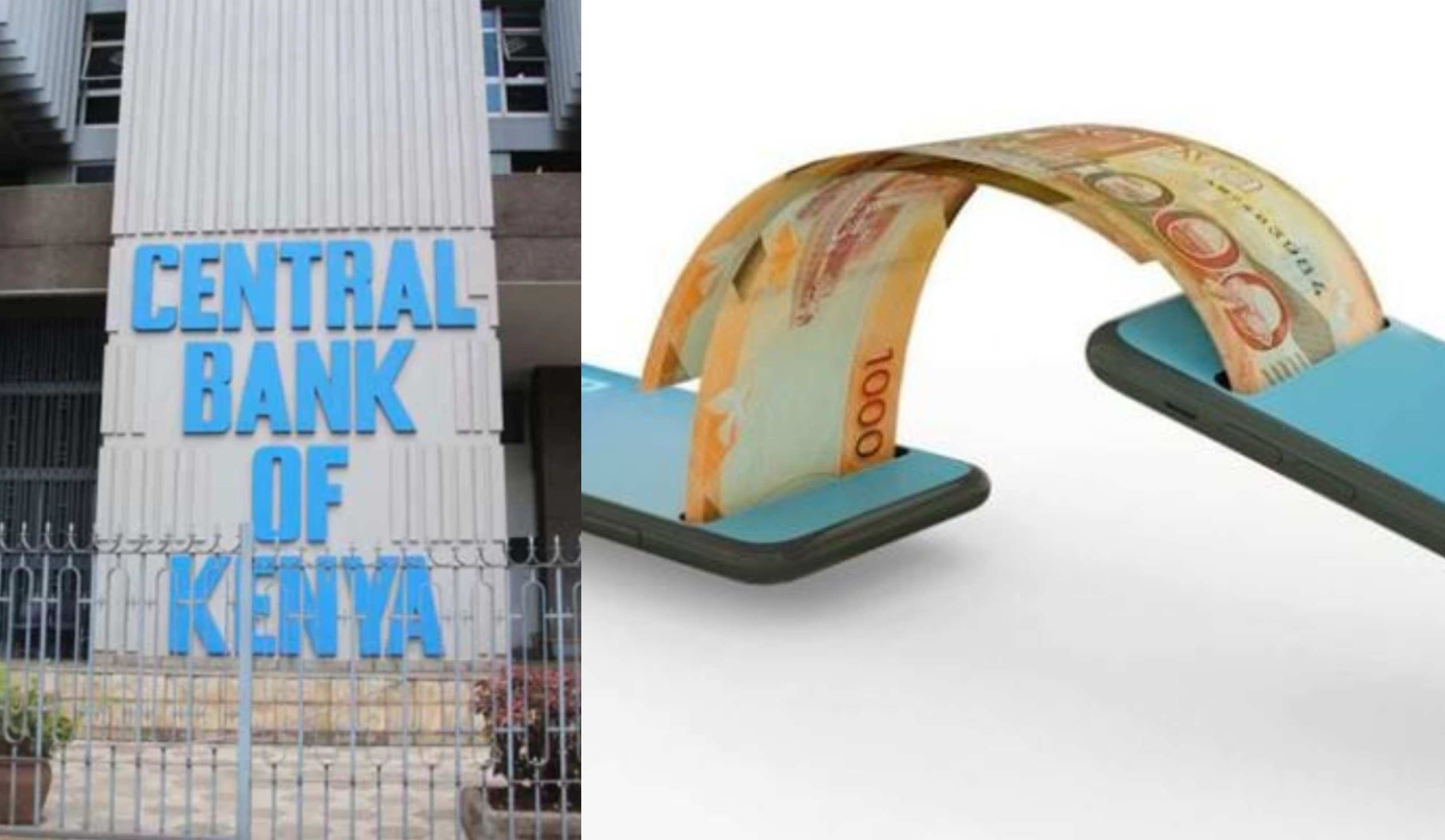
embedded in Kenya’s economy, with the Central Bank of Kenya (CBK) data showing
that it contributes to 6.59 per cent of the total national payments.
The mode of payment has been rising as mobile phone
penetration rises, since M-Pesa services were unveiled in the country in 2007.
Since then, monthly
transaction value has also increased from Sh3.8 billion to Sh753.5 billion over
the same period, peaking at Sh788.4 billion in 2023 before easing slightly in
2024.
Transaction activity has
grown even faster, with monthly mobile-money transactions rising from 1.3 million
in 2007 to 309 million in 2024.
Latest data shows that the average
daily transaction value reached Sh25.1 billion in 2024, up from only Sh125.7
million in 2007.
Kenya’s mobile market
continued to expand in the three months to September, with active SIM
subscriptions rising 2.1 per cent to 78.3 million.
The latest figures
from the Communications Authority of Kenya (CA) point to sustained growth in
the sector, supported by wider network rollout, increased device ownership, and
the country’s deepening reliance on mobile-driven digital services.
“Mobile (SIM)
subscriptions grew by 2.1 per cent to 78.3 million, marking a penetration rate
of 149.4 per cent.”
“The growth is mainly
attributed to the continued expansion of mobile networks and ever-growing
demand for mobile services.”
The CA data shows
that the uptick extends a trend observed in previous reporting periods.
In the quarter ending March 2025, subscriptions stood at about 76.7 million, while a year earlier September 2024, the figure was 70 million, reflecting consistent double-digit annual growth.
The penetration rate
of 149.4 per cent indicates that many Kenyans now maintain more than one active
SIM card, a pattern common in competitive mobile markets.
Prepaid lines
continued to dominate, accounting for 98 per cent of all subscriptions,
compared to just 2 per cent for postpaid, underscoring the price-sensitive
nature of mobile consumers.
As operators continue
network upgrades and expand 4G and 5G coverage, sector watchers expect
subscription numbers to maintain their upward trajectory in the coming
quarters.
![[PHOTOS] The new Ngong –Naivasha Road viaduct](https://cdn.radioafrica.digital/image/2026/06/64d4f771-4432-4aee-ba3c-2f304c4436ec.jpg)










![[PHOTOS] 'Mr Speaker Sir' Gen Z protester in court](https://cdn.radioafrica.digital/image/2026/06/b3e62d8e-25c3-4780-90f9-4eb48b1ce8a7.jpg)