For the generation approaching the ballot
in 2027, the defining question may be altogether different: Can Kenya finally
elect leadership on the basis of ideas rather than identity?
The
distinction is profound. For six decades, presidential succession has largely
been interpreted through the lenses of ethnicity, liberation credentials,
patronage networks and political inheritance.
Elections have often resembled
demographic censuses disguised as democratic contests. Coalitions have been negotiated
less around competing philosophies of development than around the arithmetic of
ethnic mobilisation.
Sifuna
represents an interesting interruption to that historical pattern. Unlike many
of his contemporaries, his political capital has not primarily been accumulated
through occupying executive office, dispensing patronage or inheriting an
established political dynasty.
His prominence has instead been constructed
through ideas, parliamentary debate, constitutional argumentation and public
communication where he has cultivated the image of a politician who derives
legitimacy from persuasion rather than proximity to power.
That
distinction matters because it changes the nature of political competition.
Should Sifuna emerge as the principal challenger in 2027, the incumbent
administration would confront a strategic dilemma rarely encountered in Kenyan
presidential politics.
Traditional campaign scripts become considerably less
effective against a candidate whose public identity is not burdened by executive
scandals, unresolved corruption allegations or decades of participation in
state power.
Indeed,
the emergence of a candidate whose principal vulnerabilities lie in the realm
of policy rather than personal integrity would compel a more substantive electoral
conversation. Rather than asking who stole what, Kenyans would increasingly ask
who can manage public debt more responsibly.
Rather than rehearsing historical
grievances, attention would shift towards youth unemployment, healthcare and
education financing, agricultural productivity, constitutional implementation
and institutional reform. Elections would become less theatrical and more
deliberative.
Sifuna’s
political language is fundamentally constitutional rather than populist. He
speaks comfortably about institutions instead of personalities, governance
instead of patronage, accountability instead of entitlement.
In an era when
many politicians still rely upon emotional mobilisation, he has largely
invested in intellectual persuasion. Whether one agrees with his conclusions is
almost beside the point.
Gen Z is perhaps the least tribally conditioned electorate in Kenya's history. Its
politics are driven less by ethnic identity than by unemployment, economic
opportunity, constitutional rights and digital engagement.
Consuming politics
through social media and online platforms, this generation values authenticity,
competence and consistency over patronage and ethnic mobilisation.
In this
environment, Sifuna's constitutional grounding, articulate communication and
issue-based politics position him as a leader who resonates with young Kenyans
seeking credible, accountable and transformative leadership.
Yet
perhaps the greatest misconception surrounding Sifuna concerns his relationship
with western Kenya. Much commentary instinctively frames him as a potential
"Luhya candidate." That interpretation misunderstands both his
political trajectory and the changing sociology of Kenyan elections.
The more
relevant question is not whether he can unite the Luhya vote. It is whether his
national appeal could redefine what leadership from Western looks like.
Historically,
presidential aspirants from the region have first sought ethnic consolidation
before pursuing national legitimacy.
Sifuna's political evolution has followed
the opposite trajectory. He acquired national visibility before becoming the
subject of regional presidential speculation. His constituency has been
constitutional discourse, not ethnic mobilisation.
Ironically, this may
strengthen rather than weaken his standing within Western because communities
increasingly seek leaders who command national respect instead of merely
regional influence.
Nevertheless,
political realism demands caution. Ethnicity remains an important organising
principle within Kenyan politics.
Electoral coalitions continue to reflect
regional calculations. Campaign financing, party structures and local political
elites still exercise considerable influence over voter behaviour.
It would
therefore be naïve to imagine that issue-based politics has completely
displaced identity politics. Kenya remains in transition rather than
transformation.
Equally,
legislative excellence does not automatically translate into presidential
competence. The presidency requires executive management, economic stewardship,
diplomatic engagement and coalition-building on a scale fundamentally different
from parliamentary leadership.
Sifuna would still need to persuade Kenyans that
he possesses not only constitutional literacy but also an implementable economic
vision capable of addressing inflation, unemployment, debt sustainability and
national cohesion.
Yet
these are precisely the debates mature democracies ought to encourage. The
significance of Sifuna's political emergence therefore extends far beyond the
fortunes of one ambitious politician.
It signals the possibility that Kenya's
democratic evolution is entering a new phase—one in which voters increasingly
interrogate competence before ethnicity, ideas before identity and integrity
before incumbency.
Whether that possibility ultimately materialises in 2027
remains uncertain. Democratic politics offers no guarantees.
Sifuna's
homecoming in Western marks the beginning of a serious presidential
conversation. Its greatest contribution may not be the launch of another
candidacy.
It is the invitation to ask a question Kenya has postponed for far
too long: after winning the struggle for constitutional democracy, is the republic
finally ready to win the struggle for meritocratic leadership?
The answer to
that question will shape not merely who occupies State House after 2027, but
what kind of democracy Kenya ultimately becomes.


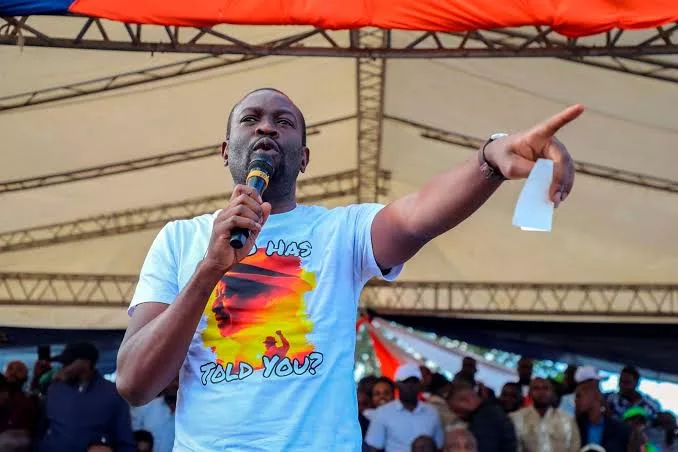
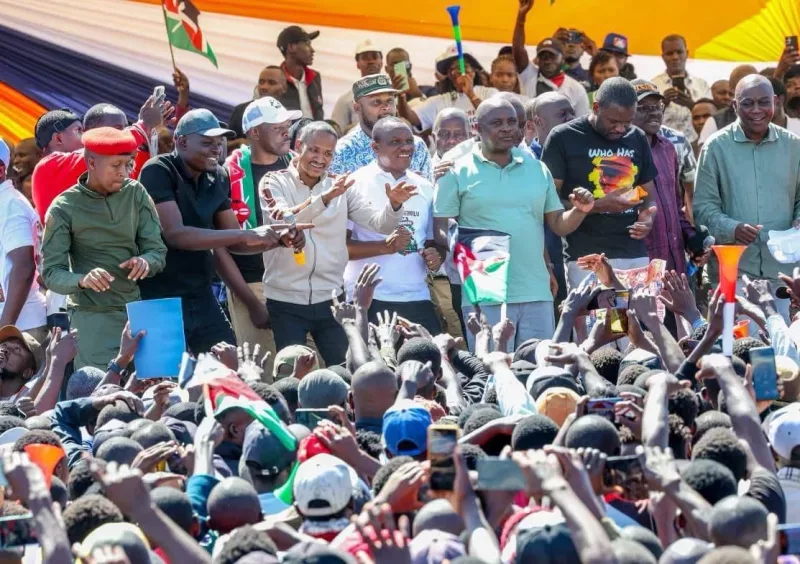 Linda Mwananchi faction, led by Nairobi Senator Edwin Sifuna, during a rally in Nakuru on April 19, 2026 / HANDOUT