His latest political calculations could be facing fresh headwinds
by ALLAN KISIA
Audio By Vocalize
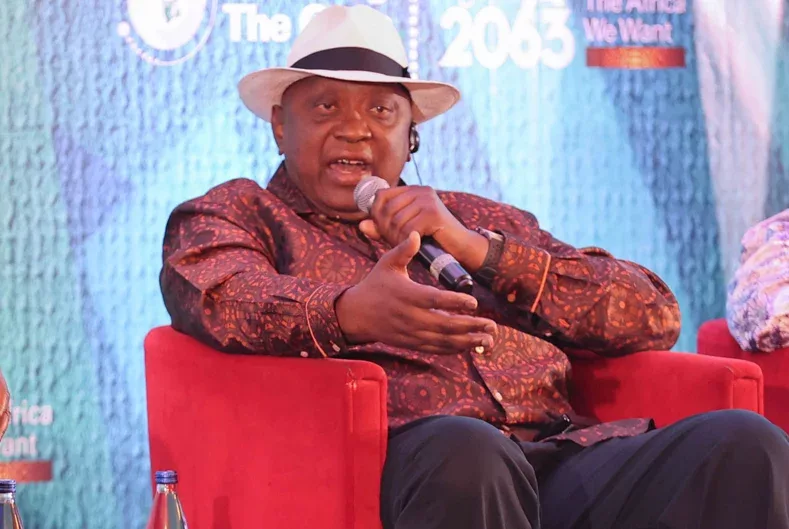
Retired President Uhuru Kenyatta speaks during the peace retreat in Abidjan, Ivory Coast on Friday, October 25, 2024
Retired
President Uhuru Kenyatta's political influence is once again coming under
scrutiny, with observers questioning whether his strategy of shaping the
opposition's leadership is yielding the desired results.
Four years
after his unsuccessful bid to help Raila Odinga succeed him as President, some
observers argue that his latest political calculations could be facing fresh
headwinds.
Uhuru has
endorsed former Interior CS Fred Matiang'I as Jubilee Party's preferred
presidential prospect.
Political
commentator Caleb Burudi believes Jubilee should be cautious about settling on
Matiang'i as its presidential candidate before broader consultations in the
opposition coalition.
He says the
party risks repeating past mistakes if it assumes Matiang'i is the automatic
choice to fly the coalition's flag.
"While
Matiang'i is widely recognised for his record in public service, a presidential
campaign requires broader political networks, grassroots mobilisation and the
ability to build a coalition that extends well beyond a candidate's regional
base," Burudi said.
He argued
that the opposition's immediate priority should be building a united front
capable of attracting support across the country rather than rallying behind a
single individual too early. Burudi warned that prematurely endorsing one
candidate could alienate other influential leaders and weaken efforts to mount
a formidable challenge against President William Ruto in 2027.
The
comments revive memories of the 2022 General Election, when Uhuru threw his
full weight behind then ODM leader Raila after ending his political alliance
with William Ruto, who was his deputy.
The
endorsement followed the 2018 Handshake between Uhuru and Raila, which gave
rise to the Azimio la Umoja-One Kenya Coalition.
Throughout
the campaign, Uhuru argued that Raila was best placed to preserve national
unity, sustain economic development and continue key government programmes.
Despite the backing of the outgoing President and a broad coalition of
political parties, Raila narrowly lost the election to Ruto.
According
to the IEBC, Ruto garnered 7,176,141 votes, representing 50.49 per cent of the
total vote, while Raila secured 6,942,930 votes, or 48.85 per cent. The Supreme
Court later upheld Ruto's victory after dismissing Raila’s petition challenging
the presidential results.
With
attention now shifting to the 2027 race, Uhuru has focused on rebuilding
Jubilee Party after its diminished performance in the last election.
The former
President has overseen efforts to reorganise the party's structures, with
Matiang'i emerging as the figure many Jubilee leaders view as the party's best
hope of returning to national prominence.
However,
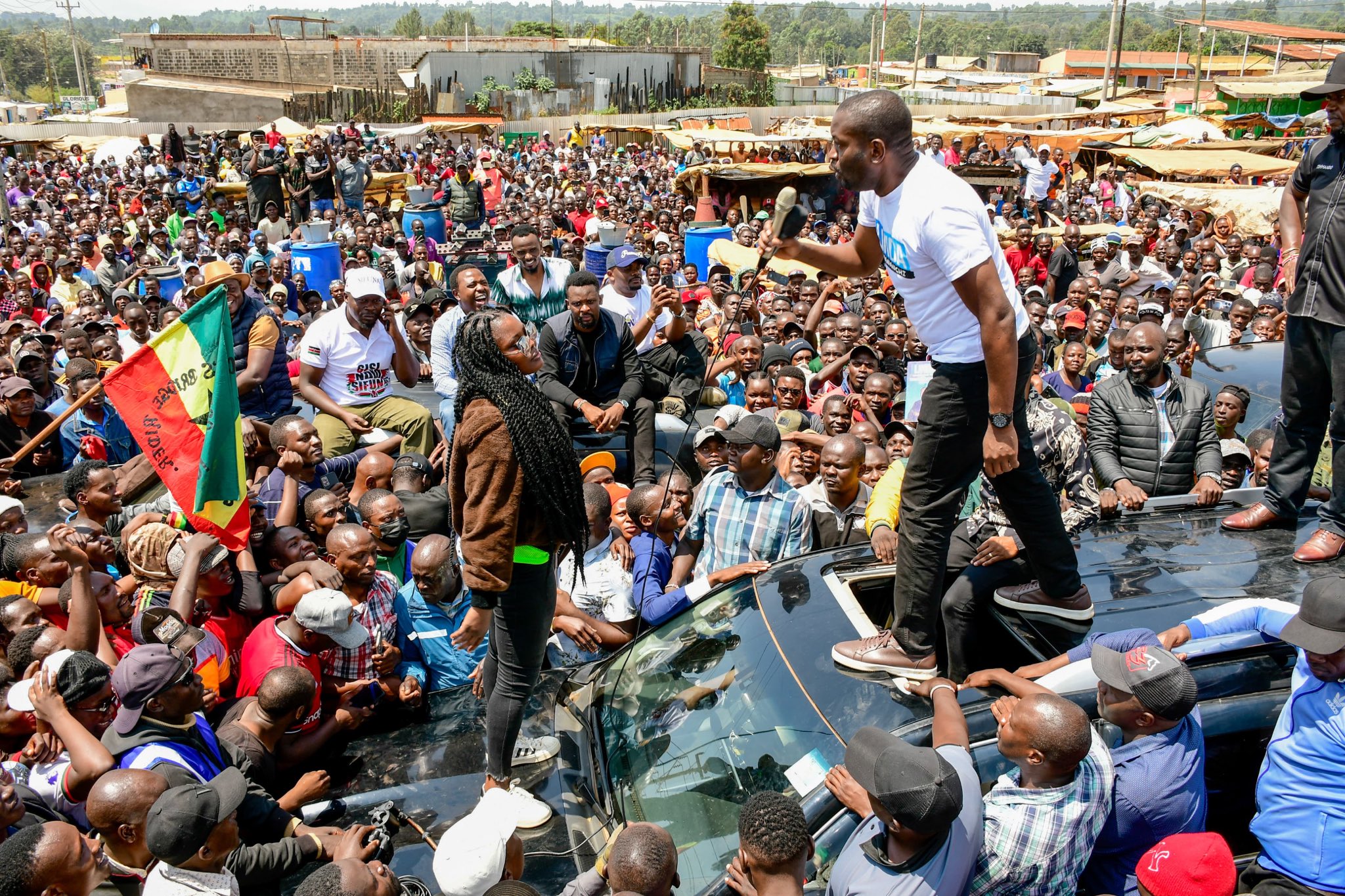
political developments in Kisii Nyanza, widely regarded as Matiang'i's
political backyard, have complicated that strategy. A growing number of
regional leaders have recently appeared at Nairobi Senator Edwin Sifuna's Linda
Mwananchi rallies. This has fuelled speculation that Sifuna is steadily
expanding his influence in the region.
Among those
who have openly associated themselves with Sifuna's movement is Kisii Senator
Richard Onyonka, who has publicly endorsed the Nairobi senator's possible
presidential bid. Kitutu Masaba MP Clive Gisairo has also participated in
political engagements alongside Sifuna during tours of the Gusii region.
The
shifting alliances have been further highlighted by the resignation of former
Jubilee official Pauline Njoroge from the party before joining Sifuna's
political camp.
The
development has intensified debate over Jubilee's ability to retain key allies
as the opposition begins positioning itself for the next presidential contest.
Jubilee's
recent electoral performance has also raised concerns about the party's ability
to mount a national comeback. In the Ol Kalou parliamentary by-election,
Jubilee candidate Wilson Kigwa managed only 198 votes, finishing far behind
DCP's Sammy Kamau, who polled 35,440 votes, and UDA's Samuel Muchina Nyagah,
who received 5,450 votes.
The result
reinforced perceptions that Jubilee continues to struggle in areas once
considered part of its political stronghold.
The outcome
prompted fresh criticism from political leaders. Eldas MP Adan Keynan argued
that the by-election demonstrated how dramatically the political landscape in
the Mt Kenya region had changed.
Declaring
Rigathi Gachagua the region's new political leader following the DCP victory,
Keynan said the Ol Kalou seat had historically belonged to Jubilee but that the
party had effectively been displaced.
He
described the defeat as a wake-up call for Jubilee's leadership as it seeks to
rebuild ahead of the 2027 General Election.
This is premium content
Subscribe to Continue Reading
Help us continue bringing you unbiased news, in-depth investigations, and diverse perspectives. Your subscription keeps our mission alive and empowers us to provide high-quality, trustworthy journalism. Join us today to make a difference!