As Kenya prepares to host the
11th ‘Our Ocean Conference’ in June this year, global attention is turning to
the Western Indian Ocean, one of the world’s most resource-rich and
strategically significant marine regions.
For coastal states including Kenya,
Tanzania, Mozambique, Somalia, Seychelles and Comoros, this moment presents not
only pressing challenges but also a powerful opportunity to strengthen ocean governance,
unlock blue-economy growth and secure livelihoods for millions who depend on
the sea.
Illegal, unreported and
unregulated fishing has long strained marine ecosystems and coastal economies
across the region. Yet growing recognition of its economic, environmental and
security implications is now driving unprecedented regional and international
momentum for reform. Rather than a narrative of decline, the Western Indian
Ocean is steadily becoming a story of coordinated action, innovation and
renewal.
The conference theme, “Our
Ocean, Our Heritage, Our Future,” reflects this shift. It signals a shared
commitment among Eastern African nations to translate political will into
measurable progress in sustainability, maritime security and transparent
resource management.
As global seafood markets demand traceability and
investors prioritise environmental credibility, the region is increasingly well
positioned to demonstrate leadership while attracting climate and blue-finance
opportunities.
At the community level, beach management
units and Fisheries Cooperative Associations are emerging as vital partners in
sustainable fisheries governance. Though historically under-resourced, these
institutions are gaining recognition as frontline defenders of marine ecosystems
and small-scale livelihoods.
Targeted investments in training, digital
monitoring tools and cooperative financing can rapidly enhance their
effectiveness, improving compliance and conservation while expanding incomes,
strengthening food security and deepening local ownership of the blue economy.
Governments across Eastern
Africa are also confronting one of the most complex enablers of illegal
fishing: hidden vessel ownership. Efforts to strengthen beneficial-ownership
disclosure, integrate licensing with financial intelligence and align with
global traceability standards are gaining traction.
Beyond deterring criminal
actors, these reforms enhance trade credibility, unlock premium seafood markets
and position the Western Indian Ocean as a trusted supplier in
sustainability-conscious global value chains. Transparency is thus emerging not
only as a governance imperative but also as a strategic economic asset.
Equally encouraging is the shift
from fragmented national responses toward coordinated regional action. Maritime
agencies are expanding information sharing, harmonising enforcement procedures
and exploring joint patrol mechanisms to safeguard shared waters.
Existing
regional frameworks provide a foundation for deeper operational integration,
while the 2026 conference offers a timely diplomatic platform to consolidate
these gains. https://cdn.radioafrica.digital/image/2026/02/bb881427-9aab-4ce6-baa0-04f07bb3f978.jpg.
At the same time, Eastern African
states are scaling up surveillance technologies, patrol capacity and judicial
expertise to close the long-standing gap between detection and interdiction at
sea.
Satellite monitoring, electronic catch documentation and regional
intelligence cooperation are already improving visibility across vast maritime
zones. With sustained investment, supported by international partnerships and
blue-finance mechanisms, these advances can translate into consistent
enforcement success and long-term maritime stability.
Taken together, these
developments point to a hopeful trajectory. Pressures that once exposed
governance weaknesses are now catalysing reform, cooperation and innovation
across Eastern Africa’s maritime domain.
By hosting the 2026 ‘Our Ocean
Conference’, Kenya stands at the centre of this transformation, with a unique
opportunity to showcase progress, mobilise partnerships and set a new benchmark
for sustainable ocean stewardship.
If current commitments continue
to translate into action, the Western Indian Ocean could emerge as a global
model for balancing conservation, security and economic growth. Stronger
community institutions, transparent governance, integrated maritime security
and sustained investment together signal a future in which ocean resources are
protected, coastal prosperity expands and the blue economy fulfills its
promise.
Far from slipping beyond reach, Eastern Africa’s Ocean wealth is
moving steadily within grasp, guided by regional resolve, shared responsibility
and a clear vision for generations to come.
Senior research fellow at Global Centre for Policy and Strategy, a Nairobi-based think-tank

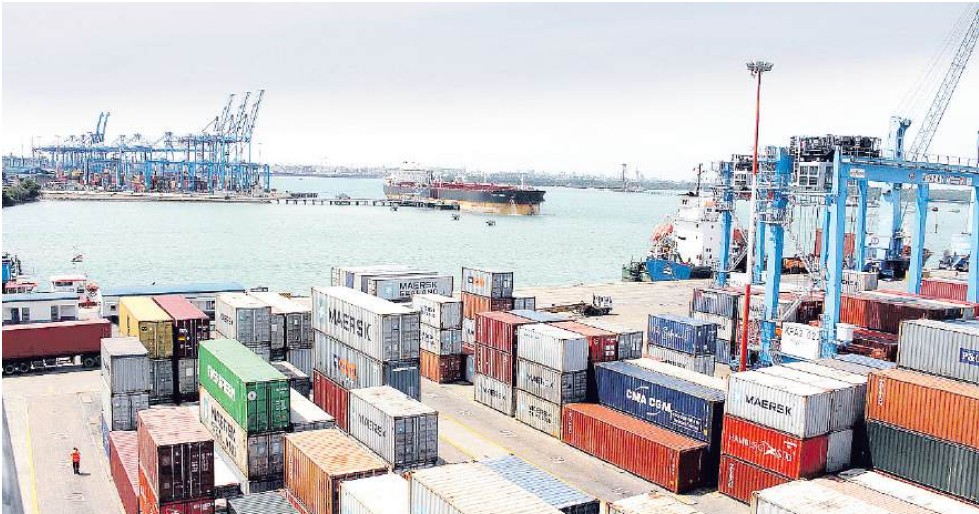 A more connected maritime security architecture would significantly reduce opportunities for illegal operators and strengthen collective resilience /FILE











![[PHOTOS] Red carpet in Pretoria as Ruto begins South Africa visit](https://cdn.radioafrica.digital/image/2026/06/abe3e750-6e5a-4394-a45c-899768be6240.jpeg)