Poverty has always been Kenya’s invisible but
lethal enemy, that one factor that can never be spoken about in political
debates. Quietly, poverty widens the levels of inequality, misery and
instability in Kenya, yet our political class will seldom discuss poverty.
The
recent by-elections, which turned into violence and unrest, just exposed how
deeply poverty remains at the root of our political crisis and further in the
African continent, especially amongst the youth, who in turn rarely even vote.
Last week’s by-elections across constituencies
such as the United Democratic Alliance strongholds, the Independent Electoral and
Boundaries Commission, declared winners of which the winners remain a
contentious topic.
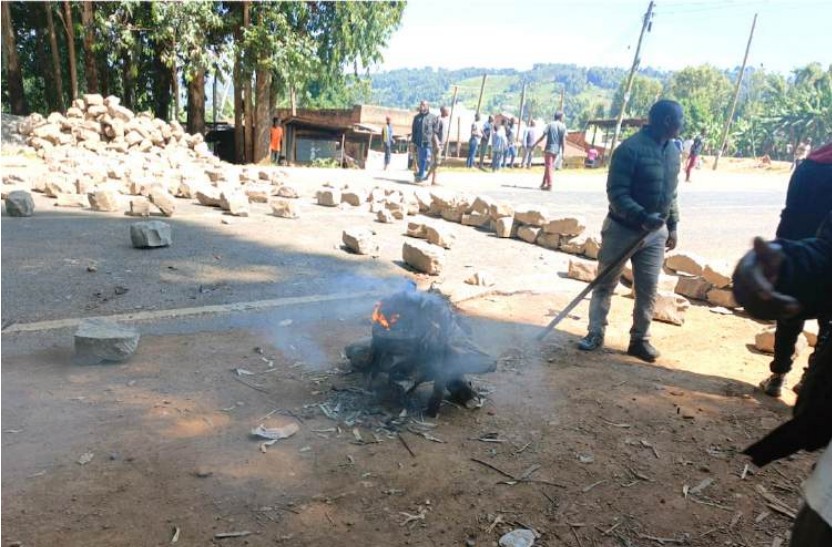
These by-elections were marred by campaign clashes,
destruction of property and bloodshed, transforming what should have been
peaceful democratic contests into high-stakes do-or-die fights.
Beyond the surface of political rivalry, the
chaos around by elections reflects more latent issues, we just have massive
frustrations and fuelled by generational poverty, inequality and lack of
opportunity.
So, for many Kenyans, particularly those from marginalised
communities and in low-income places, elections become moments of desperation.
Elections for them are usually their chance to be heard, to grab any promise of
relief from suffering. When politicians exploit these vulnerabilities, turning
campaigns into a scramble for patronage, the ground becomes fertile for
violence and manipulation.
A detailed study of electoral violence in Kenya
highlights poverty as a core trigger for election violence. So what leads to
the trigger? Economic frustration, entrenched
inequality, unemployment and deprived livelihoods thus resentment, anger and a
readiness to resort to violence when provoked.
Think about the many stories we
have seen in the media of well-to-do Kenyans killed in their palatial homes,
those they build in the villages. This type of murder is always triggered by
resentment, anger among relatives or simply those without means from the
village who turn into crime.
Basically, just like the example of relatives who
turn on each other, when people have little to lose, political elites and
aspiring leaders find in them easy recruits, ready to fight each other,
intimidate, or be intimidated for sadly a few coins or promises.
Kenya’s high poverty rate (39.8 per cent) and
medium inequality (Gini coefficient 0.39) translates into unequal access to
everything basic to luxury. Food insecurity has risen, low income earners face
higher inflation among other factors What’s even more tragic in our country and
continent is that poverty undermines the very idea of free and fair elections.
As argued in scholarly work, poverty, combined with unequal distribution of
resources and institutional neglect, suppresses the real political voice of
communities. It distorts participation, undermines civic education, and limits
genuine representation.
As we analyse these by-elections, one message
should be clear, unless we Kenyans, without so much reliance on our political
class, tackle poverty head-on, through equitable development, youth
empowerment, job creation and redistribution of resources, political
competition will continue to serve only the rich and powerful.
Elections will
remain serious battlegrounds, not of ideas, but of desperation and survival.
These by-elections might just be a warm-up to what might happen in the 2027
general election.
Poverty is one of the biggest enemies of
democracy. For Kenya to truly move forward, we must recognise poverty in all
its forms possible and confront it.




![[PHOTOS] The new Ngong –Naivasha Road viaduct](https://cdn.radioafrica.digital/image/2026/06/64d4f771-4432-4aee-ba3c-2f304c4436ec.jpg)








![[PHOTOS] 'Mr Speaker Sir' Gen Z protester in court](https://cdn.radioafrica.digital/image/2026/06/b3e62d8e-25c3-4780-90f9-4eb48b1ce8a7.jpg)