One, that the country’s energy sector is where corruption finds the cosiest home.
Two, that incompetence is the second name of the sector.
And three, that a look at the Cabinet-level and the senior management of state-owned corporations within the energy sector point to an entrenched tribal enterprise that is exclusive in nature and generally points to a return of the ‘homeboys’ era’, when lucrative government positions in key sectors were the preserve mark, if you ask me.
Last Friday night, the entire country went dark, in one of those nationwide power blackouts that are now becoming too regular for comfort. In some areas, power had not been restored 24 hours later. Kenya Power, the country’s sole distributor of electricity, attributed it to a “system disturbance”, one of many phrases intended to mean nothing. Mercifully, they did not blame a “monkey interfering with supply cables”, because even failed states can use outrageous excuses only once.
Kenya is already acknowledged as one of the countries in Africa with the highest electricity costs. On average, a household consumes 280kWh of electricity per month, translating to about seven kwh per day and nearly Sh200 per day of consumption. Many factors contribute to these high costs, including high taxes and the sticky issue of expensive power sourced from independent producers.
Responding to Friday’s power outage on his official social media handles, Nairobi Senator Edwin Sifuna, a member of the Senate Standing Committee on Energy, disclosed that committee’s investigations into Kenya Power’s purchase of expensive power from these independent producers had chanced onto an office at the state power distributor known as the ‘Dispatcher’, whose powerful role entailed deciding arbitrarily whose power would be added on the grid and when.
According to the vocal Senator, this Dispatcher had consistently ignored cheaper offers from green energy producers and opted for more expensive power from thermal generators. If this is true, it is not rocket science why this powerful Dispatcher would act in this manner.
The Nairobi Senator has put his money where his mouth is. He is bringing the Energy (Amendment) Bill to the Senate, aimed at amending the Energy Act to bring more transparency to the power purchase agreements entered into by Kenya Power, so as to eradicate the Dispatcher’s unbridled appetite for expensive power.
If passed, the Bill will require energy purchase agreements to align with the principles of public finance, which among others, demand openness and accountability, public participation, good fiscal governance and sustainability. This will indeed be revolutionary.
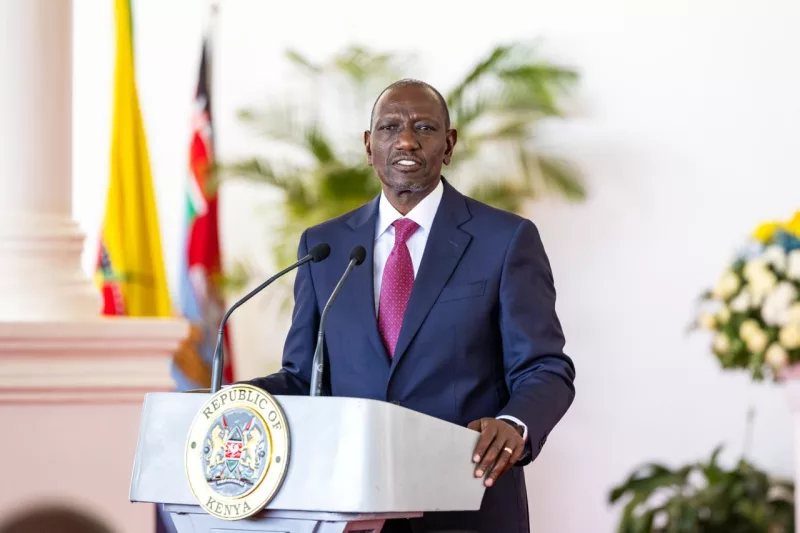
I am not sure if President Ruto has had occasion to remind those who run the energy sector for him that a huge percentage of his manifesto items hinges on the performance of this sector. High energy costs lead to increases in prices of essential goods, and impact on nearly every other sector of the economy. For a country also struggling with a weak economy, a crisis and an unfavourable balance of trade, expensive energy naturally stunts manufacturing and limits the ability of the country to spur exports.
Obviously, the biggest concern of this catalogue of worries is that rising cost of goods caused by expensive energy raises the spectacle of protests as an ever-present possibility, while also losing the goodwill and political support for a President with an eye on a second term. In his shoes, I would hire only the most competent personnel in this sector, even if they were not homeboys, because a poorly handled power crisis equals a despondent population and therefore a national security issue.
There is a second, more crucial angle to this. In many countries, especially post 9/11, critical infrastructure used in delivering public goods and services, like water and electricity, is considered a national security matter.
Vulnerability in these areas, especially repeatedly, paints a picture of a country totally out of touch with its security needs. Thankfully, Kenya sits in a region where neighbours don’t look like they have ill intent against us, but security is a much wider facet that encompasses both state and non-state actors.
If it were up to me, I would bundle the CS for Energy and the management of all state corporations under him, especially Kenya Power, into a truck, for a journey to the Isiolo Military Garrison, for a month-long course on electricity supply as a security matter.
The lesson would include videos of recent major wars, where enemy actors are shown bombing the grid to cut off power supply. These technocrats would then be shown how a nationwide power supply blackout as an act of war has the impact of disabling defence systems, hospital infrastructure, airports, as well as throwing the entire population into a panic sending the country one step away from surrender.
If this team then gets the unwelcome idea that we dwell in an island of peace and our neighbours wouldn’t dare, the next lesson would be how these ‘system disturbances’ and ‘monkey interfered-with power lines’ on a regular basis unwittingly become invitations to saboteurs and, God forbid, terrorists, to strike at our vulnerabilities. Incompetent people get away with too much in this country, and the fact that nothing really adverse happens from their acts of omission and commission just makes it worse. I wonder how long this callousness can last before it one day becomes a real security issue.
In all honesty, a timid population is also an enabler of this incompetence. In a civilized world, Kenya Power would now be dealing with millions of lawsuits for compensation, ranging from the beloved tilapia that went bad in my fridge, to more critical matters like lives lost when hospital systems went down. The power distributor is reputed to have no bottom line worth writing about, but if lawsuits were to hurt its bottom line, perhaps the decision makers would think twice about keeping people in those big offices who cannot perform.
The most dominant players in the energy sector are all state-owned. Effectively, they effortlessly inherit the lethargy and poor policies prevalent in within the regime. Conventional wisdom usually has it that privatisation has the effect of turning state corporations into profitable concerns responsive to consumer needs. But this presupposes that the incompetence is domiciled in the parastatal itself, rather than the parent ministry or the government itself. In my view, if the top is functional, the bottom will follow suit.
There is no reason why power should be so expensive in a country where over 87 per cent of electricity is from renewable sources. There is certainly no reason why Kenya Power, even as a state enterprise, cannot be run competently and be turned into a credible and reliable power distributor. Perhaps the day that the technocrats in the ministry and the corporation realise that they not only distribute a critical product for the survival of citizens, but also one with national security implications, they could take their work seriously. At any rate, the success of their sector holds so much in determining the success of the man whose manifesto they seek to fulfil.
But that man has to want it badly enough to reform that sector, even if some of his friends end up in jail for it.