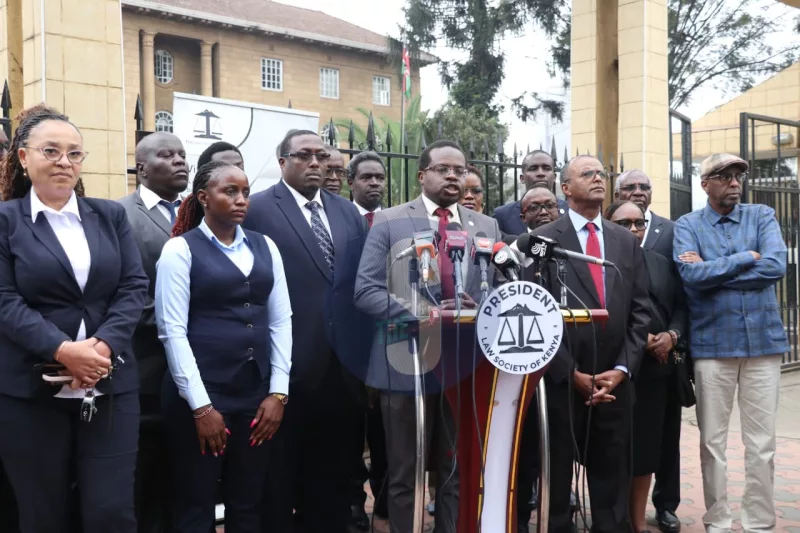
 LSK president Charles Kanjama leads lawyers and other senior counsels during a press briefing on the nationwide court boycott outside the Supreme Court, Nairobi on July 22, 2026/LEAH MUKANGAI
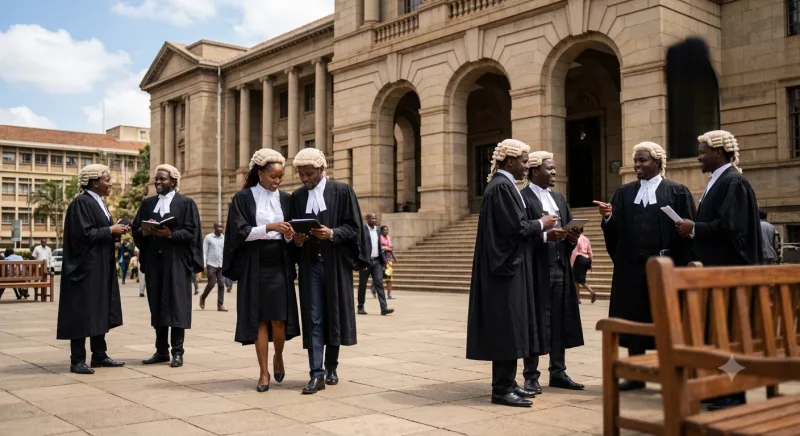
Lawyers across Kenya on Wednesday stayed away from court hearings but continued handling urgent matters after the Law Society of Kenya (LSK) commenced its one-day nationwide boycott.
Led by LSK president Charles Kanjama, the lawyers said the boycott has been necessitated by what it termed 'persistent administrative failures and a lack of accountability within the Judiciary'.
The nationwide action, which has seen advocates refrain from participating in hearings across the country, extends to a targeted boycott of specific courts, including the Supreme Court.
“We are asking every lawyer not to appear in any court that is subject to the targeted court boycott, and that includes the Supreme Court,” Kanjama said during a media briefing outside the apex court.
He noted that the boycott is constitutionally grounded in Articles 37 and 41, though he expressed concern over judicial resistance to the protest, stating that several judges and judicial officers had declined to comply with the formal notice issued to the judiciary.
“We are still receiving information from our members who have been forced to proceed with matters and some of whose matters have been taken out with prejudice,” Kanjama said.
Kanjama warned that the LSK reserves the right to take further action against any judges, judicial officers or persons who interfere with the advocates’ constitutional right to push for accountability across the entire legal justice system.
The boycott has been structured to avoid completely stalling urgent legal deadlines; advocates are permitted to file court documents, and mentions or applications involving interim orders will proceed solely to obtain fresh hearing dates or secure extensions.
While some judicial officers have respected the protest, the LSK is documenting instances of non-compliance through its branches and chapter leadership, with a view to taking disciplinary or institutional action.
Among counsel in attendance were Nelson Havi, Philip Murgor, Ndegwa Njiru and Ahmednasir Abdullahi, the latter a prominent and highly vocal figure in the surrounding national debate over judicial performance and integrity.
Murgor declared that the senior counsel bar, in its entirety and without exception, stands shoulder to shoulder with the LSK leadership on demanding accountability, not only in performance but also in the restoration of integrity and the elimination of corruption in the administration of justice.
The confrontation follows a breakdown in over two years of institutional engagement.
According to Murgor, the Bar and the Bench have held dialogue upon dialogue until finally the dialogue stopped, leaving the LSK with no option but to take the drastic action executed today.
Over the past two years, the two institutions have held at least five formal engagements, yet the LSK maintains these discussions have yielded little to no tangible progress, leading to a complete breakdown in confidence.
The tipping point for today’s action is the issuance of court orders obtained by certain judges and judicial officers which block the Judicial Service Commission and the Ethics and Anti-Corruption Commission from investigating or processing corruption and misconduct complaints against them.
The LSK has characterised these as “immunity orders” that insulate misconduct from scrutiny and constitute an abuse of judicial power.
Further fuelling the anger, Kanjama revealed that the Office of the Chief Justice intends to delay the publication of individual judge performance data, a key accountability measure previously promised to the LSK and the public. He said the delay is being justified by a case filed a week ago, which, critically, has no orders actually stopping that publication.
“We strongly deplore the rollback of accountability, which is what the Law Society of Kenya has been pushing for,” Kanjama stated.
Immediate former LSK president Faith Odhiambo reinforced the stance, declaring that the boycott goes on and that the independence of the judiciary does not mean immunity from scrutiny.
“The courts have always relied on public trust, and we ask them to win back that trust,” she added.
Abdullahi pledged unwavering support, stating, “We are behind you one hundred per cent, and we will continue this job with you until the judiciary is reformed and until the corrupt judges change their bad habits.”
Looking ahead, the LSK branch leadership and the senior counsel bar are scheduled to meet the Judicial Service Commission on Friday, July 31, to press the concerns further, with the society emphasising that the journey towards accountability must reach the right conclusion for the entire legal justice system.
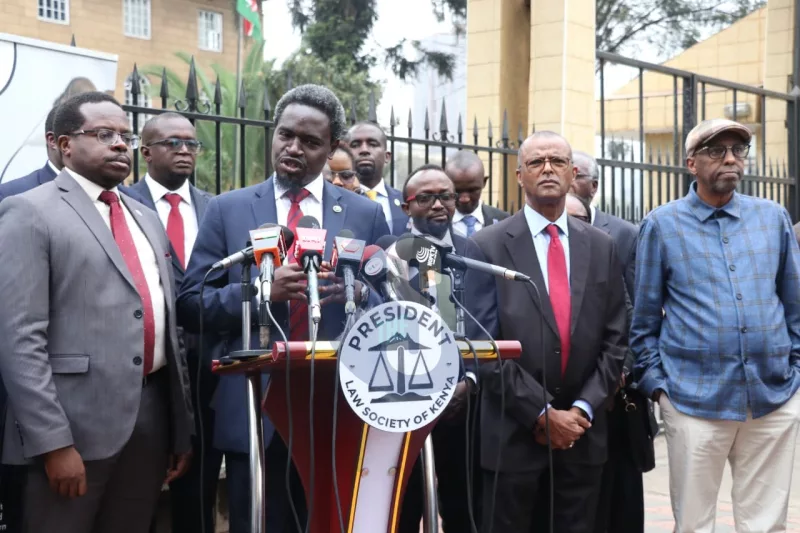 Senior Counsel Nelson Havi and other senior counsels during a press briefing on the nationwide court boycott outside the Supreme Court, Nairobi on July 22, 2026/LEAH MUKANGAI.
The Judiciary had earlier assured the public that all courts across the country will remain open and continue hearing and determining matters as scheduled, meaning parties can still proceed with their cases, including representing themselves where necessary.
"The Judiciary assures the public that all courts throughout the Republic will remain open and will continue hearing and determining matters as scheduled on Wednesday, 22 July 2026," the Judiciary said in a statement.
In a separate statement, the Kenya Magistrates and Judges Association (KMJA) said it "does not take lightly" the concerns raised by the LSK but urged the society to reconsider the boycott and instead allow room for dialogue.
"Such engagement provides the most appropriate avenue for candid discussion, principled resolution of concerns and the strengthening of institutional cooperation in the public interest," the association said.
The Judiciary acknowledged the legal profession's role in the administration of justice and pointed to five consultative engagements held over the past two years, during which concerns affecting the administration of justice were discussed and practical action points agreed upon.
"A further consultative meeting involving the Judicial Service Commission, the Council of the Law Society of Kenya and representatives of the Senior Counsel Bar is scheduled for 31 July 2026," the Judiciary said.