The momentary disquiet around the Finance Bill, 2023, that was largely orchestrated by a hostile media has dissipated, after the Court of Appeal lifted the orders barring the implementation of the bill, and the containment of the so called maandamano.
The people of the mountain are stuck to what they know doing best: looking for money and the creation of wealth. The region accounts for a huge portion of our country’s GDP. In fact, the Kenya Kwanza’s key message on economic outlook during the last campaigns was largely borne out of the grievances that the region found itself facing, despite having voted to a man to one of their own Uhuru Kenyatta as president.
The first ever economic retreat on economic matters was held by President Ruto and a select group of leaders from the region on May 1 and 2, 2021, whereby the basic draft of the UDA manifesto was adopted, with a 10-point agenda.
Further down the line, the first county bottom-up economic forum was held in Nyeri on February 14 last year, before the same happened in all the 47 counties across the country. In effect, the region set the tempo for the whole of the country in terms of shaping the narrative that clearly dichotomised the mantra that Azimio championed about a constitutional moment, versus the economy.
Majority of Kenyans chose the latter and it's instructive to note that 87 per cent of mountain region voted for President William Ruto to a man, contributing to over 45 per cent of those who voted for him to become president.
This means that essentially, the mountain region played a critical and definitive role in the formation of the Kenya Kwanza administration. Interestingly, majority of Kenyans didn’t expect that the region would vote for another candidate other than their own for president.
The Azimio duo of Uhuru and Raila Odinga had figured that if they combined forces, they would rally the bases to easily form government. In fact, my interaction with some members from that camp who have since crossed over, indicate that all along, they thought that our desire was to form a strong opposition. That Uhuru trashed intelligence reports that indicated that Raila was only doing 13 per cent in the region.
In the end, Uhuru, Martha Karua and their state machinery managed to get more than 800,000 from the region to Raila’s camp. This wasn’t a mean feat especially going by the many years of demonising the ODM party leader. However, as Kanini Kega aptly put it, the mountain was so slippery that they all fell together. Jubilee has since joined Kenya Kwanza.
The President held a five-day tour of the region, starting with Githurai last Saturday (August 6), whereby he officially opened the Githurai market that had been in contention for quite some-time. This area is considered the official gateway to the mountain region that boasts of seven million votes that are fairly critical to anyone’s bid for the presidency.
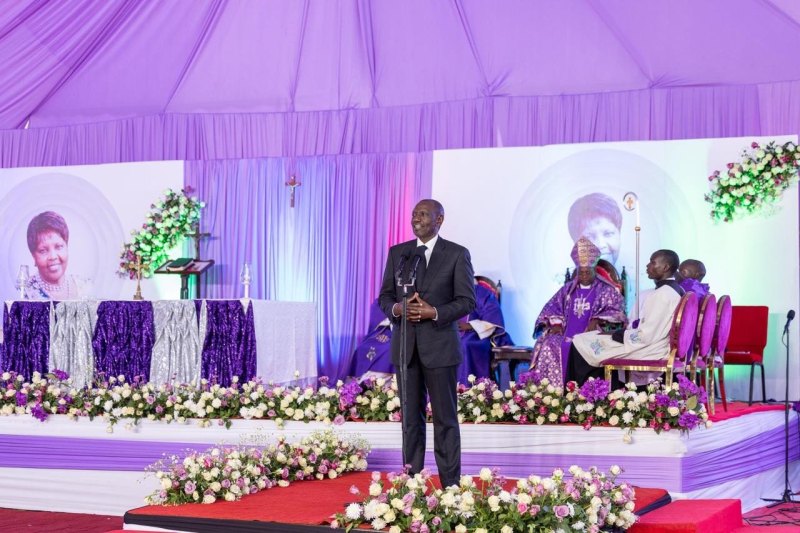
The President’s tour took him to Kenol, Kagio, all the way to Sagana State Lodge, whereby he held an interdenominational service on Sunday (August 6), before having a closed door meeting with members of the Executive and parliamentarians from the region later on in the afternoon.
On Monday, he toured Mukuruwe-ini, Tetu and Nyeri Town constituencies whereby he commissioned several projects such as roads, water supply, markets and Kiganjo KCC factory on Tuesday morning after a full cabinet meeting. In between, he held consultations with various groups, culminating to a 5,000-delegate meeting.
The President has clearly defined his agenda for the region by committing to providing new markets for products in the dairy industry. His vision is to ensure that a kilo of milk is purchased at Sh50 at the farm gate. He has also ordered the purchase of more than 650 coolers to ensure that the milk lasts longer to fetch better prices.
He has also banned the importation of powder milk and instead wants Kenyan farmers to export powder milk to the US and African market. The industry is worth more than Sh200 billion shillings. Further, he has removed VAT on yellow maize in order to increase the production of animal feeds.
On coffee, his vision is to increase the number of kilos per bush from the current two to about eight through the provision of affordable fertiliser that has been reduced from Sh3,500 to Sh2500.
This way, our annual output shall be increased from the current 50,000 metric tonnes to 80,000 in the medium term. In matters tea, the President has removed VAT on packaging materials, something that will lead to the farm-gate price rising by between 50-150 per cent.
Further, he intends to complete the more than 400km of the Mau Mau roads, in order to open up the region for investment. Nyeri county alone will construct more than 10,000 affordable houses, thus employing more than 30,000 youth.
President Ruto is the undisputed king of the mountain and deputised by Rigathi Gachagua whose firm grip on the region’s politics is unquestionable.
Any assertions to the contrary are only the momentary preoccupation of a storm in a tea cup.