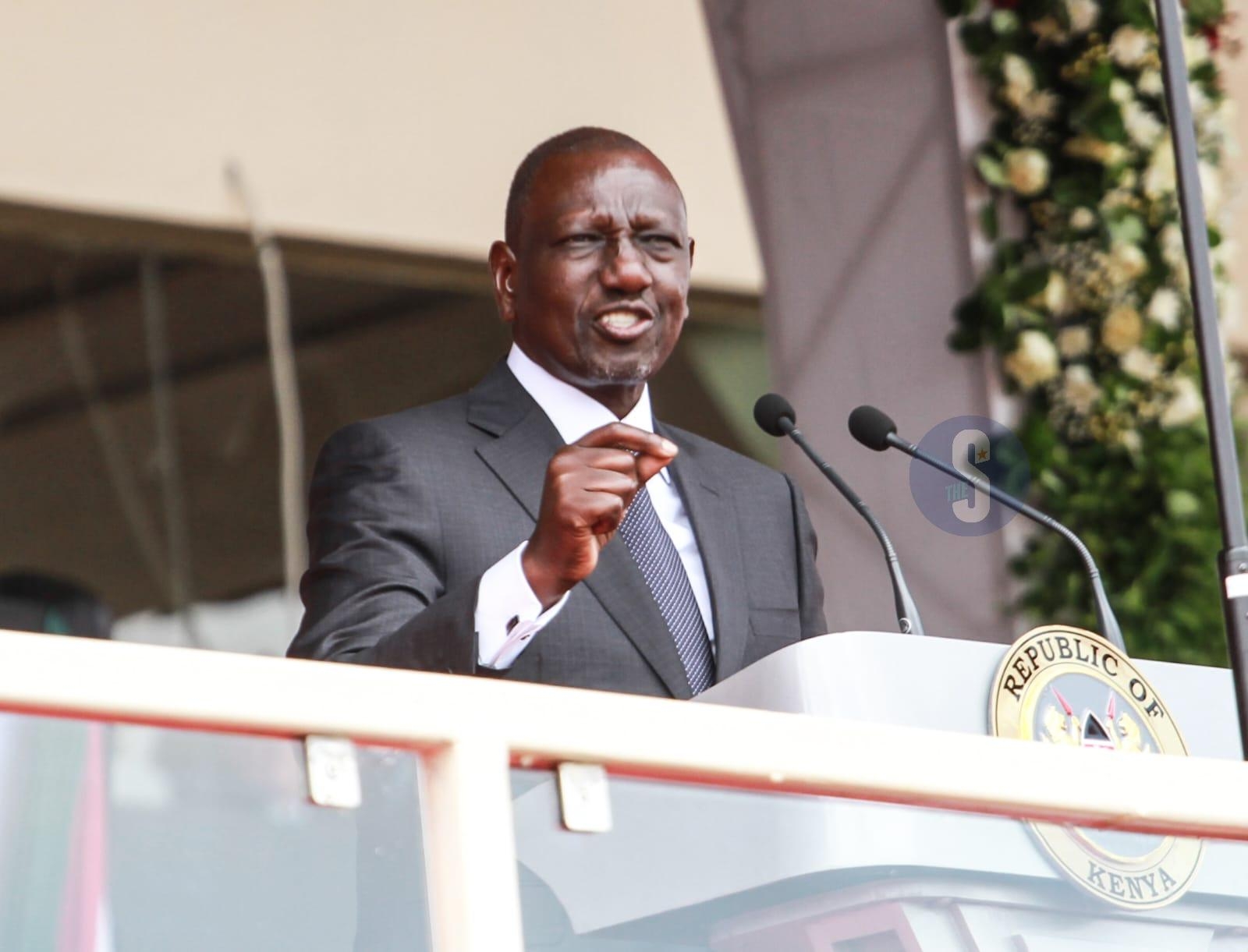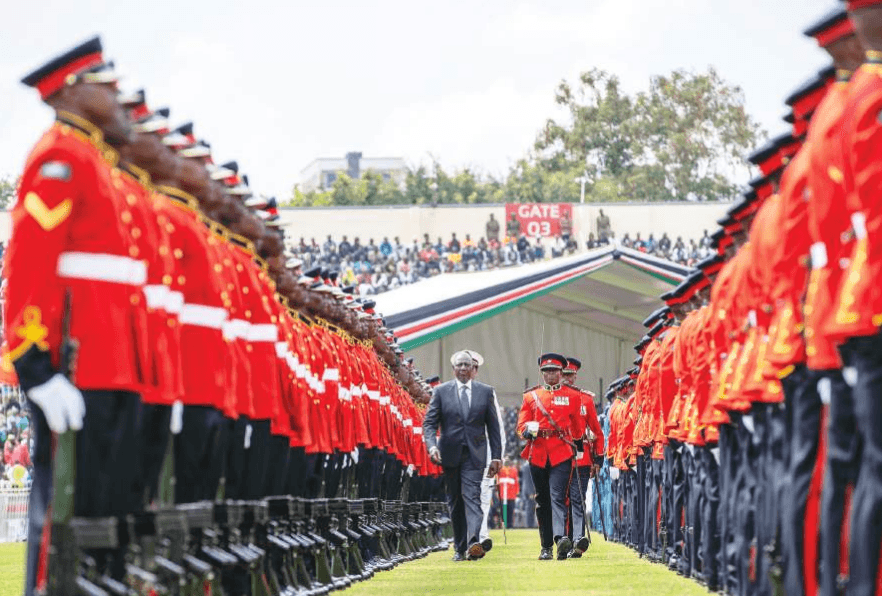


In September 2022, President William Ruto told governors, “We are committed to the complete transfer of all functions constitutionally earmarked for the Counties”.
In March this year, the chair of the Intergovernmental Relations Technical Committee told a Senate committee that, “In the next three months, we want to come to a situation where it is clear which functions are going to move from the national state departments and agencies, including state corporations, to county governments.”
Counties have, indeed, complained that a number of functions that ought to be with the counties, according to the Fourth Schedule (or appendix) of the Constitution, have remained with the national government or with national parastatals.
A report in 2017 by the IGRTC identified various functions still being carried out at the national level – particularly by parastatals - or at least unclear. They included some under agriculture, roads, disaster management, forestry and water.
The Constitution
The powers of counties did not get enough attention in the constitution making process. People were more interested in whether their community was grouped with certain other communities than in what a devolved unit (county) would actually do. This is something that happens not only in Kenya when a country shifts to a system of devolved government.
The constitution explains – though perhaps less clearly than one might wish - what having a power or function over a particular topic means for a county. Sometimes it means carrying out a particular activity (like running an abattoir, market or clinic).
Otherwise it usually means regulating the activity as carried out by others – like cinemas or faith-based or commercially run schools, or licensing dogs. A county can make law on the topics within its power (Article 185(2)).
If a particular topic is not mentioned, it is something for the national government (Article 186(3)).
A special provision applies when both the national and a county government choose to make law on the same topic, they both have that power, but the laws are inconsistent. The basic position is that the county law is the valid one. But in certain situations the national law takes precedence, for example, if a national law is needed for reasons of national security or trade or environmental protection or protecting equal opportunities. The courts would decide finally.
Devolution does complicate things – whenever a level of government wants to make law it should think “do we have the power to do this?” In other countries with this sort of divided power, “Who has the power?” is an important question. So books about environmental law in Canada or Australia, for example, will probably begin with a chapter on which level of government has the power to make law on which aspects of the environment.
Is this a terrible waste of money? If the situation is dealt with efficiently it need not be. The courts should interpret the constitution and most issues will be sorted out in time. And careful thought before law-making should avoid most problems, instead of make law, deal with the consequences later.
Two major issues have arisen recently. One is housing (see last week’s Katiba Corner) and the other health –in the news this week.
Housing
The word “housing” appears twice in the Fourth Schedule to the Constitution. First, “housing policy” is a national government function. However, “housing” comes under “county planning and development” and is a function of counties. It is really hard to see how a national body is still actually building housing.
Some have pointed out that land and housing go together, and land law is national. But public land in a county is held by the county, though managed by the National Land Commission. A national commission is not a part of the national government. It should work just as much with the counties when needed. And a county can acquire land.
The IGRTC 2017 report said, “the lingering question is the level of responsibility between the two levels of government with respect to housing as a function, and the role that the National Housing Corporation plays in that regard. The unbundling and assignment of respective components of the housing will require urgent attention through the IGRTC.” This never seems to have been done.
Health
Giving counties so much power over health facilities but not over schools (other than pre-school) seemed surprising because local authorities had had a lot of experience in education.
However, under the Fourth Schedule, health policy and “national referral health facilities” (like Kenyatta National Hospital) are for the national government. And “county health services” are for the counties, with specific examples including county facilities and pharmacies.
The Transition Authority, created to sort out what responsibilities should go to which level of government, assigned level 5 hospitals to counties. This seemed questionable because these hospitals serve more than one county.
However, the High Court and the Court of Appeal decided that there was no problem with the counties having level 5 hospitals, particularly because the national Health Act envisages level 5 hospitals being at the county level.
There has been tension between counties and the national government in the past over issues like medical equipment leasing. And now it seems that the national government wants to create a new body of community health workers (to be jointly funded with counties and running a network of primary health care) under a new name. There is also the idea of a health service commission (which the medical profession has wanted fir a long time).
Without going into the constitutionality of these specific ideas, how should these issues be resolved? First, it is against the constitution for a level of government to exercise powers it does not have. And if the national government decided it wanted to amend the constitution to change who had a certain power, it would of course need large majorities in both houses of Parliament.
Would it need a referendum (an expensive and possibly divisive affair that the President seems keen to avoid)? If is a matter of an individual power being shifted from counties to national level, probably not. Moving a lot of powers might need a referendum – because it would amount to a change in the objects or principles of devolution (Article 255(1)(i)).
Are there solutions without changing the constitution?
The national government can influence how counties behave by giving conditional grants, additional to the counties’ equitable share of national revenue (Article 202(3)). But spending money on a county power is not giving grants to the counties.
Disagreements between levels of government are supposed to be settled through the intergovernmental relations mechanisms (Article 189(3)), before anyone goes to court. Maybe everyone involved could agree on some solution that respects the constitution. But they could not agree to do something against the constitution. It is not theirs to change. It was adopted by the people of Kenya and binds all governments and all public agencies.
If counties are failing to cope with level 5 hospitals they could be reassigned to the national government. The earlier court decision about this was not based on the constitution. An amendment to the Health Act (after suitable public participation and consolation with counties) might be the way to do it.
The constitution allows for agreement between national and county governments for a responsibility to be transferred from one to the other (but every individual county government, not the Council of Governors, would have to agree) (Article 187).
Or, if necessary, the national government can take over some aspects of a county’s work for a while to put it back on the right track (Article 190). And in extreme circumstances a whole county government can be suspended to make it possible to deal with an exceptional situation. But each county would have to be dealt with individually (Article 192).
Finally, of course, it is essential to remember that “The governments at the national and county levels … shall conduct their mutual relations on the basis of consultation and cooperation” (Article 6(2)).