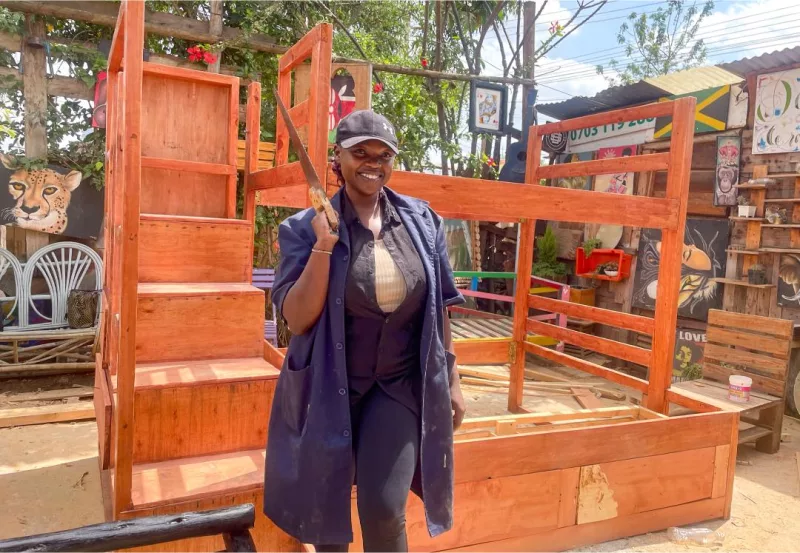
Cherie Kihato steps outside the workshop, her eyes fixed on her phone. It's noisy; the shop is on Karen Road in Nairobi's Karen neighbourhood, a busy thoroughfare, but Kihato takes no notice.
As a busy entrepreneur, she is scrolling through designs, responding to clients and keeping an eye ona new opportunities. She’s doing business in a fast-changing environment, not just locally but across the continent. And she needs to stay abreast of the changes.
“I think we're at the age of the African Renaissance. I really do. There's never been a time before where positive eyes have been on Africa, and not just in the sense where negative connotations are put on elsewhere, that it's a country or a continent of poverty, a continent of corruption,” she said.
“Now more than ever, we're actually seen in a positive light. And I think as Africans, we need to take note of that, and we need to take advantage of that.”
Kihato had never intended to get into the trade she now sees as her livelihood and future. She had intended to work in development. That changed when she returned to Kenya from university in the United Kingdom in 2017.
"I thought I was going to do something else," she says. "Then one day I was journaling, and I felt God tell me that I was going to start a furniture brand made in Kenya and employ Kenyans."
Her initial venture was a platform that brought together furniture producers and home decor sellers in Nairobi through pop-up events. As she visited workshops and looked for exhibitors, she came across artisans whose work rarely reached larger marketplaces.
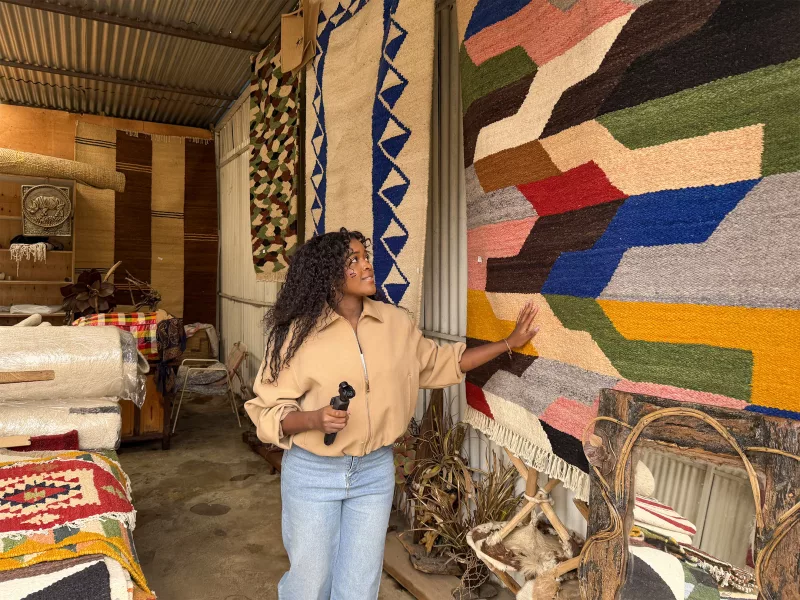
"When people see a rug, they see the final product," she said. "What they do not see is the mathematics, the skill and the thinking that goes into making it."
CREATING OPPORTUNITIES
The economic importance of craft extends beyond individual workplaces. According to Unesco, the cultural and creative industries provide 50 million jobs worldwide and give jobs to more young people aged 15 to 29 than any other economic sector.
Kihato approached Miriam Wachira, owner of Mbace Africa Handicraft, a weaving workshop, and asked if she could take several carpets to sell at an upcoming event.
“I said, ‘Look, I'm having an event. If you allow me to take your carpets, I will sell them and then bring you the money.’ And surprisingly, she agreed, and this was the first day I ever met her, but surprisingly, she agreed.”
The collaboration continued, and weaving eventually became an integral part of Savannah Space. Nearly a decade later, the partnership is still going strong.
"After she sold the carpets, [Kihato] invited me to sit down and talk about the business. We've now worked together for almost 10 years," Wachira said.
"She is a very trustworthy person and has created so many opportunities for me and other women in the weaving industry."
As Kihato spent more time with weavers, she discovered that many were women who had spent years honing their craft. However, their work was frequently perceived as craft rather than design, or as things for tourist markets rather than luxury interiors.
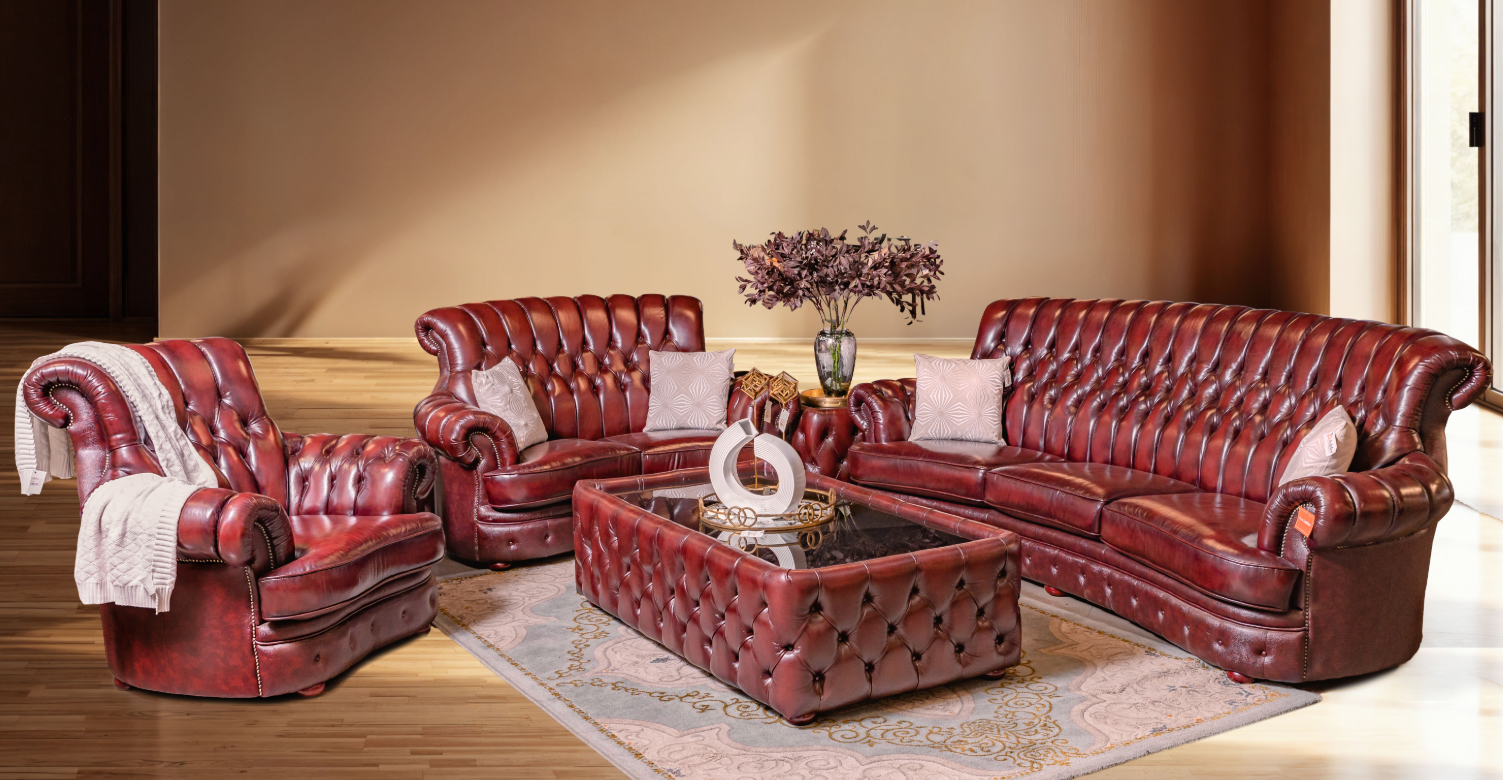
Kihato sees no distinction. So she founded Savannah Space, a Kenyan furniture and home décor company that collaborates with artisans to make high-end handicrafts for modern households.
"When you think of luxury, you think of quality, uniqueness, intentionality and time," she says. "That is exactly what craft is."
The Kenya crafts and handicrafts industry is set to experience considerable growth. According to the Invest Kenya Creative Economy Sector Pack (2026), exports from the sector are expected to increase from $132 million to $220 million in 2030, demonstrating the growing economic power of artisanal and creative firms that have expanded their markets regionally and internationally.
PRODUCTION PROCESS
Weaving is important to Kihato not only because of the result but also because of where it begins. The wool is derived from sheep and may be collected repeatedly without hurting the animal.
"The process of rug weaving to me is one of the most beautiful businesses, mainly because it's actually a very sustainable practice," she said.
The wool is spun into yarn after shearing, then washed, coloured and ready for weaving. The yarn is stretched onto looms before artists start handcrafting patterns.
“So it's a regenerative art form," Kihato says. "The sheep is shaved, and instead of throwing that wool away, it gets turned into yarn."
The process could take weeks. By the time a rug is finished, the wool has been through multiple phases and many expert hands. Much of that work goes unnoticed once the product leaves the workshop.
“The mathematics that goes into it, people don't see it, but to make a rug and to make the patterns make sense, especially when it's geometrical patterns, these women are doing mathematics; it's just not shown.”
Kihato's goods are inspired by African fabrics, architecture, landscapes and cultural traditions, while also meeting the needs of modern households.
Kihato's venture is not the only one in this pace. The trend is also noticeable in the construction and interior decoration industries.
Architect and interior designer Mercy Birya says traditional crafts are regaining popularity as more people learn about them through social media and travel.
"Most of the clients are getting to ask us about these things; we need to reintroduce them back into the homes,” she said.
“And so crafts, people are opting to do those things; weaving, people are opting to bring them back. You go to homes and people are hanging basket mats around their homes.”
The architect says more visibility is influencing how these products are perceived. Crafts that were once considered ordinary household items are increasingly being incorporated into architectural and interior design projects, demonstrating a growing appreciation for locally made products and traditional techniques, and repositioning them as valuable products in the design market.
The procedure hasn't always been straightforward. Handmade production takes time, and integrating traditional processes with evolving consumer expectations can be challenging.
"With handmade things, you cannot rush them," Kihato says. "If you rush them, people will know."
SOURCE OF STABILITY, PRIDE
For the craftspeople with whom Savannah Space collaborates, weaving is more than just a source of money. It provides stability in an industry where work is sometimes unexpected.
“These women earn a living from these rugs, and it's a consistent living where you know that you have this order of rugs, and that's where your living is coming from. So, it's not just a one-off payment; you have consistent earnings where you can grow your family.”
Ruth Nyakio has worked as a weaver for 22 years. She taught herself the technique and joined Mbace Africa Handicraft after many years of weaving to support her family. Her work income enabled her children to get an education and continues to offer a steady living.
"I started when my kids were really young, and through weaving, I have educated them through school. Now that they have finished, weaving still holds me firm," she said.
Nyakio says weaving has also introduced her to design and given her a sense of pride in her work.
"I had no idea about design, now I know. When you make a carpet and hear the feedback from clients, it really uplifts me because I know that this is the work of my hands."
The work is also helping preserve a craft that Kihato believes is at risk.
"The art of weaving is a dying art form," she says. "If we do not preserve it, nobody else will."
The creative industries are also growing more vital to Kenya's economy. According to Invest Kenya, the sector accounts for more than 5 per cent of the country's GDP.
Her worry goes beyond weaving. Throughout Africa, many indigenous industries have struggled to compete with imported goods and large-scale production. However, Kihato feels that there is a growing interest in African innovation and design, which will create chances for businesses that invest in local manufacturing.
Many of these businesses have traditionally relied on the expertise of women. Weaving, basket-making and jewelry-making have been passed down through generations, and women continue to play an important role as artists and entrepreneurs.
Kihato believes that supporting these companies ensures that more value remains within African communities.
She stays focused on the goal that first brought her into the sector seven years ago: creating a firm anchored in Kenyan craftsmanship and demonstrating that African-made design belongs in the global luxury debate.