With such a large number of fake academic documents in circulation, it should not be surprising that several aspirants seeking political office in the August 9 General Election have faced difficulties proving their academic credentials.
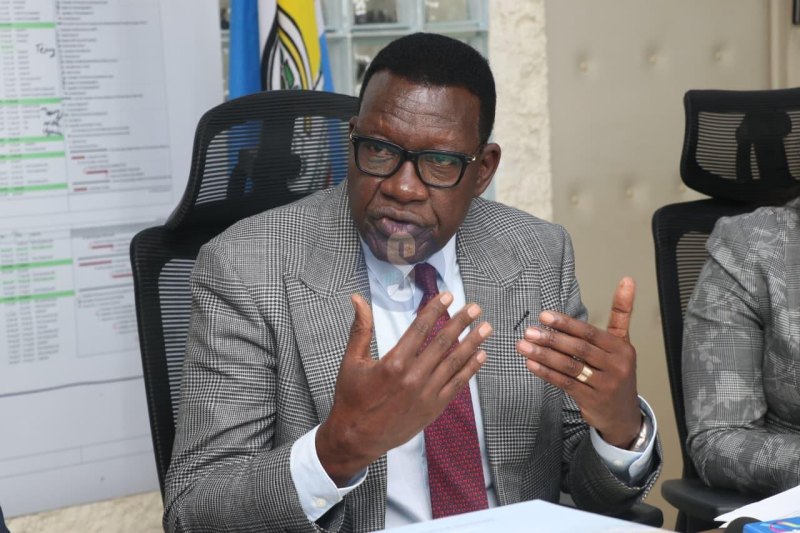
In case you are wondering how we know that a third of academic certificates are fake, the information was announced last year by the Kenya National Qualifications Authority’s director general Dr Juma Mukhwana. He lamented the lack of a database through which interested persons could verify academic certificates.
“It's unfortunate for some people to get employed knowing well they are not qualified," Mukhwana said. "We are working with all stakeholders to eradicate this practice that is denying Kenyans with genuine academic documents an opportunity to benefit from their hard work in school."
The prevalence of fake academic certificates is confirmed by Wilson Sossion, former secretary-general of the Kenya National Union of Teachers. Sossion claimed in an appearance on KTN television that many public servants have fake degrees.
“Very many characters in this country have unscrupulously printed certificates from River Road [Nairobi], which they used to get jobs, while some individuals may have used documents of other citizens," Sossion, a nominated MP in the outgoing Parliament, said.
The trend of fake academic papers has spread into realms that pose a risk to society. Last year, a pilot was charged in a Nairobi court for falsifying a high school certificate to help him gain admission into flight school. Interesting enough, the pilot passed flight training and had flown for eight years before the deception caught up with him.
SECTORS AFFECTED
The teaching profession has not been spared the scourge of fake qualifications. In April, the Teachers Service Commission announced that it had deregistered 26 teachers for presenting forged certificates during recruitment.
A decade ago, the University of Dodoma in Tanzania discovered that 200 Kenyans who had applied for jobs at the institution had presented fake academic documents.
In 2016, a 28-year-old man with no known medical training was found practising as a doctor at the Kapsabet County Referral Hospital in Nandi County. The culprit, Ronald Melly, had reportedly done eight surgeries by the time he was exposed. The county government blamed the Ministry of Health for the fiasco.
Still in 2016, George Mburu was arrested for posing as a doctor and a clinical officer at the Rift Valley General Hospital in Nakuru. The 33-year-old had been working at the hospital for two weeks before he was exposed, following complaints from patients.
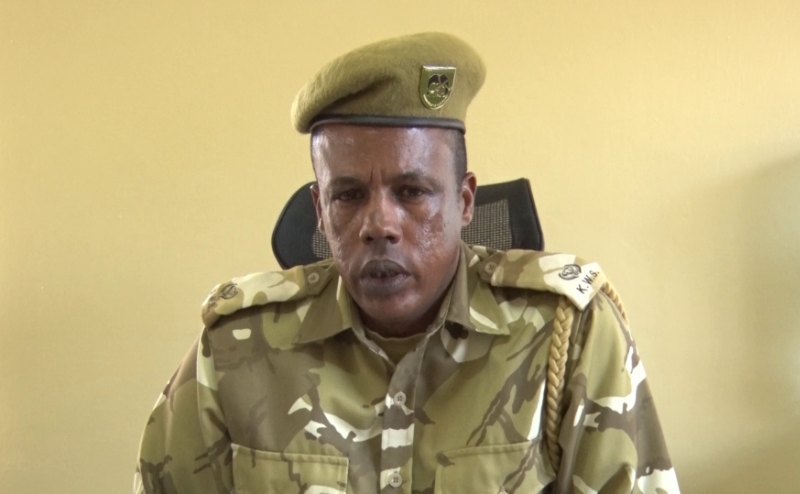
The matter of fake qualifications has implications for national security. Both the military and the police have numerously caught recruits trying to present fake papers at recruitment centres.
This month, the National Police Service announced the arrest of 10 recruits at Kiganjo Police College in Nyeri county after it was discovered that the academic papers they presented during recruitment were fake. The suspects have been expelled from the institution as they await prosecution.
People who have degrees sat down and decided that 95 per cent of the population should not hold office because they don't have degrees
ELITIST REQUIREMENT?
As the country heads to the polls this coming August, it is the turn of politicians to fall under scrutiny for holding questionable documents. According to the Independent Electoral and Boundaries Commission, anyone intending to vie for the positions of President, Deputy President, Governor and Deputy Governor must hold a degree from a university recognised in Kenya.
If the educational institution that issued the degree certificate is not based in Kenya, a certified copy of the certificate must be submitted, which must be verified by the Commission for University Education (CUE).
The university degree requirement was introduced to prevent poorly educated persons from getting elected. However, the relevant clauses in the Election Act have been challenged several times in Parliament and through the courts.
The requirement that MPs possess a university degree was declared unconstitutional in a High Court ruling last April. A similar court ruling was made in October 2021 with regards to Members of County Assemblies. The requirement for a university degree requirement now applies only to the positions of president and governor. A university degree is not mandatory for those seeking election into the Senate, National Assembly and County Assemblies.
The latest batch of politicians whose academic papers are under intense scrutiny includes Johnson Sakaja, who is running for governor in Nairobi county, Wavinya Ndeti (Machakos governor aspirant), Granton Samboja (incumbent governor, Taita Taveta) and presidential candidate Walter Mong’are. Interestingly, Samboja is completing his first term as governor despite doubts raised about his academic credentials soon after the 2017 elections.
The biggest criticism facing the requirement for university degrees is that it effectively locks out the vast majority of Kenyans from elective positions. The 2019 population census showed that only 3.5 per cent of Kenyans had a university education. Opponents of the requirement say that making university degrees a prerequisite for elective positions would confine leadership to a tiny elite.
“A university degree is not proof of leadership acumen,” said acclaimed singer Wahu Kagwi in a social media post. "Honesty, integrity, diligence and a track record of good leadership in whichever sector one is involved in are some of the things I would love to see us focus on."
Nahashon Kimemia, a Nairobi-based social commentator, believes the university degree requirement was put into law by people who wanted to have exclusive access to political positions. "People who have degrees sat down and decided that 95 per cent of the population should not hold office because they don't have degrees," he says.
Kimemia believes that misuse of government resources is a consequence of poor organisation in our society, which then gives rise to moral character issues. “Degree requirements will not stop the problems we have; it will only create more corruption while reducing the value of degrees,” he says.
The knowledge you get in class will be useful to you in the future, though you may sometimes feel your studies are not relevant to your current circumstances
RELEVANCE IN POLITICS
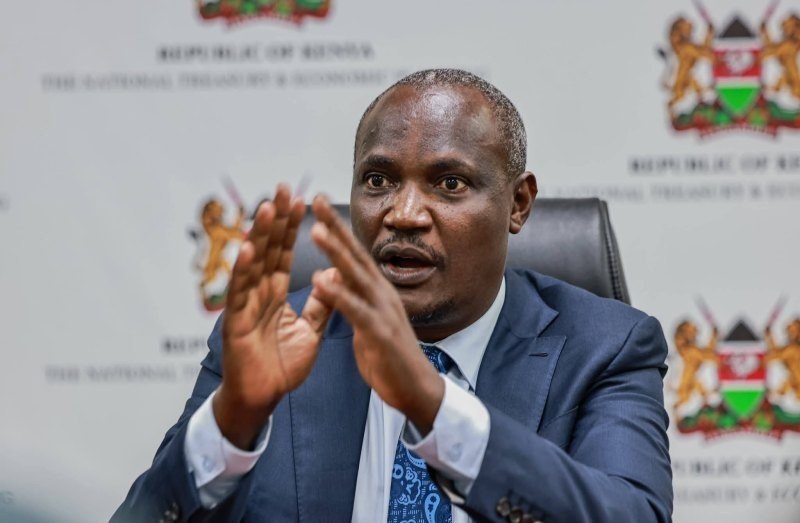
On the other hand, supporters of the degree requirement say running a government and providing oversight requires educated people. Speaking during a debate on the subject in 2021, National Assembly Minority Leader John Mbadi wondered how legislators who did not go beyond primary school would critically look at the national budget and demand accountability from the Executive.
In his contribution the same day, Majority Leader Amos Kimunya said the lack of higher education has diluted the quality of debate in Parliament. Nominated MP Dennitah Ghati said it would be a mockery of education if anyone is allowed to come into the House without a degree.
“People must go to school; Members of Parliament must go to school. Why are we educating our children and we're saying you can go to Parliament without a degree?” Ghati said. Despite the debate in the National Assembly, the Judiciary ruled that the degree requirement for Members of the National Assembly and that of county assemblies were unconstitutional.
Amos Marube, a lecturer at a public university in Nairobi, says universities are centres of knowledge, and that knowledge has improved human society over the years.
“University education is important because it teaches about life; it teaches critical thinking. Education helps you understand where you come from,” Marube says. "The knowledge you get in class will be useful to you in the future, though you may sometimes feel your studies are not relevant to your current circumstances."
To combat the scourge of falsified documents, the Kenya National Qualifications Authority has created an online portal to be used for reporting suspected fakes. The portal is called “Report Cheti Mwitu” and can be accessed at https://qa.knqa.go.ke/cheti-mwitu/.