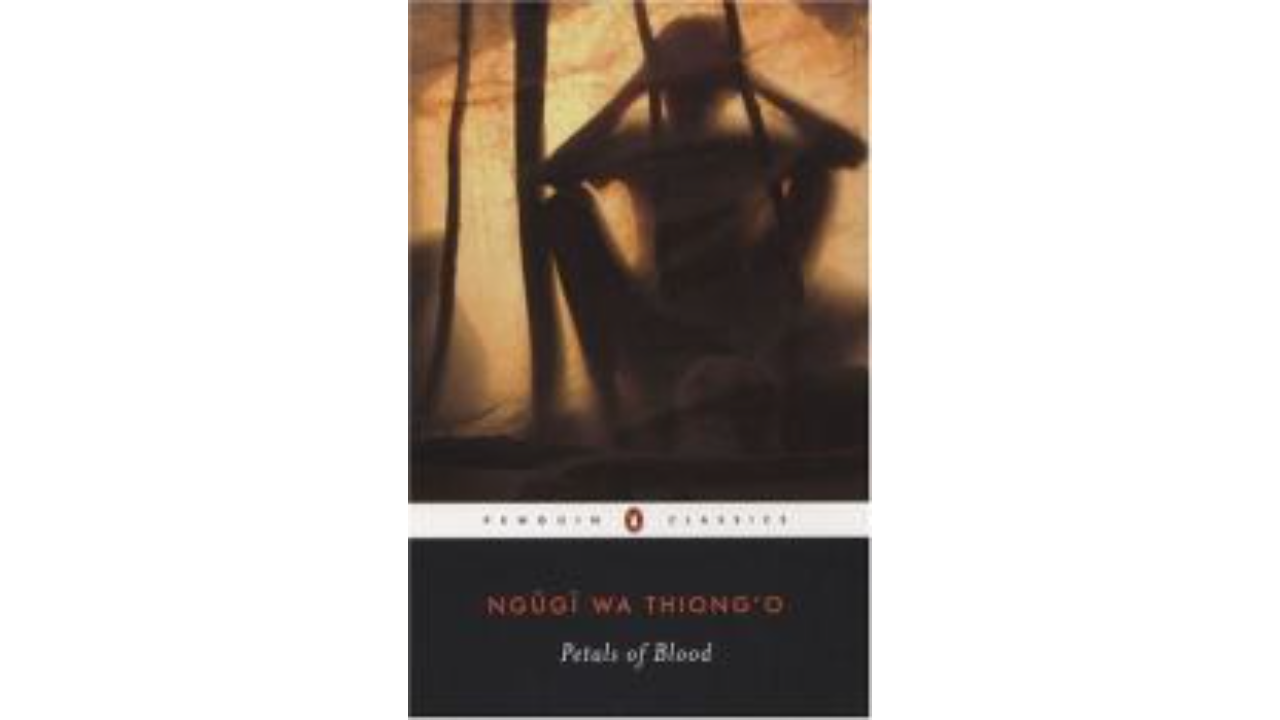
Ngũgĩ wa Thiong’o’s Petals of Blood is a novel that doesn’t ask politely for your attention. It seizes it, shakes it and refuses to let go.
This is not a gentle reading experience; it is raw, unflinching and steeped in the moral smoke rising from a country clawing its way out of colonialism only to collapse into the hungry arms of a new elite.
If the book were a landscape, it would be a field of embers, quietly glowing at first, then suddenly flaring into flames.
The story begins with a jolt: three prominent Nairobi businessmen have been murdered, burned alive. Four villagers from the small, drought-scarred and fictional village of Ilmorog are arrested as suspects, namely Munira, Wanja, Karega and Abdulla.
This violent mystery is the hook, but Ngũgĩ is not interested in giving readers a whodunit. Instead, he rewinds time, pulling us through the lives of the accused to reveal how their intertwined journeys, marked by loss, betrayal, hunger, desire and awakening, mirror the fractures of a nation sold false promises.
Ilmorog, barren and forgotten, is more than a setting; it is the novel’s wounded heart. Its soil holds memories, resentments and silent warnings of what happens when a people are abandoned by those who swore to liberate them. In one of the novel’s stark reflections, Ngũgĩ writes, “Ilmorog had been left to die, while others feasted in the city’s glow.” This is a story of that death, and the furious fight against it.
The villagers’ desperate pilgrimage to Nairobi forms one of the novel’s most striking passages. As they trudge through the harsh landscape seeking help from their elected leaders, Ngũgĩ’s narrative blooms into a sweeping social and political critique. He exposes the hypocrisy, greed and spiritual emptiness of a ruling class too comfortable to remember the promises of Independence.
It is during this journey that the truth of Kenya’s transformation becomes painfully clear, captured in the chilling observation: “The city devoured not only men but their dreams, their courage and even their shadows.”
But Ngũgĩ’s brilliance lies not only in his political sharpness, though that sharpness cuts deep. It lies in his characters, who are rendered with such emotional density that they feel carved from lived experience.
Wanja is the novel’s blazing centre: alluring, wounded, uncompromising. She is both a survivor and a symbol of the land itself: exploited, underestimated, yet burning with irresistible life.
Munira, whose guilt and self-doubt thicken with every chapter, becomes a mirror held up to moral passivity. Karega, radical and relentless, embodies the voice of resistance. And Abdulla, stoic yet tender, is a testament to endurance.
Ngũgĩ’s writing style elevates the story from compelling to unforgettable. His prose is muscular yet lyrical, dense with metaphor but never at the expense of clarity. He shifts effortlessly between simmering interior monologues and scorching social commentary, between quiet scenes of personal pain and explosive confrontations with the machinery of power. Even silence becomes a tool in his hands. Characters haunted by memories they cannot voice, villages holding truths buried beneath dust and drought.
The novel’s structure itself deepens its impact. By beginning with the shocking aftermath and unravelling the past through layered flashbacks, Ngũgĩ creates a narrative tension that never loosens. Every revelation feels earned, every character’s wound connected to a larger historical betrayal.
And yet, Petals of Blood does stumble in one significant way. Its political exposition, though intellectually and historically important, often overshadows the narrative. At times, characters slip into long speeches that read less like organic dialogue and more like ideological declarations. These sections can feel intrusive, yanking the reader out of the emotional fabric of the story and into something closer to a political tract. For readers seeking narrative momentum or subtlety, these moments can grate, slowing the otherwise gripping flow of the novel.
Petals of Blood is a fierce, haunting and necessary work. It is a story about betrayal and awakening, about the violence of forgetting and the cost of remembering. It is about what happens when a land bleeds, and who steps forward when the petals finally burn.
If you dare step into Ilmorog, prepare yourself. This is not just a novel. It is a reckoning.