 Abdullahı Maalim, a governance and policy expert with 25+ years of experience in public administration, devolution, and institutional reform. /HANDOUT
Some places are synonymous with the pursuit of knowledge. Cambridge is one such place. For over eight centuries, this historic city has nurtured scholars whose ideas have transformed science, medicine, engineering, economics and public policy, leaving an indelible mark on the world.
Long before artificial intelligence, cloud computing, and quantum technologies became part of everyday conversation, Cambridge demonstrated a timeless truth: societies that invest in knowledge secure their future.
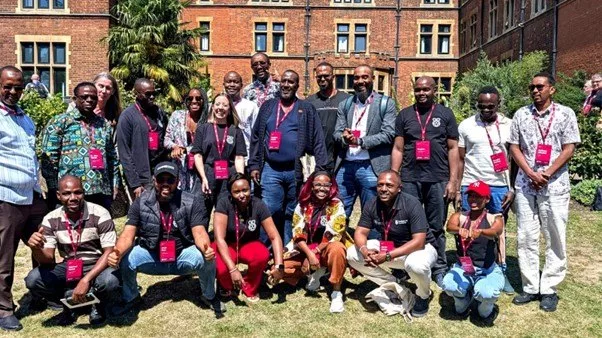
It was therefore both a privilege and a profound learning experience to join educators, policymakers, researchers and development practitioners from across the globe at the Raspberry Pi Foundation Global Partners Summit, held from June 30 to July 2 in Cambridge.
Representing the Frontier Counties Development Council (FCDC), we travelled from Kenya's vast arid and semi-arid lands to one of the world's foremost centres of scholarship, not merely to learn from others, but to contribute our own experiences to an increasingly global conversation about the future of education.
At first glance, Cambridge and Kenya's frontier counties appear to inhabit different worlds.
One is defined by centuries-old colleges, renowned laboratories and libraries that have shaped global intellectual history. The other stretches across Kenya's expansive northern frontier, where schools are separated by vast distances, communities are predominantly pastoralist, and education systems must navigate the persistent realities of drought, insecurity, limited infrastructure and historical marginalisation.
Yet, beneath these contrasts lies a shared challenge.
Across continents, governments and education systems are grappling with the same pressing question: How do we prepare today's learners for tomorrow's digital economy without leaving millions of children behind?
This question framed every conversation throughout the summit.
One of the most thought-provoking discussions centred on overcoming barriers to reaching underserved communities. Too often, such communities are defined solely by what they lack—electricity, connectivity, infrastructure or financial resources. Development discourse frequently measures deficits while overlooking strengths.
Our experience in Northern Kenya tells a very different story.
It is a story of extraordinary resilience: of teachers who travel hundreds of kilometres to reach remote classrooms; of parents who continue to prioritise education despite economic hardship; of county governments that increasingly recognise digital learning as a development imperative; and of learners whose curiosity and determination remain undiminished by circumstance.
These experiences resonated strongly with delegates from Latin America, Asia, Africa and Europe. While contexts differed, one lesson emerged with remarkable clarity: sustainable educational transformation cannot be imported. It must be rooted in local realities, shaped by communities themselves and built upon existing strengths rather than perceived weaknesses.
This philosophy also informed our summit presentation, Unlocking What Exists: Turning Idle Devices into Engines of Learning. The title challenged one of education’s most persistent assumptions: that digital transformation begins with purchasing more technology.
Across many countries, including Kenya, schools already possess underutilised computers. Some sit locked away in laboratories; others gather dust in storage rooms. Many become obsolete not due to age, but because teachers lack sufficient training, maintenance systems are weak, connectivity is unreliable, or school leadership lacks confidence in integrating technology into everyday learning.
This raises an uncomfortable but necessary question: Before investing billions in new devices, have we fully utilised those we already have?
For Kenya, the answer carries significant policy implications. The country has made commendable investments in expanding access to digital technologies in schools. These initiatives have broadened opportunities for thousands of learners and established a strong foundation for digital inclusion. However, experience increasingly demonstrates that hardware alone does not transform education. The policy lesson is clear: expansion must be matched with effective use, or its intended impact will remain incomplete.
A computer has little educational value unless accompanied by confident teachers, relevant curriculum content, reliable technical support and an enabling learning environment. Technology, after all, is only an enabler; people remain the true drivers of transformation.
Throughout the summit, this message was echoed repeatedly by educators and practitioners from around the world. The most successful education systems are rarely those with the newest technologies; rather, they are those that invest consistently in teacher development, strong institutions and cultures of innovation.
Technology amplifies quality teaching—it cannot replace it. These conversations could not have come at a more consequential moment.
Artificial intelligence is rapidly reshaping economies, industries and workplaces across the globe. Education systems everywhere are reconsidering what learners must know and the competencies they will require for careers that may not yet exist. While AI presents immense opportunities, it also reinforces an enduring reality. The skills that will matter most are fundamentally human: critical thinking, creativity, collaboration, ethical reasoning, adaptability and problem-solving. These are precisely the competencies that quality computing education seeks to cultivate.
For Kenya, and particularly for its arid and semi-arid counties, this presents both an urgent challenge and an unprecedented opportunity. Digital literacy can no longer be regarded as an optional addition to the curriculum. It is becoming an essential foundation for economic participation, innovation and national competitiveness.
Yet digital inclusion cannot be measured merely by counting computers delivered to schools.
Its true measure is whether a learner in Wajir, Mandera, Turkana, Marsabit or Garissa enjoys the same opportunity to acquire future-ready skills as a learner in Nairobi, London or Singapore. It is whether geography ceases to determine destiny.
This is why partnerships matter.
One of the most encouraging lessons from Cambridge was the recognition that governments, universities, philanthropic organisations, civil society and the private sector each possess complementary strengths. Sustainable educational transformation occurs when these strengths converge around a common purpose.
The collaboration between the Frontier Counties Development Council, the Raspberry Pi Foundation, UNICEF, and others illustrates this principle in practice. By combining global expertise with local leadership, the partnership has supported schools across Kenya's frontier counties in strengthening computing education, building teacher capacity, and creating learning environments where children develop not only digital skills but also confidence, creativity, and resilience.
Perhaps, however, the greatest lesson from Cambridge had little to do with technology. Walking through colleges that have stood for centuries, one cannot help but reflect on what endures. Great institutions are not built through isolated projects or short-term interventions. They are sustained by patient investment, visionary leadership, intellectual curiosity, and an unwavering belief in the transformative power of education.
The same principle should guide our own national journey. Kenya's educational future will not be secured through one-off donations or periodic technology drives. It will be built through long-term investment in teachers, stronger institutions, equitable policies and sustained partnerships that ensure every learner, regardless of location or circumstance, can thrive in an increasingly digital world.
As our delegation journeyed home, we carried far more than conference notes and presentation slides. We returned with renewed conviction that the experiences of Kenya's frontier counties are not peripheral to global education conversations; they are central to them. We were reminded that innovation is not the preserve of wealthy nations or prestigious universities.
Quite often, the most practical, scalable and transformative solutions emerge from communities that have learned to innovate precisely because resources are scarce.
Cambridge has shown the world how ideas can endure for centuries. Kenya's frontier counties are demonstrating that those ideas achieve their highest purpose only when they reach every child, regardless of geography, background, or circumstance.
That is not merely an educational aspiration. It is a national imperative.
The writer is a governance and policy expert with 25+ years of experience in public administration, devolution, and institutional reform