Social repair in a progressive country like Kenya begins with the acknowledgment that the police acted beyond reasonable force /FILE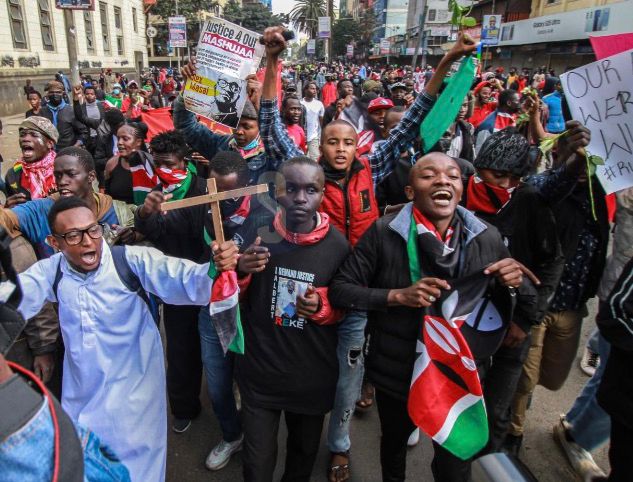
Following anti-Finance Bill
and Saba Saba protests, the government received a reparations framework drafted
by the Kenya National Commission on Human Rights. The plan proposes public
apologies and payouts of at least Sh2.5 million per victim of right-to-life
violations, backed by a presidential directive of Sh2 billion for compensation.
I hold the view that compensation does not imbricate justice. So, the radical and unsophisticated simplification of the compensation measures should be abandoned. The campaign to take reparations hostage is pellucidly an injustice to victims to whom compensation is due. The problematic encapsulation of reparations in an activism capsule is worrying.
The
Committee Overseeing the Implementation of the 10-point agenda (Coin-10), made
clear recommendations in the March 10 report, on the necessity for the KNCHR to
develop a compensation framework for victims of police brutality during
demonstrations, and a further recommendation that the Independent Policing
Oversight Authority, should be conducting investigations and make their reports
public within a period of six months of each case.
Therefore, it must be appreciated that the reparations framework developed by the KNCHR and handed to President William Ruto, is a manifestation of the ongoing diligent oversight by Coin-10 in the implementation of the 10-point agenda.
The right to peaceful assembly as enshrined in Article 37 and compensation for victims or protests and riots is agenda number six of the 10-point agenda.
Demonstrable efforts to restrain and redress the effects of gross human injustice are welcome and are an indication that the state is not refractory.
Predicated on planetary nationalism within the orbit of national healing and pursuit for justice, President William Ruto has issued a state apology to the victims, for all forms of police brutality over the last five regimes. President Ruto has not said “mea culpa, mea culpa, mea maxima culpa” (through my fault, through my fault, through my most grievous fault), because it is not about him, but about the state over the last many regimes. He is the only President who has had the courage to confront issues of police brutality, and taken action. The language of remorse by the head of state is not only powerful, but important as well.
It should be understood that from the President’s perspective, as it should be with all Kenyans, retrospective justice rests on the belief that some crimes are so atrocious that an apology alone does not suffice, hence the reparations framework. Is it not true that with examples all over the world that authentic memory requires a public acknowledgment of the gravity of historical harms?
Social repair in a progressive country like Kenya begins with the acknowledgment that the police acted beyond reasonable force, caused grievous harm, that the dignity and rights of persons were violated and make symbolic and material compensation for the harm suffered.
The compensation is a conscionable act of an irreducible moral value, and the President appreciates the constitutional value of human rights under the Bill of Rights, and that is why his commitment to reparations and compensation of victims is a priority.
Reparations is an act of disenclosure, a deliberate and conscientious effort to provide necessary reliefs through a comprehensive framework that considers the legal and epistemic walls that keep the objects of injustice captive and active within a system.
In fact, memory and reparations are not merely about legal ownership or financial compensation; they are foundational requirements for healing the society, sharing the national social space and making amends with the atrocities committed.
The distinctive logic is that confronting traumatic histories of police brutality offers a means to promote dialogue and healing particularly for victims and Kenya as a whole. This even as we come to terms with the material significance of Kenya’s Bill of Rights because protesters are not subhuman.
While the compensation sum is an effort to redeem survivors from entrapment in the despair of the injustices suffered, the holistic nature of reparations will be considered and therefore it will not end at cash pay-outs. A comprehensive policy and legal reforms will be railroaded, including guarantees of non-repetition through policy or legal overhauls.
The ontological significance of the compensation of victims cannot be gainsaid, and should not suffer dramatised criticisms for limited political value.
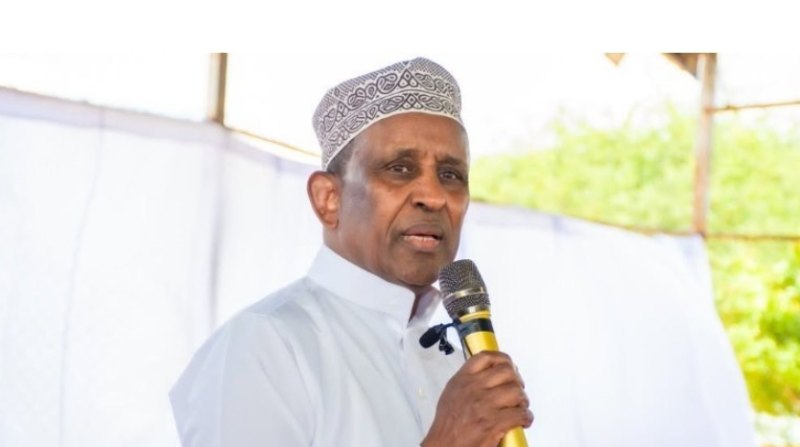
Bigambo is a lawyer, governance expert and vice chair to the Committee Overseeing
Implementation of the 10-point agenda