


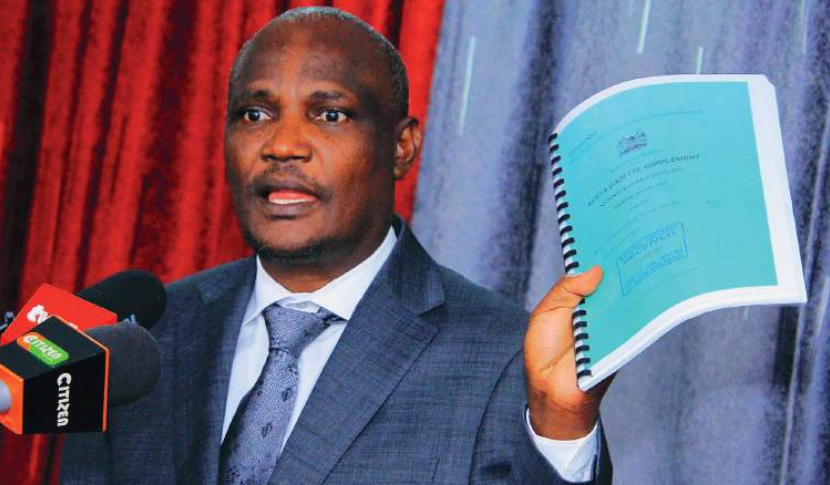
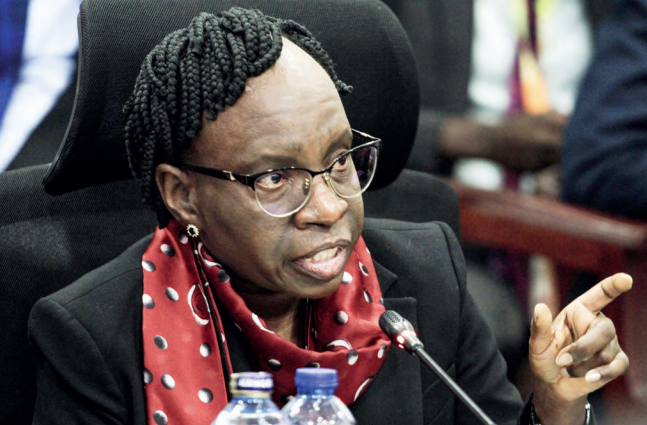
 SAIRIN LUPIA/ HANDOUT
For many years, the Kenyan budget was more than just a government document. It was a national event that captured the attention of millions of citizens.
Families would gather around radios and televisions, eager to hear how the budget would affect their daily lives. Changes in the prices of essential goods, adjustments to taxes, and new development projects were discussed across the country.
The budget represented hope, planning, and the promise of a better future. Today, however, the national mood surrounding the budget has changed dramatically. Instead of anticipation, many Kenyans approach budget day with anxiety.
The phrase “tighten your belts” has become a recurring theme, repeated year after year as citizens are asked to bear the burden of higher taxes and increased living costs.
What was once a symbol of national progress has increasingly become a source of frustration and concern. One of the most significant issues facing Kenya today is the growing budget deficit. A budget deficit occurs when the government plans to spend more money than it expects to collect in revenue.
In principle, a deficit is not always a bad thing. Governments around the world sometimes borrow to finance major infrastructure projects, improve public services, or stimulate economic growth.
The real question is not whether the government borrows but why it borrows and how the borrowed money is spent. This is where the concerns of many Kenyans begin. Every year, the government emphasizes the need for additional revenue and frequently introduces new taxes or expands existing ones.
The justification is often straightforward: the country needs more money to finance its budget and reduce the deficit. Yet many citizens are increasingly asking a simple question: if taxes continue to rise, why do public services and living standards not improve at the same rate?
The growing disconnect between the government and its citizens is rooted not only in taxation but also in public expenditure. Many Kenyans believe that the country’s financial challenges are driven less by a lack of revenue and more by how public funds are allocated and utilized.
Reports of excessive government travel, expensive conferences, luxury accommodation, unnecessary administrative expenses, and duplicated functions across government institutions create a perception that public money is not always being treated with the care and responsibility it deserves.
When ordinary citizens are struggling with the rising cost of food, fuel, housing, and education, it becomes difficult to justify lavish government spending.
Taxpayers are generally willing to contribute when they can see tangible results—better roads, reliable healthcare, quality education, access to water, and economic oppwortunities.
However, when additional taxes appear to finance consumption rather than development, public trust begins to erode.
The debate surrounding Kenya’s budget deficit should therefore move beyond the question of how much revenue can be raised.
Equally important is the question of how existing resources are being spent. Before asking citizens to contribute more, the government must demonstrate that it is maximizing the value of every shilling already collected.
This requires greater transparency, stronger accountability mechanisms, stricter controls on public expenditure, and a commitment to eliminating waste.
Debt itself is not the enemy. In fact, debt can be a powerful tool for development when invested wisely in projects that generate economic growth and improve the lives of citizens.
The real danger arises when borrowing is used to finance recurrent expenditure, inefficiency, or activities that provide little long-term benefit to the country.
Future generations should not be burdened with debt simply to sustain unnecessary spending today. Ultimately, Kenya’s budget challenge is not solely a revenue problem; it is also an expenditure problem. Sustainable public finance cannot be achieved by continually increasing taxes while ignoring wasteful spending.
A responsible budget must balance both sides of the equation—raising revenue fairly while ensuring that public funds are used efficiently, transparently, and in the best interests of the people.
For many young Kenyans, the frustration is not with taxation itself but with the perception that sacrifices are demanded from citizens while similar discipline is not applied within government. Rebuilding trust will require more than new tax measures.
It will require a clear demonstration that public resources are being managed responsibly and that every shilling collected serves the public good. The budget should once again become a document that inspires confidence and hope.
Achieving that goal will require a shift in focus—from simply finding
more money to ensuring that the money already available is spent wisely. Only
then can the budget truly become a tool for national development rather than a
source of growing public concern.







![[PHOTOS] Red carpet in Pretoria as Ruto begins South Africa visit](https://cdn.radioafrica.digital/image/2026/06/abe3e750-6e5a-4394-a45c-899768be6240.jpeg)