


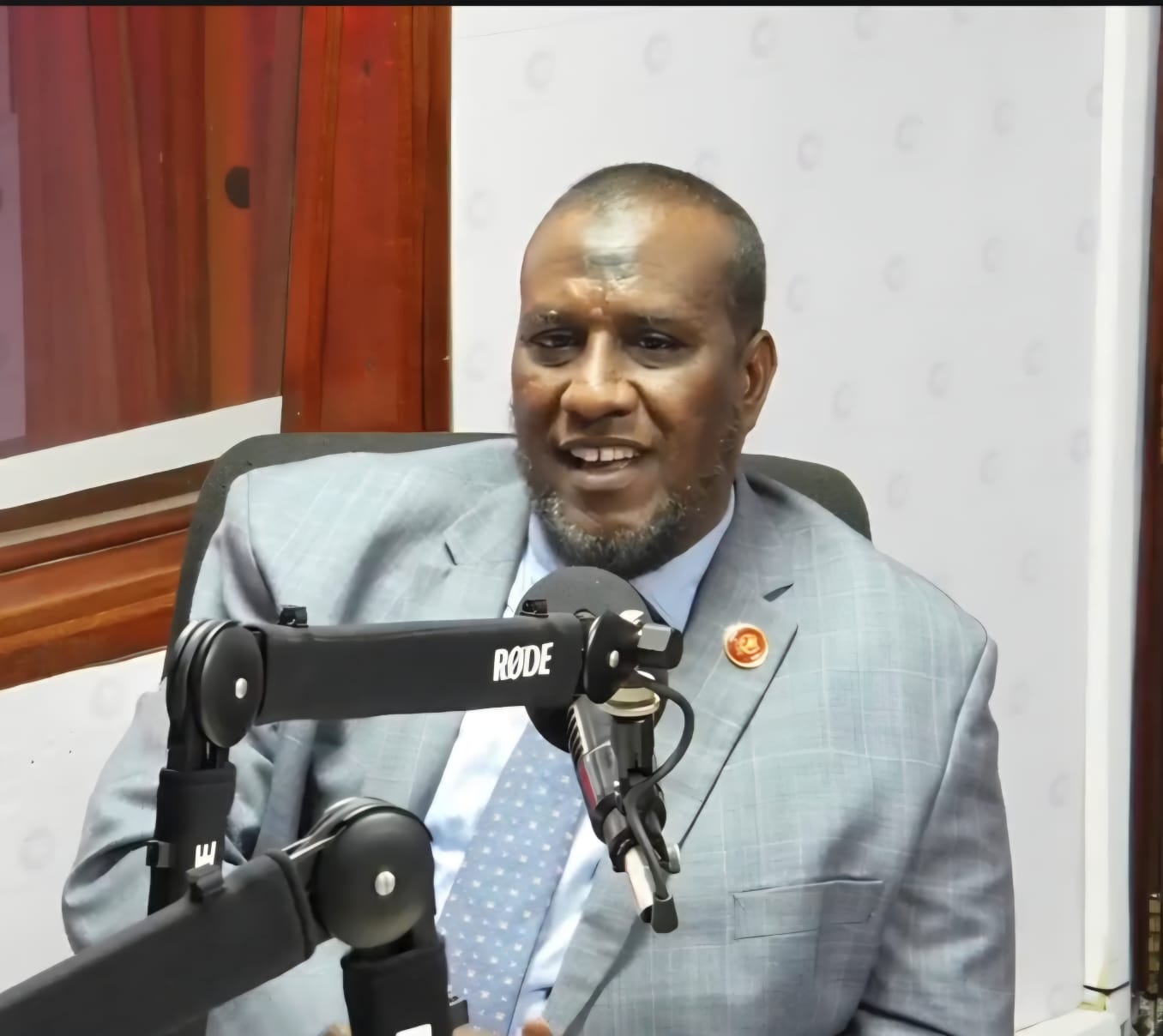
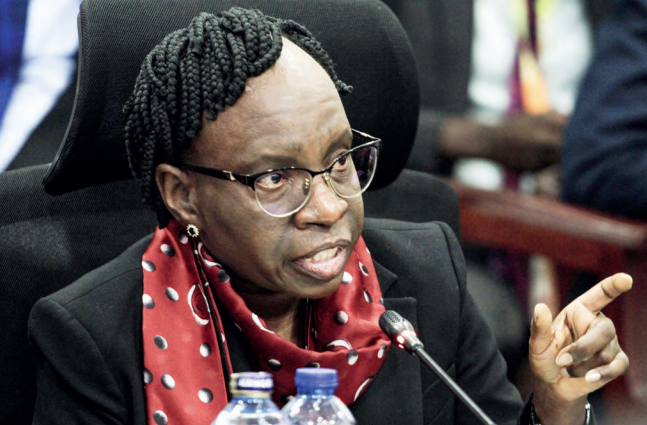
 Abdullahı Maalim, a governance and policy expert with 25+ years of experience in public administration, devolution, and institutional reform. /HANDOUT
"Sessional Paper No. 10 of 1965 entrenched a development paradigm that concentrated development in the so-called 'high potential' areas. Vast regions like the former North Eastern Province were classified as marginal, as lesser, and as undeserving."
Those words, spoken by President William Ruto during the 63rd Madaraka Day celebrations in Wajir, will remain among the most powerful acknowledgements ever made by a sitting Head of State of the historical injustices suffered by Northern Kenya.
More profound was the apology that followed. On behalf of the Republic of Kenya, the President offered a sincere apology for decades of marginalisation, exclusion, discrimination and policy failures that denied generations of Northern Kenyans equal opportunities. For many of us who have lived, worked and served in this region, it was not merely a political statement. It was a recognition of a lived reality.
Building on this apology, it is perhaps no coincidence that this year's Madaraka Day celebrations were held in Wajir under the theme "Education, Skills and the Future." If there is one sector where the effects of historical marginalisation are most visible, it is education. Northern Kenya continues to carry some of the country's highest burdens of educational disadvantage, including low transition rates, teacher shortages, inadequate infrastructure, and a disproportionately high number of out-of-school children.
Against this backdrop, the President's decision to place education at the centre of his address was both timely and symbolic.
One of the most significant announcements was the commitment to formally integrate Duksi, Madrassa and the Programme for Pastoral Instruction into the national education framework. For decades, thousands of children across the Frontier Counties have acquired foundational literacy, numeracy, religious and life skills through these alternative learning pathways. Yet many of these learners have remained invisible within official education statistics and have often faced barriers when transitioning into formal schooling.
The absence of a structured recognition framework has undoubtedly contributed to the persistent challenge of out-of-school children in pastoralist and Muslim-majority communities. The President's directive to the Ministry of Education to consult stakeholders and develop an integration framework presents a historic opportunity to bridge this gap. If implemented thoughtfully, it could open pathways for thousands of children who have previously fallen between the cracks of the education system.
The timing of these commitments is particularly significant. In just a few days, Kenya will join the rest of Africa in commemorating the Day of the African Child on 16 June 2026. This year's Madaraka Day address therefore serves as a fitting prelude to a month dedicated to reflecting on the rights, welfare and future of African children. For the children of Northern Kenya—many of whom continue to face barriers related to access, equity and inclusion—the President's commitments on education, teacher deployment, school infrastructure, digital learning and the recognition of Madrassa, Duksi and pastoralist education pathways offer renewed hope. It is perhaps one of the most encouraging starts to the Month of the African Child that the region has witnessed in recent years. The message emerging from Wajir is clear: Northern Kenyan children matter, their education matters, and their future matters.
Equally encouraging was the focus on teacher recruitment and teacher training. For years, schools across Northern Kenya have struggled with chronic teacher shortages. The operationalisation of Wajir, Kotulo and Mandera Teacher Training Colleges, alongside Garissa TTC, represents a practical and sustainable solution. Training local teachers who understand the language, culture and context of the communities they serve is one of the most effective ways to address staffing challenges in the region.
The recruitment of local teachers and the enrolment of thousands more in teacher training colleges signal a shift from temporary interventions towards long-term solutions.
The President also highlighted investments in classrooms, laboratories and learning facilities. This is particularly important as Kenya advances the Competency-Based Education and Training system and seeks to strengthen Science, Technology, Engineering and Mathematics (STEM) education. The revelation that 52 per cent of learners in the first Grade 10 cohort have selected STEM pathways is encouraging and demonstrates growing interest among young Kenyans in scientific and technological fields.
However, enthusiasm alone is not enough. STEM learning requires laboratories, workshops, digital devices, reliable connectivity and well-trained teachers. The ongoing construction of classrooms and laboratories, especially in ASAL regions, therefore becomes more than an infrastructure project; it becomes an investment in the future competitiveness of our learners.
Digital learning deserves special mention. Across Northern Kenya, significant efforts have already been made by governments, development partners, schools and communities to introduce digital literacy and technology-enabled learning. Programmes such as the Raspberry Pi Foundation Digital Learning Initiative have demonstrated that children in pastoralist communities are just as capable of thriving in digital environments when given the opportunity.
The President's commitment to expanding digital connectivity, ICT centres, digital skills programmes and innovation spaces is therefore highly welcome. In an increasingly digital world, technology is no longer a luxury; it is a necessity. Digital learning has the potential to reduce geographical barriers, improve access to quality content, expand teacher support systems and connect learners in remote areas to global opportunities.
Importantly, the address moved beyond merely identifying problems. It outlined practical investments and policy directions aimed at expanding educational opportunity and inclusion. School feeding programmes, teacher deployment, digital infrastructure, TVET expansion and alternative learning pathway recognition collectively point towards a more comprehensive understanding of educational equity.
While implementation will ultimately determine success, the significance of the Wajir Madaraka Day address should not be underestimated. It acknowledged historical injustices, recognised the unique educational realities of Northern Kenya and offered a vision in which geography should no longer determine a child's future.
For those of us who have dedicated our professional lives to education in Northern Kenya, the message was both reassuring and hopeful. The apology recognised where we have come from. The education commitments point to where we could go.
The task ahead now belongs to all of us — national government, county governments, development partners, educators, religious leaders, communities and parents. Together, we must ensure that these commitments translate into meaningful change in classrooms, learning centres, madrassas, duxsis and communities across Northern Kenya.
As we approach the Day of the African Child on 16 June, the challenge before us is to transform the promises made in Wajir into tangible outcomes for every child. The true measure of success will not be in the applause that greeted the speech, but in the number of children who enter school, remain in school, access quality learning, acquire relevant skills, and realise their full potential. If the commitments announced in Wajir are implemented faithfully, Madaraka Day 2026 may well be remembered as a turning point in the educational journey of Northern Kenya and a defining moment for the African child in this region.
The writer is a governance and policy expert with 25+ years of experience in public administration, devolution, and institutional reform.


![[PHOTOS] Red carpet in Pretoria as Ruto begins South Africa visit](https://cdn.radioafrica.digital/image/2026/06/abe3e750-6e5a-4394-a45c-899768be6240.jpeg)