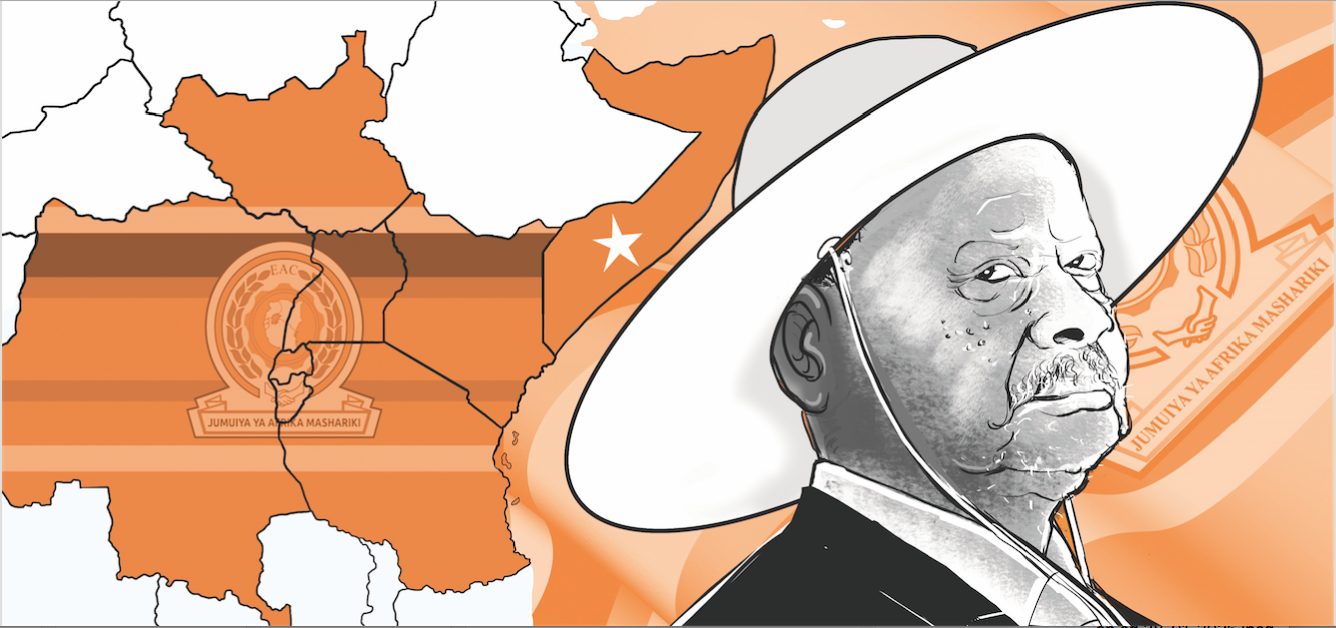
There is a point at which longevity stops looking like leadership and starts looking like national stagnation. For President Yoweri Kaguta Museveni, that point was crossed a long time ago.
His
latest swearing-in, marking 40 years at the helm of Uganda since 1986, is
not just a political milestone. It is an indictment of a country that has
remained trapped in the grip of one man for nearly half a century. Whatever
else may be said of Museveni, and there is much to say, no honest observer can
pretend that 40 years in power is healthy for a republic.
Museveni deserves credit where it is due. When he took power in 1986, Uganda had endured years of chaos, bloodshed, misrule and political trauma. He brought a measure of stability to a country badly in need of it. He restored some order, reasserted state authority and gave Uganda a chance to breathe after a long season of national torment.
That part of his legacy cannot simply be erased by his critics, nor should it be. History would be dishonest if it denied him that contribution.
But history would be equally dishonest if it turned that achievement into a permanent excuse for overstaying.
Stability is not an eternal licence to rule. It is not a hereditary crown. It is not a moral blank cheque that allows a leader to convert a republic into a lifelong personal project.
The tragedy of Museveni’s long rule is that a man who once presented himself as a corrective to Africa’s problem of leaders who overstay has himself become one of the continent’s most enduring examples of it. The liberator has lingered too long. The reformer has hardened into the very political condition he once seemed to resist.
Forty years is long enough even for a leader chosen in the freest and most flawless democratic conditions. In Africa’s fragile democracies, it is far too long. A nation cannot remain politically healthy when its highest office is effectively frozen in one era, one personality, and one governing instinct.
Over time, long rule breeds a particular kind of fatigue. Institutions weaken because they learn to orbit the ruler. New leadership is stifled because the future is always postponed. Public imagination shrinks because citizens are trained to confuse continuity with destiny. The country begins to stand still even while time moves on around it.
That is Uganda’s burden today. While other nations in the region struggle forward, however imperfectly, Uganda remains caught in the long shadow of one man who simply will not leave.
A whole generation has grown up knowing no other president. Another has grown old waiting for political renewal that never seems to come. At some point, national stability begins to look less like order and more like suspension. Uganda is not merely being governed by Museveni. It is being held on pause by him.
This is why his repeated claim that he still wishes to turn Uganda into a middle-income economy before exiting the scene rings hollow. Forty years is not a trial period. It is not a rehearsal. It is not the beginning of a vision. It is a full political lifetime.
If after four decades in charge Uganda still waits for the decisive transformation repeatedly promised, then the problem is no longer time. It is the illusion that more time under the same pair of hands will somehow produce a different historical outcome. It will not. Leaders who stay too long often begin mistaking persistence for progress.
A good dancer knows when to leave the stage with honour. That wisdom applies to politics no less than performance. Museveni had many opportunities to secure his legacy by stepping aside while his early accomplishments still carried moral weight.
He could have left as the man who steadied Uganda after turmoil. He could have been remembered as a strong transitional figure who restored order and then trusted his country enough to let it grow beyond him. Instead, he has chosen the well-worn path of the African strongman who cannot imagine the nation without himself at its centre. That is not statesmanship. It is failure of political humility.
And then there is the painful symbolism of regional leaders and former presidents attending his inauguration as though this spectacle were a triumph of democratic endurance rather than the exhaustion of it.
Such attendance may be diplomatically routine, but politically it feels like betrayal. It tells Ugandans who yearn for change that the region’s political class is more comfortable celebrating longevity in power than standing with citizens hungry for renewal. It normalises the abnormal. It flatters the old order while millions are left to wonder when their own future will finally begin.
Ugandans deserve better than a permanent presidency. They deserve new energy, fresh vision and the healthy disruption that comes when a country is allowed to renew its leadership. No leader, however consequential in one historical moment, should become so fixed in power that change itself begins to feel subversive. A republic is not built to orbit one man forever.
Museveni has done his part. That is the truth his admirers should have the courage to tell him. He helped stabilise Uganda. He shaped its modern political story. He earned a place in history. But history is not honoured by endless occupation of office. It is honoured by knowing when your chapter should close.
Forty years is enough. Uganda does not need more Museveni. It needs what comes after him.