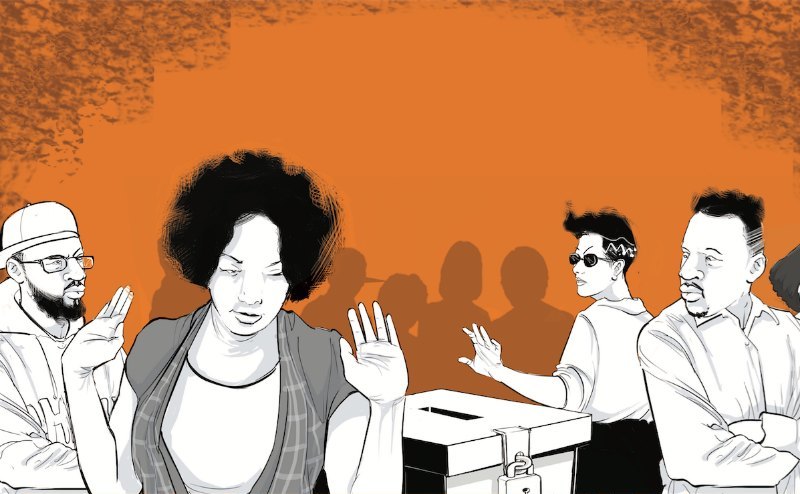
As Kenya hurtles toward the 2027 general election, our public institutions remain trapped in cycles of experience-induced myopia. Decades of service have not refined them; they have calcified them into fortresses of impunity, inertia and disconnection.
Law enforcement, the public service and the Independent Electoral and Boundaries Commission stand out as particularly egregious offenders, their veteran operators nursing dangerous blind spots even as citizens demand better. While pockets of judicial progress and grassroots ingenuity offer glimmers of hope, the dominant story is one of elite entrenchment that risks electoral disaster.
Kenya's police force exemplifies the rot. Battle-hardened veterans, shaped by colonial-era command cultures and repeated protest crackdowns, treat citizens as perpetual threats. Recent horrors, such as the custody death of a teacher-blogger in June 2025, the street execution of a mask vendor and dozens more killed during demonstrations, expose a force operating as an occupying army rather than a public service.
Compassion fatigue runs deep. Prolonged exposure breeds cynicism, where routine non-compliance triggers lethal overreaction. Confirmation bias reigns; gut instinct trumps evidence and the Kiganjo crew code, Kenya’s version of the infamous blue code of silence, shields the guilty.
Technology is often dismissed in favour of old methods, even as corruption scandals persist and public trust hovers near rock bottom. Decades of experience have normalised brutality and bribe-taking, with vetting exercises yielding cosmetic change at best. Independent Policing Oversight Authority convictions remain pitiful against thousands of complaints. Institutional failure has been epitomised in law enforcement.
The broader public service fares little better. Long-serving bureaucrats, cocooned in hierarchies and "we've always done it this way" mantras, deliver status-quo bias with ruthless efficiency. Citizens queue endlessly for services while internal metrics trump real outcomes. Echo chambers promote conformists, stifling innovation.
Ethnic patronage and political interference deepen the
disconnect, where politicians are insulated from evolving citizen needs,
especially from the youthful, digital majority, thus they mistake procedural
compliance for delivery. The result is bloated inefficiency and persistent
corruption, where police and civil registration are among the worst offenders,
and service gaps keep fuelling public fury.
The IEBC's record is equally damning. Seasoned administrators excel at logistical box-ticking and statutory timelines but falter on the sociopolitical essence of elections. Heavy investment in KIEMS kits and biometrics creates a dangerous technological fallacy—the illusion that gadgets or physical registers guarantee integrity. When transmission glitches or opacity arise, deep public suspicion follows, as seen in past disputed polls.
Defensive compliance after Supreme Court petitions has become reflexive, prioritising legal armour over early consensus-building with parties and citizens. With boundary reviews stalled, electoral campaign funding caps ditched and credibility questions persisting into 2027 preparations, experienced hands risk repeating history rather than breaking it.
The Judiciary warrants nuance. Hierarchical traditions and adversarial inertia persist, with some biases evident in high-stakes cases and processes that sideline litigants. Yet under the current Chief Justice, genuine progress stands out: court-annexed mediation clearing backlogs, e-filing expansion, anti-corruption drives and decentralisation efforts. These reforms demonstrate that experience, paired with reformist will, can deliver people-centred justice. Public confidence, though fragile, benefits from this trajectory.
Amid
institutional failure, citizen-led initiatives shine. Nyumba Kumi remains a persuasive model of what can work; community
ownership fostering intelligence-sharing, crime reduction, conflict resolution and trust-building where police falter. It has the potential to prove that
safety is not solely a state monopoly but a shared responsibility. Grassroots
vigilance can deliver tangible gains in neighbourhoods, underscoring that
empowered citizens can outperform entrenched bureaucracies.
Kenya's institutions should heed this warning. Your accumulated experience is breeding perilous blind spots, such as resistance to reform, public disconnection, and short-term survivalism, precisely when 2027 demands credibility, neutrality, and adaptability. Double down on defensiveness and ignore citizen fatigue, and you invite chaos.
Embrace humility by integrating reverse mentoring, genuine red-teaming, robust external oversight and meaningful public participation. Kenyans are watching. They have built WhatsApp networks and will not tolerate cycles of institutional arrogance. True experience learns; anything less risks the Republic itself. The ballot of 2027 will judge harshly.
Social impact adviser, a social consciousness theorist, trainer and speaker, agronomist consultant for golf courses and sportsfields and author of 'The Gigantomachy of Samaismela' and 'The Trouble with Kenya: McKenzian Blueprint'