


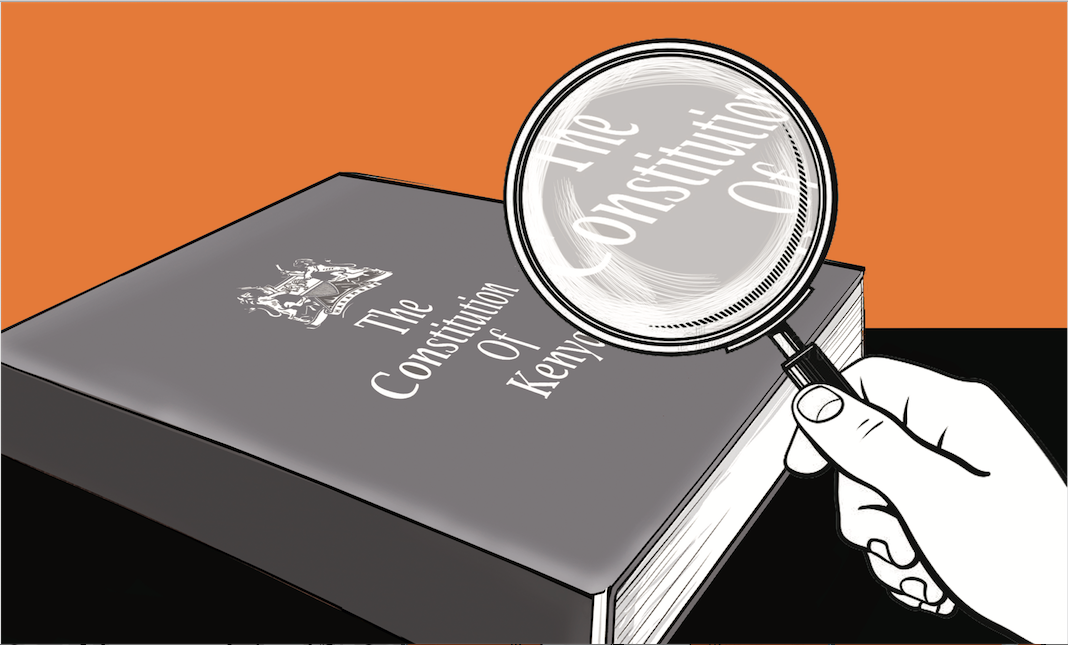
In the architecture of Kenya’s justice system, the Kenya Law Reform Commission (KLRC) was meant to stand as a vigilant sentinel, akin to a constitutional guardian tasked with reviewing laws, recommending reforms and shielding the 2010 constitution from Executive overreach.
Established in 1982 and restructured under the new constitutional order, the KLRC carries a noble mandate: to ensure our statutes evolve with the demands of social justice, equity and the rule of law.
Yet, from its inception to the present day, the commission has proven itself a watchdog that refuses to bark. Its silence is not mere oversight; it is complicity mirroring a structural betrayal that leaves Kenyan citizens exposed to the very power it was designed to restrain.
The KLRC’s failure is rooted in its DNA. Commissioners are appointed directly by the president, often drawn from circles close to the Executive. Funding flows from the same budgetary pipelines controlled by the very arm of government it should scrutinise.
This arrangement was never accidental. Post-independence, when the Attorney General’s office under Charles Njonjo wielded justice as a weapon of control, the seeds of institutional subservience were sown.
The KLRC, even after the 2010 constitution promised independence, inherited that legacy. Its advisory role, without enforcement teeth, ensures recommendations can be politely ignored or quietly shelved.
In practice, the commission has never mounted a sustained challenge to Executive creep: not when land laws were twisted to favour political elites, not when police powers expanded without accountability, and not when electoral statutes were amended to entrench incumbency.
Nowhere is this timidity more damning than in its handling of the Truth, Justice and Reconciliation Commission (TJRC) report of 2013. The TJRC laid bare decades of historical injustices, including land dispossession, political assassinations and state-sponsored violence.
It called for legislative reforms, reparations and prosecutions. A robust KLRC should have seized the moment: dissecting existing laws for constitutional infirmities, drafting bills to implement TJRC recommendations and publicly flagging Executive delays as violations of the social contract. Instead, radio silence.
The commission issued no urgent reports, convened no stakeholder forums of consequence and offered no pointed critique when the Ministry of Justice and Constitutional Affairs was merged into the State Law Office, a move widely seen as neutering citizen-centred justice to shield the regime from TJRC accountability and International Criminal Court scrutiny.
This pattern repeats across administrations. Under Mwai Kibaki, the KLRC watched as post-Moi retribution replaced genuine reform. Under Uhuru Kenyatta and William Ruto, it remained mute while constitutional amendments were floated to consolidate Executive power.
Even on bread-and-butter issues like police brutality, gender-based violence laws or devolution statutes undermined by central government fiat, the KLRC has produced polite discussion papers, like whispers in a storm that gather dust in government archives.
Its website boasts of “ongoing reviews,” yet ordinary Kenyans see no tangible outcomes: no landmark legislation born of its work, no public confrontations with unconstitutional practices, no defence of the marginalised when the Executive tightens its grip.
From a social justice perspective, this institutional paralysis is an act of violence against the people. Social consciousness demands that law reform serve the farmer dispossessed by historical land grabs, the mother denied justice after police violence and the youth whose vote is diluted by manipulated electoral laws.
The KLRC’s composition and funding dependency make it structurally incapable of fulfilling that role. It is not independent; it is embedded. By failing to bark, to name Executive infractions, to demand legislative courage, to centre the constitution above convenience, the commission has become an accessory to the very adversarial justice system that treats citizens as subjects rather than sovereigns.
Kenya’s 2010 constitution envisioned a transformed republic where power is checked, rights are realised and historical wounds are healed through law. The KLRC was to be one of its sharpest instruments. Instead, it has been reduced to a decorative footnote, its potential neutered by design.
Until the commission is restructured, guaranteed ring-fenced funding and equipped with binding recommendation powers, it will remain what it has always been: a watchdog that won’t bark, while the Executive prowls unchecked.
The people of Kenya deserve better. Social justice cannot thrive in a system where the very body meant to reform the law is itself captive to the politics of power. The KLRC’s silence is not neutrality; it is surrender. And in that surrender, the promise of a just Kenya is quietly buried.
Social impact adviser, social consciousness theorist, trainer and speaker, agronomist consultant for golf courses and sportsfields and author of 'The Gigantomachy of Samaismela' and 'The Trouble with Kenya: McKenzian Blueprint'










![[PHOTOS] Red carpet in Pretoria as Ruto begins South Africa visit](https://cdn.radioafrica.digital/image/2026/06/abe3e750-6e5a-4394-a45c-899768be6240.jpeg)