Kenya has long admired a particular brand of politician — the defiant one, the one who speaks truth to power at great personal cost, the one whose suffering lends their words a moral authority that comfortable politicians can never manufacture.
Across this nation's turbulent political history, certain figures and the constituencies behind them have cultivated this image with exceptional skill, presenting themselves as the perpetual underdogs, the righteous outsiders, the guardians of democratic values in a republic too often governed by those who hold democracy in contempt.
The country has extended to such figures enormous goodwill, and rightly so, for genuine democratic conviction deserves respect and protection. The trouble arises, as it so often does in Kenyan politics, when one looks not at what is said, but at what is consistently done.
And what has been consistently done, by at least one prominent political constituency in this country, tells a story that is the precise opposite of the one that has been so carefully told.
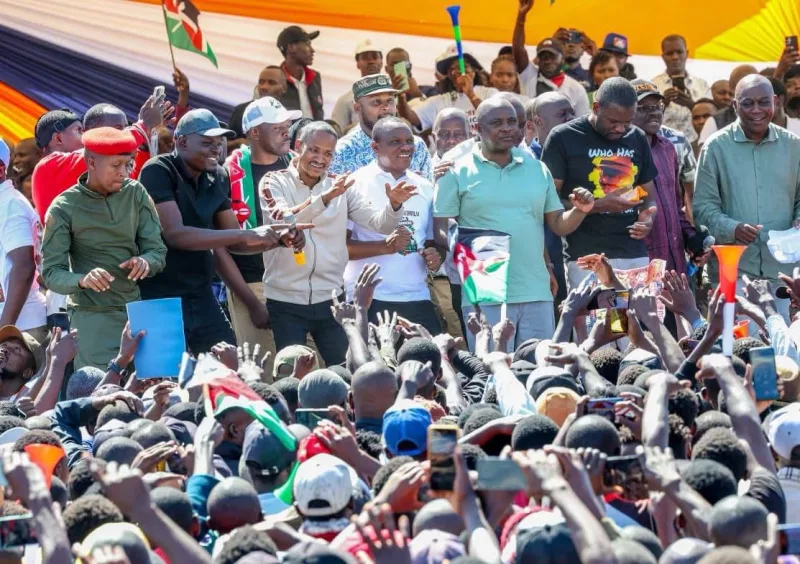
The story follows a script so rehearsed it has acquired the quality of ritual. An election is held. Results are announced. The claim of theft follows, delivered with the full force of righteous fury. Protests erupt. The language of democratic martyrdom fills the air.
The aggrieved constituency presents itself to the nation and to the world as living proof that Kenya's democratic institutions are rotten, that the will of the people has been strangled and that no self-respecting citizen can regard the incoming government as legitimate.
Kenya watches, debates, and in many cases sympathises. Opposition, after all, is the sinew of democracy, and the performance is convincing.
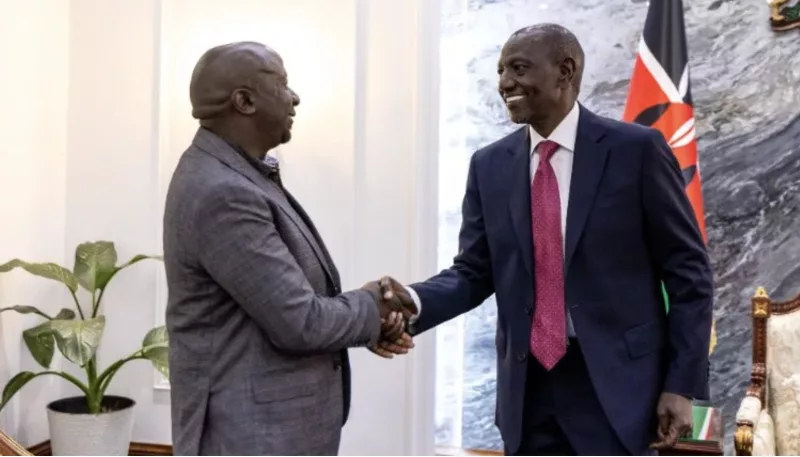
But then, quietly and without ceremony, something shifts. Overtures are made. Meetings are held behind closed doors. And before long, the very government that was declared an affront to the constitution becomes a partner. The movement that had thundered against illegitimacy is now part of it — and thoroughly comfortable with the arrangement.
It is what happens next that strips away every remaining pretence. The transition from fierce opposition to enthusiastic participation is never accompanied by any explanation of what changed—what policy breakthrough was achieved, what democratic demand was met, what institutional reform was secured that justified abandoning the position of principled resistance.
None is offered, because none exists. What changed is far simpler: the door to power opened, and they walked through it. And once inside, the transformation is so complete and so swift that it would be comic if its consequences were not so serious.
Those who had been the most vocal critics of a government become its loudest cheerleaders. Those who had urged citizens to resist become those who urge citizens to comply. The grievances that had fuelled mass mobilisation are retired without explanation. The democratic cause, which had been presented as a matter of existential urgency, turns out to have had a price, and that price, it emerges, was always negotiable.
The citizens who had been rallied to the cause – those who marched, who chanted, who in some cases bore the full physical cost of political agitation – are never part of the negotiation. They are informed of the new position after it has been decided, and they are expected to fall in line.
For the leadership of such a constituency regards its followers not as the principals of a democratic movement but as its instruments—useful when power is out of reach, inconvenient when it is within grasp.
This is the detail that elevates the matter beyond ordinary political opportunism into something more troubling. Ordinary opportunism involves a politician switching sides for personal gain.
What is described here involves a leadership that has, repeatedly and systematically, mobilised entire communities around democratic ideals it never intended to honour — using their numbers, their passion and on occasion their blood, as the currency with which to purchase a seat at a table from which those same communities derive no lasting benefit.
The pattern has now repeated itself across enough administrations, across enough elections, and across enough decades that it can no longer be mistaken for coincidence or explained as pragmatic adaptation to political realities.
It is a strategy, and a remarkably successful one. The genius of it lies in the maintenance of the democratic brand even as democratic behaviour is abandoned. The language of struggle is never fully relinquished, because it must remain available for the next election cycle, the next allegation of fraud, the next season of righteous protest.
The brand is the asset, and the brand must be preserved regardless of how thoroughly the behaviour contradicts it. Kenya has, for too long, consumed this performance without examining it critically — without asking the simple but devastating question that the record now demands: if the cause was always genuinely about democracy, about justice, about the integrity of the republic, why does it evaporate, without exception, the moment an invitation to government arrives?
The answer, uncomfortable as it is, has become undeniable. For this political constituency, democracy has never been the destination. It has been the vehicle — a reliable, emotionally resonant vehicle for travelling toward the only destination that ever truly mattered, which is power and the proximity to its rewards.
This does not make them unique in the landscape of Kenyan politics, where opportunism is hardly a rare commodity. What makes them singular is the scale of the moral claim they have attached to what is, at its foundation, a straightforward pursuit of self-interest.
Kenya deserves
politicians who suffer for their convictions and then hold to those convictions
when comfort is offered. What it has received from this quarter is politicians
who suffer strategically, and negotiate privately, and perform publicly — and
have done so, with considerable success, for longer than this republic should
have tolerated.