There is a quiet
discovery hiding in plain sight. It is not found in government reports,
political rallies or economic forecasts. It is found in the pockets of
ordinary Kenyans who wake up every morning hoping that today's earnings will be
enough to carry them into tomorrow. Without ever announcing it, we have become
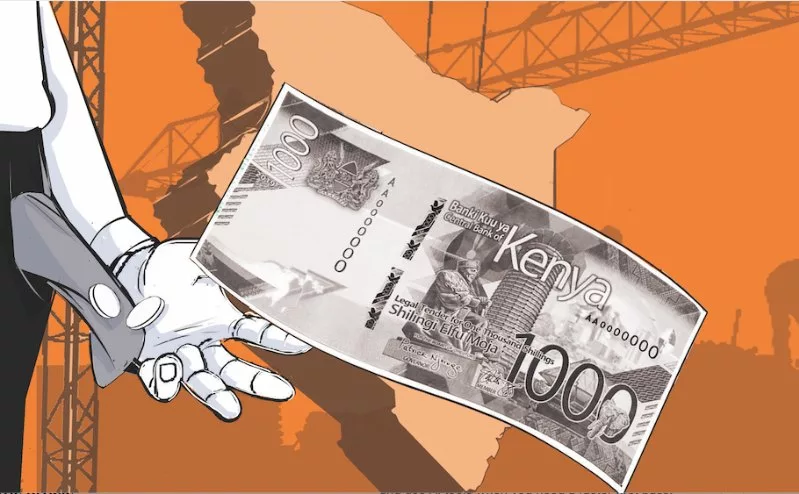
a Sh1,000-a-day economy.
Not long ago, Sh1,000 was a powerful note. Receiving it felt significant because it could accomplish so much. It could comfortably buy groceries, fuel a car, settle household bills or support a small family for several days. It represented purchasing power and gave people room to breathe.
Today, that same note barely survives
the day. It disappears into transport, food, electricity, mobile money charges,
internet bundles and the countless expenses that have become part of everyday
life. Before the sun sets, it is gone.
That simple reality says
more about our economy than many official statistics ever could.
Think about the average Kenyan who has finally secured employment after months of searching. The first salary arrives with excitement and relief. Family members celebrate because employment is still seen as the gateway to financial stability.
Yet it does not
take long to discover that having a job and achieving financial security are no
longer the same thing. Every payday immediately collides with rent, transport,
groceries, utilities and the responsibility of supporting relatives who are
also struggling. The salary disappears almost as quickly as it arrives.
The arithmetic becomes
even harsher when children are involved. School transport, lunch money, milk,
diapers, school contributions, uniforms and unexpected medical expenses
quickly consume what little remains. What once looked like a reasonable amount
of money suddenly becomes insufficient for the ordinary demands of family life.
Sh1,000 is no longer money that builds a future. It has become the price of
getting through another ordinary day.
This is what I mean by a
Sh1,000 economy.
It is an economy where
income is consumed almost immediately instead of creating wealth. An economy
where people think about today's fare, today's meal and today's bills instead
of next year's investments. Saving has become increasingly difficult, while
planning for the future feels like a luxury reserved for a fortunate few. Every
sunrise resets the financial clock, forcing millions of Kenyans to begin the same
struggle all over again.
The tragedy is not that
Kenyans have become lazy. On the contrary, they are working harder than ever.
Many hold full-time jobs while running side businesses in the evenings or on
weekends. Others juggle multiple income streams simply to keep their households
afloat. Yet despite this determination, hard work increasingly guarantees
survival rather than prosperity. Employment has become permission to endure
instead of an opportunity to advance.
This should concern every
policymaker regardless of political affiliation. An economy cannot be measured
only by the number of people who have jobs or by impressive growth figures. It
must also be judged by whether work allows citizens to save, invest, own homes,
educate their children with confidence and build wealth that can be passed to
the next generation. When salaries only finance survival, something deeper is
fundamentally wrong.
Perhaps the saddest part
is not that life has become more expensive. It is that we have quietly adjusted
our expectations to match our hardships. We celebrate reaching the end of the
month without borrowing as though it were prosperity. We have become
comfortable thinking one day at a time because planning further often feels
impossible. In doing so, we have mistaken resilience for economic progress.
Kenya deserves better
than an economy where Sh1,000 has become a daily survival kit. We deserve an
economy where work rewards ambition, where families can plan beyond the next
payday and where a single note once again represents opportunity instead of
anxiety. Until that happens, the greatest and saddest discovery of our time
will remain this: we have become a Sh1,000 economy.