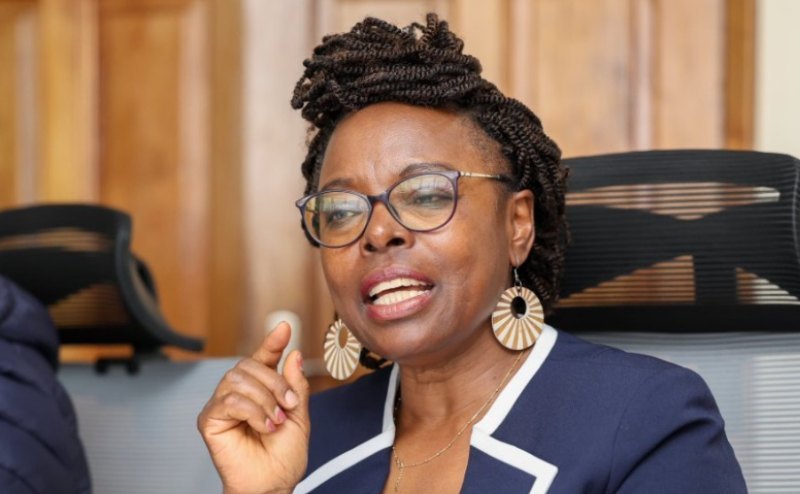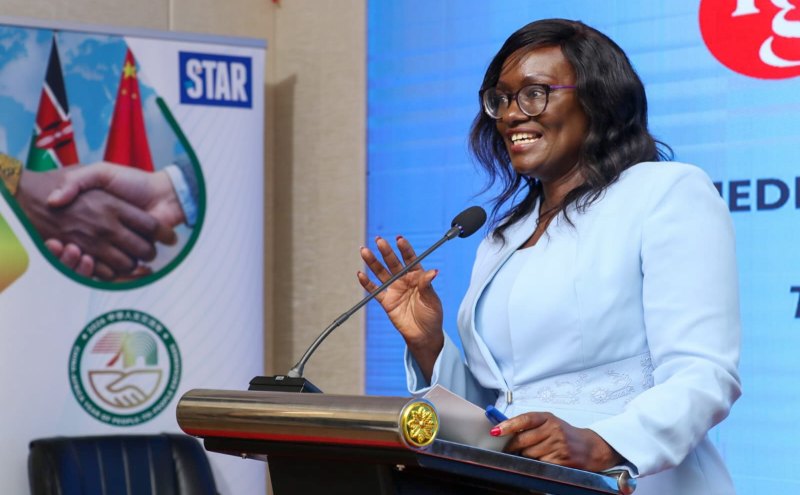
(Taking points by Kenya Editors Guild CEO Linda Bach at the Seminar on China-Kenya People-to-People Connectivity Hosted by the Star Publications Limited, on June 11, 2026)
The media industry is navigating one of the most transformative periods in its history. Artificial Intelligence, social media platforms, citizen journalism, digital influencers, and algorithm-driven information flows have fundamentally altered how news is produced, distributed, and consumed.
Traditional media no longer competes only with other media houses. We now compete with every smartphone owner, every content creator, and every social media platform. The challenge is not merely survival. The challenge is maintaining credibility, trust, and public service journalism amid unprecedented change.
The changing media landscape is reflected in audience behaviour. According to the State of Media 2025 Report by the Media Council of Kenya, social media remains the leading source of news at 39 per cent, up from 37 per cent in 2024. Television stands at 31 per cent, unchanged from the previous year, while radio has grown from 21 per cent to 26 per cent. Newspapers remain at one per cent. Family, friends and colleagues account for four per cent, while online news sites account for three per cent.
In a world flooded with information, accuracy becomes more valuable than speed. The public can get information anywhere. They come to professional media for verification, context, balance and accountability. Ethical journalism remains the key distinction between professional media and unregulated content producers.
Editorial decisions should continue to be guided by truth and accuracy, fairness and balance, independence, accountability, respect for human dignity, and protection of vulnerable groups. The future belongs not to the fastest newsroom, but to the most trusted newsroom.
As the media environment evolves, the need for strong editorial leadership becomes even more critical. The changing media environment demands stronger editorial leadership, not less. Editors must become guardians of ethical standards, mentors of younger journalists, defenders of newsroom integrity, and navigators of technological disruption.
Editorial leaders must create cultures where ethical considerations are not viewed as obstacles but as essential newsroom values. Newsroom leaders should be willing to make difficult decisions when commercial, political or social pressures threaten editorial independence.
One of the most significant developments shaping journalism today is the rapid advancement of Artificial Intelligence. AI is transforming journalism and can assist in research, translation, data analysis, transcription and audience engagement. However, AI cannot replace editorial judgment.
Human editors remain responsible for verification, context, ethical considerations and public interest assessments. News organisations should therefore develop clear AI policies addressing transparency, attribution, verification standards and protection against misinformation and deepfakes.
At the same time, misinformation and disinformation have emerged as major threats to the information ecosystem. False information now spreads faster than factual reporting. Disinformation campaigns increasingly exploit political divisions, social tensions and international conflicts.
To address these challenges, journalists must strengthen fact-checking systems, verification protocols, investigative capacity and media literacy efforts. Newsrooms should move beyond merely reporting facts and actively help audiences distinguish fact from manipulation.
The ethical challenges facing journalism are occurring alongside significant economic pressures. Declining advertising revenues and changing audience habits have created serious challenges for media organisations. However, financial difficulties should never become justification for compromising ethical standards.
Public trust is the most valuable asset any media organisation possesses. Once trust is lost, rebuilding it is extremely difficult. Media sustainability and ethics must therefore go hand in hand.
As journalism becomes increasingly global, international partnerships and exchanges offer opportunities for greater understanding among nations and peoples. Media partnerships and exchanges can help journalists better understand different societies, cultures and development experiences.
Such engagements should be guided by professional journalism principles including independence, accuracy, respect for diverse perspectives and commitment to truth. International cooperation in media should enrich journalism while preserving editorial autonomy.
Equally important is strengthening ethical self-regulation within the profession. The strongest protection against external interference is strong internal accountability. Media institutions should continue investing in editorial guidelines, ombudsman systems, ethics committees and continuous professional development.
Ethical self-regulation demonstrates that journalism takes responsibility for maintaining public trust and reinforces the profession's credibility.
Ultimately, journalism is not merely a business. It is a public trust and a democratic institution. Ethical journalism promotes social cohesion, accountability, informed citizenship, peaceful dialogue and national development.
Especially in polarized times, journalism must illuminate rather than inflame.
Technology will continue to evolve. Platforms will rise and fall. Business models will change. But the fundamental mission of journalism remains constant: to seek truth, serve the public interest, and hold power accountable. Ethical leadership is therefore not an option for the future of media—it is the foundation upon which that future must be built.
To safeguard that future, we must invest in newsroom ethics training, develop responsible AI policies, strengthen fact-checking and verification systems, protect editorial independence, foster international media cooperation built on mutual respect, and recommit to journalism's core mission of truth, accountability and public service.
Linda Bach is the Kenya Editors Guild CEO