


Somalia today stands at a critical crossroads, confronting a complex
political crisis with far-reaching implications. The nation is entering a
perilous period of uncertainty that threatens the stability of its fragile
state institutions, undermines national security, jeopardises unity, and
endangers the future of the Somali people.
As millions of Somalis yearn for lasting security, dignity, meaningful
employment opportunities, and the re-establishment of functional government
institutions capable of delivering basic services, Somalia has instead plunged
into a deep constitutional crisis characterised by legal ambiguities and
political paralysis. The current administration’s constitutional mandate
officially expired on May 15, 2026, yet the country remains trapped in a
political vacuum, lacking a nationally endorsed path toward legitimate
leadership.
This crisis transcends mere political disagreements among leaders; it
constitutes a national emergency with serious consequences for the sovereignty
of the Somali state, the cohesion of its diverse ethnic and regional communities,
and the stability of the wider Horn of Africa.
No nation can achieve sustainable peace, economic development, or security
when foundational constitutional principles are undermined and political
legitimacy is contested. Somalia’s painful history, marked by civil conflict
and broken trust, has demonstrated the devastating cost of political
stubbornness, exclusionary practices, and the collapse of dialogue between
leaders and citizens.
Today, those same trust issues are being tested once again.
The persistent absence of an inclusive political agreement erodes federal
institutions, fuels public frustration, and creates widespread uncertainty
nationwide. Alarmingly, this political impasse threatens to reverse the
progress Somalia has made over the past decade in rebuilding vital
institutions, restoring international confidence, and fostering regional
stability.
At a time when Somalia should be rallying a united front against the
persistent threat posed by al-Shabaab militants, internal political tensions in
Mogadishu are diverting attention from national security priorities and
weakening the collective effort needed to combat terrorism. Terrorist groups
such as al-Shabaab thrive during periods of political division and
institutional weakness, gaining ground and recruiting new members. Each day
Somalia’s political leaders fail to reach a broad consensus presents another
opportunity for extremists to exploit the crisis.
The implications extend beyond Somalia’s borders, affecting regional
security frameworks, cross-border economic cooperation, humanitarian efforts,
and the broader stability of the Horn of Africa. Neighbouring countries and
international partners are increasingly concerned that Somalia risks sliding
back into violent conflict or civil unrest if urgent mediation is not achieved.
The Somali people have endured enough conflict and instability; they seek a
peaceful and prosperous future free from fear and uncertainty. They want
leadership that genuinely listens, unites diverse communities, and acts in the
national interest.
For this reason, I firmly believe the only sustainable solution lies in
immediate national dialogue and genuine political compromise. Somalia needs a
comprehensive and inclusive consultation involving all relevant stakeholders: the
federal government, opposition leaders, federal member states, traditional
elders, civil society organisations, women’s groups, and youth representatives.
The future of Somalia must be shaped through consensus rather than unilateral
decisions or narrow political interests.
I advocate for the formation of a transitional consensus government to
oversee a credible, transparent, and widely accepted electoral process. This
transitional authority should be temporary, fully constitutional, and founded
on broad political agreement among major stakeholders.
Protecting national unity during this fragile period is paramount. Political
instability should never serve as a pretext for secessionist or divisive
agendas. Preserving Somalia’s territorial integrity and safeguarding the unity
of the Somali people require collective responsibility from all leaders.
Somali citizens deserve leadership that rises above personal ambition and
prioritises the nation’s long-term stability. They deserve a government
committed to restoring confidence in state institutions, upholding
constitutional order, and governing with transparency, justice, and
accountability.
If entrusted with leadership, I will dedicate myself to strengthening
national institutions that serve all Somalis equally.
My administration will focus on constitutional governance, institutional
reform, anti-corruption measures, judicial independence, security-sector
professionalism, and transparent public administration. Our goal must be to
build a Somalia where institutions are strong enough to withstand political
transitions, where respect for the rule of law is unwavering, where power is
held accountable, and where national interests always take precedence over
personal or partisan gain.
This moment demands wisdom, humility, open dialogue, and unity. Somalia has
suffered immense hardship, and our people deserve a future rooted in peace,
legitimacy, democratic governance, and national cohesion. Such a future can
only be achieved through inclusive dialogue, political compromise, and
responsible leadership that places the nation’s interests above personal or
factional ambitions.
The choice before us is clear: a path toward consensus and stability, or
continued uncertainty and decline. For Somalia’s sake and for future generations,
we must choose wisely.
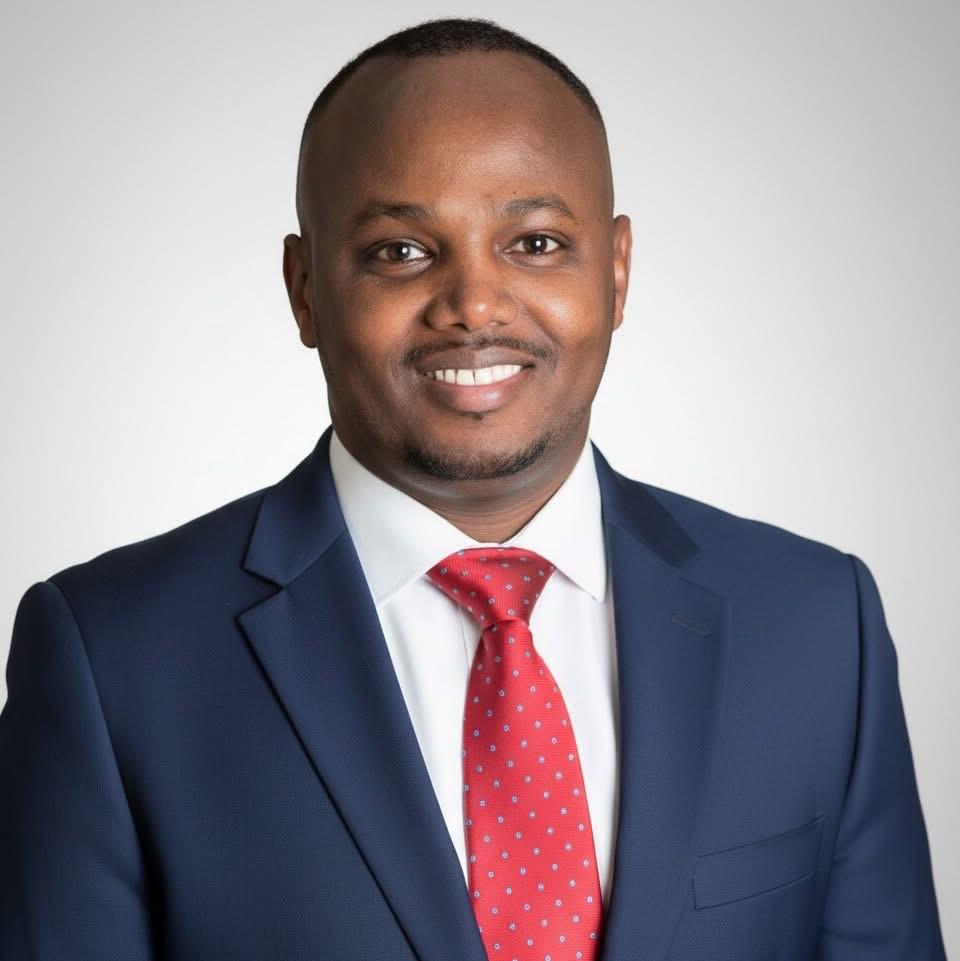
Nasa Ige is a prominent Somali
politician and presidential candidate.




![[PHOTOS] Red carpet in Pretoria as Ruto begins South Africa visit](https://cdn.radioafrica.digital/image/2026/06/abe3e750-6e5a-4394-a45c-899768be6240.jpeg)